


Something I never cared for in Dungeons & Dragons was the way initiative seemed designed to slow down combat for no good reason. The idea is that every combatant (or at least every player character), rolls to see where in the order of combat his or her action comes each round of combat.
In the old days, this is how Gygax managed bigger, slower weapons that did more damage versus smaller, faster weapons. Upon looking into D&D 5th Edition, I was surprised to find initiative still used at all. You can just say whichever hero is closest to the monsters goes first. (See Closer Initiative at bottom.)
The speed of your weapon doesn’t really matter when considering when you act. That instead affects how likely you are to hit, with small weapons getting a +1 in my system because they are quick enough to get multiple strikes. Remember that “an attack” isn’t a single strike but a series of strikes, feints, parries, and shield bashes. Even your reflexes don’t count for much. Your experience does.
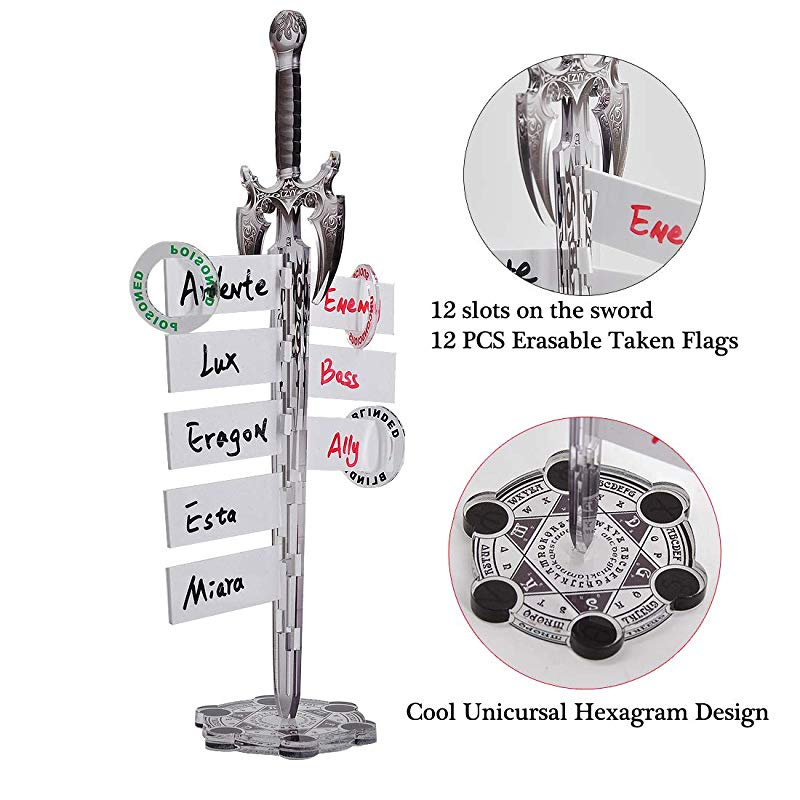
Some people make or buy fancy initiative trackers that we would have laughed at back in the day.
The better way to manage it is with a variant of “popcorn initiative” I call “baton initiative”. Each side decides who goes next on their side, like relay teams each passing their team’s baton to a teammate.
Baton Initiative
If one character in particular starts a combat, that character has seized the initiative, and there’s no need to roll. If the sides have squared off and both are ready, then each side rolls 1d20. The GM may give a bonus to one side if it has significantly more characters, are of significantly higher level, or are better prepared.
Deal with prepared actions first, then the winning side.
- If the monsters win, the GM chooses the first to act. Then let the players choose who among them goes next. This must happen quickly! Don’t let them debate the question. If they wait too long, decide for them: it’s the character who was attacked by the monster who acted last (or some other logical character). Then you decide who among the monsters goes next.
- If the players win, they can choose among themselves who is ready to declare their action first. Then the GM chooses for the opponents. Then the players get to choose from their side again.
The GM may group some monsters together (three goblin slingmen all going at once, for example), and may decide when extra characters and non-combatants act.
When all the characters on both sides have had a turn, the round ends. Any spells or other effects that were due to end during the round end at this time. (A spell that lasts one round therefore lasts one full round plus however long it took to get to the end of the round in which it was cast.)
Don’t roll initiative every round. Whichever side acted last at the end of the round, the other side gets to start the next round. So, if there are more monsters than heroes, the monsters will probably end the round. Then the heroes get to go first the next round.
Held Actions
One twist is that a character can volunteer to go next and declare their action (they must declare) but hold that action. This allows them to then take their action at any time, including right before or after a teammate or monster of their choice. This means the heroes could create a combo moment where they act together without it being spoiled by a monster attacking in between.
What they can’t do is declare that they will shoot an arrow at a certain hobgoblin if he moves and then try to interrupt to shoot a different hobgoblin you say is now pulling a lever. Sorry, kid, that’s not what you were focused on. If the hobgoblin they were focused on gets killed or something, then their held action dissipates, and they are back in the mix and available to be chosen to go next.
Spells Affecting Initiative
If a spellcaster casts an area-effect spell or if there is some other disruption, the GM should decide if it causes the combatants to pause–ducking for cover or shading their eyes (that is, rolling a saving throw). If so, then you should call for initiative again.
Surprise
If one side manages to ambush the other (or some similar one-sided surprise scenario), then all the creatures on that side get to act without the other side acting. Then, the surprised side automatically gets initiative in round 2. This should not be like the old method of rolling to see if one side or the other is surprised; it should only be for cases where one side is deliberately lying in wait for prey.
So, if the heroes are ambushed, all the monsters can spring out and attack heroes (at least the ones in front, anyway). Then the new round starts, and the heroes automatically get to go, choosing who among them is first. Then you go back and choose one of the monsters. And so on.
Real Popcorn Initiative
In most variants of popcorn initiative, the character who has just acted gets to name whichever hero or monster (or group of monsters) goes next. This allows heroes to go back-to-back, which allows some team-up situations. But it also includes naming the character to start the next round, and that can be yourself.
This allows some major meta-gaming to happen, since the players can take all their actions early, likely killing multiple opponents. Of course, a ruthless GM can then have the monsters take their actions and then name themselves to begin the next round and all go one after another, possibly killing off a PC, since they’ve all gotten to act twice before the PCs act again.
Those who have used it suggest that being ruthless in this way tames the players’ urge to gobble up all the actions and teaches them to pick the monsters here and there thruout the round. But I doubt that lesson comes cheap or is even fully learned.
I prefer that the baton go back and forth between the players and monsters, but each side can name anyone on its side. That maintains the main advantage of popcorn initiative: that the players remain engaged and communicate with each other about who is ready to go and which opponent to target.
Closer Initiative
Mentioned at the top. At my table at least, I basically just said whichever hero was closest to the monsters could go first, then one of the monsters went–usually the one the first hero attacked–and then whichever hero was next closest would go, unless a spellcaster or archer at the back said they wanted to go instead.
If the monsters ambushed the heroes, of course, all bets were off. The monsters would probably all attack first, except for some stuck in the back.
You might call this “closer initiative”. It seemed pretty weird to even consider having the players roll and finding the rogue in the middle of the party or the cleric at the back could go first. What are they going to do? They’re not in a position to attack or do much of anything else.
 zarban.com