

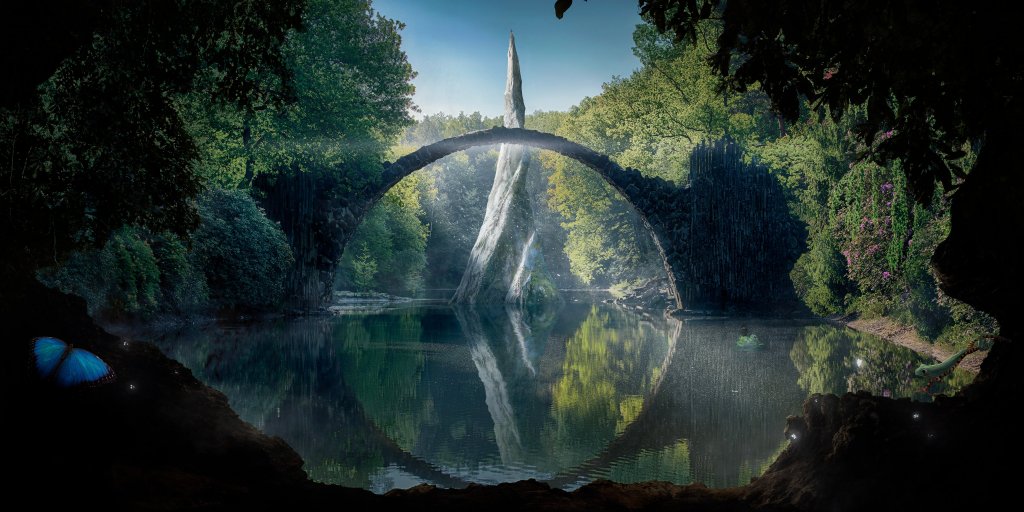
If you’re creating a fantasy RPG campaign setting for D&D, OSR, or other game system, one of the most compelling things you can do is fill it with fantastical locations for the heroes to adventure in. You’ve got maybe 15 or 20 adventures before the campaign fizzles out or finishes triumphantly. Why let those locations be random 5-room dungeons between generic inns in generic towns?
Since the game takes place in the theater of the mind, the heroes can go anywhere, so feel free to go big. You can set them on fire, flood them, and even collapse them, if you want to. Your players may feel like their characters are invincible because they’re the heroes, but an entire town set on fire because they refused to pay off the pirates will still shake them up.
If the encounter is a social one, consider if the purpose is to wow the players or give them the creeps. Then go looking for real and fantasy locales that will evoke that. Look at the world’s greatest buildings and tweak them a bit.
If the encounter is for a puzzle or combat, figure out what your dungeon was and has become. An old mine that is now a goblin lair? A manor house abandoned during the plague years and now used as a hideout by bandits? An elegant villa of the Old Empire fallen into ruin since the fall? Then, don’t just draw a flat 2-dimensional map. Think of the dungeon or ruins from the outside and imagine the entrance and surface ruins, but don’t look at typical floor plans of cities, castles, and churches.
Borrow from Real Locales
If your campaign world doesn’t have a statue that acts as a lighthouse like the Statue of Liberty or the Colossus of Rhodes, why not? Don’t let your adventures be labeled “low budget”.
You could make the Taj Mahal a sultan’s palace (instead of a mausoleum). The top of the Chrysler Building might be a glorious temple 18 stories tall (with 59 levels of crypts?). Who doesn’t want to walk out on those eagle gargoyles to survey to city?

You don’t have to hide the inspiration of such places; saying outright “the Great Western Barrier is a bit like the Great Wall of China and Hadrian’s Wall” is very helpful to players.
Who would have built the Egyptian pyramids in your campaign world? Or Petra? Perhaps they are active places rather than ruins. Could something like the Eiffel Tower be a stone beacon tower? Who lives in your Neuschwanstein Castle? Mad King Ludwig built it as his medieval fantasy; you might as well use it for yours.
Are your temples or monasteries as fantastical as the Tiger’s Nest? Or Angkor Wat? The Hanging Temple of Hengshan? Is there a tomb as impressive as Emperor Qin Shi Huang’s terracotta army? Does your world have a city of canals like Venice, Giethoorn, or similar cities?
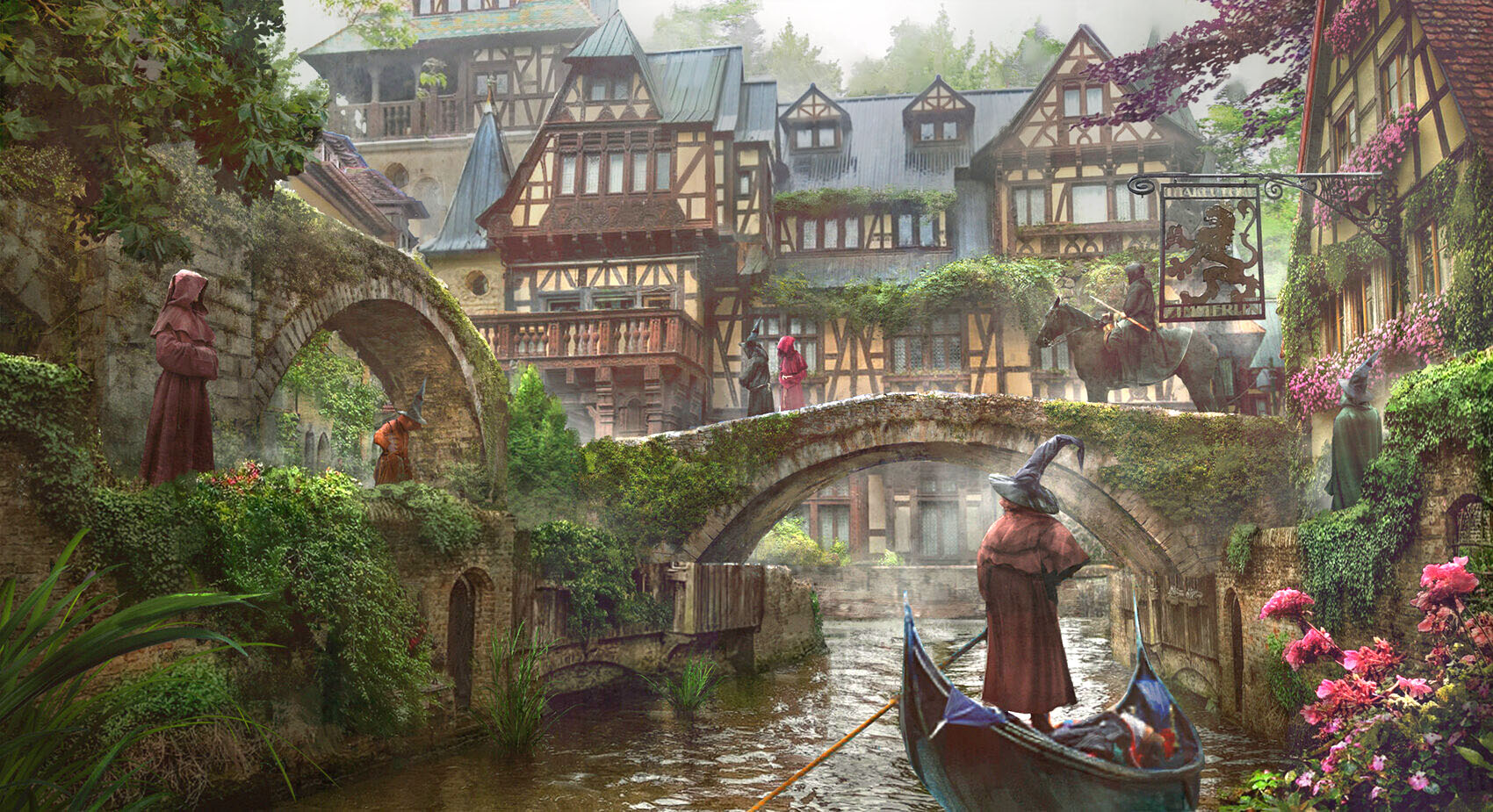
Gelbensande Manor might be a lord’s manor house. Heck, perhaps in your realm, Victorian-style mansions were built in place of castles, because times were peaceful way back then. But now fully fortified castles are required, and the old mansions are largely abandoned, so you can play in a haunted mansion like Winchester Mystery House or some noble can live in a strange mansion in a peaceful area.

The nice thing about real locations is that you can find pictures of them from various angles and in various lighting and weather. Real places also have history and purpose you can borrow and twist.
If nothing else, real places will inspire you to create your own fantastic locations fit for kings and wizards and mad high priests, living or long since dead.
Borrow Fantastic Locales
Does your world have a Hobbiton? A Knockturn Alley? Lothlorian? Or its own bizarre locale? Don’t overlook your favorite fictional settings; just reskin or at least rename.
For wilderness adventures, look up “amazing landscapes” and “fantasy landscapes” & save some to set your wilderness encounters there. The artist’s wild imagination may spark your own imagination to explain what it is, who built it, why it was built, and why it’s in ruins.

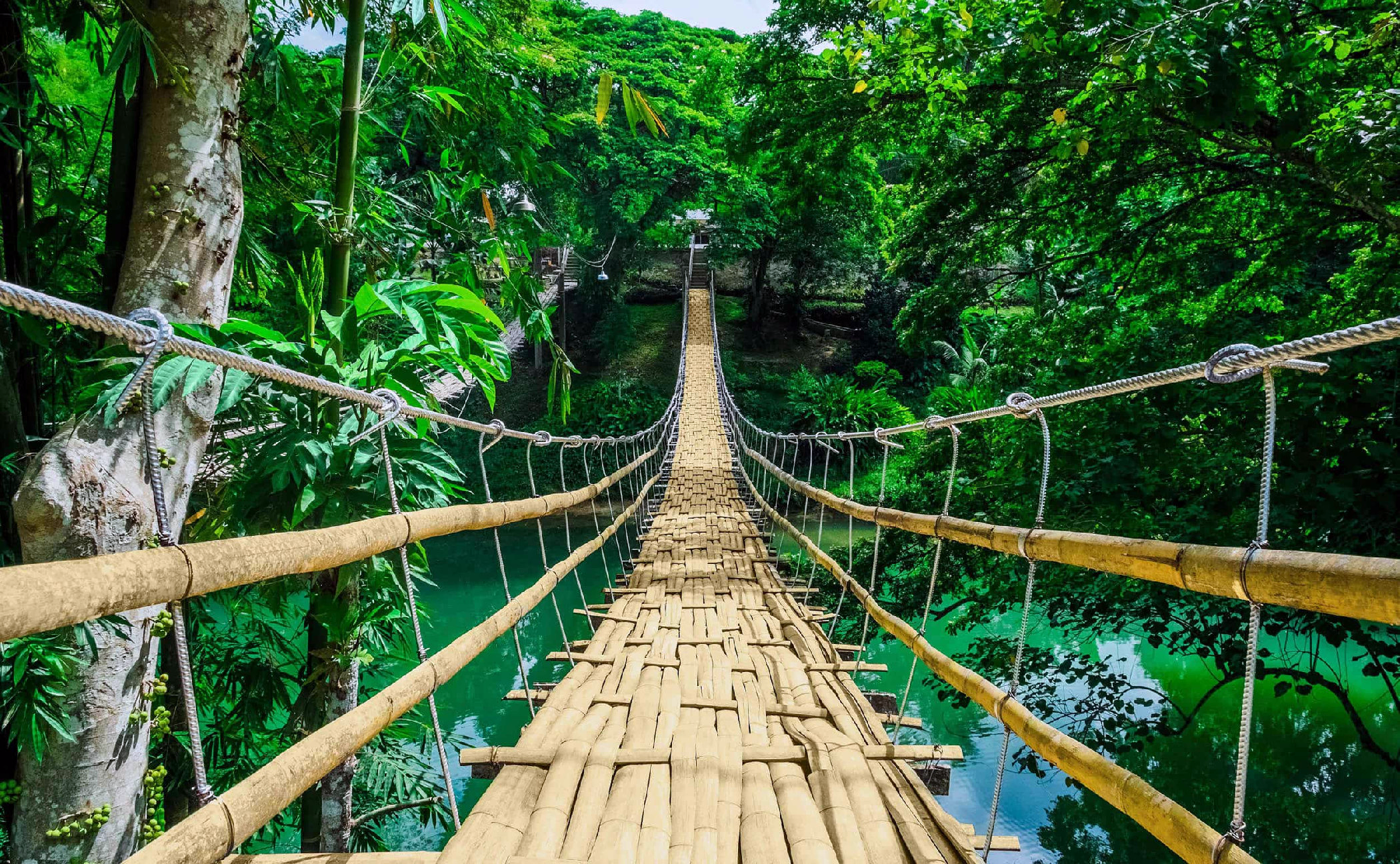
Real or imaginary, crazy waterfalls, sheer cliffs, giant sequoia forests, tiny islands linked by rope bridges, giant crystal caverns, babbling brooks thru rocky forests…. Show your players that image & say “This is what you see.”
Interiors
Even simple passages and stairways in a castle or dungeon or narrow town lanes can be magical, if you can show players an evocative image. Did you find some interesting staircase or hearth? Make it the centerpiece of a combat or social encounter. Need a little help envisioning a medieval hall or yeoman’s cottage or an apothecary’s shop? Someone has already done it for you.

Combat Encounter Locales
Try to plan set pieces that occur in fantastic locations with dimensionality and changeability. Plan for the monsters or NPCs to do at least one thing utilizing the furnishing, stairs, and so on, rather than just stand and swing a weapon on level ground.
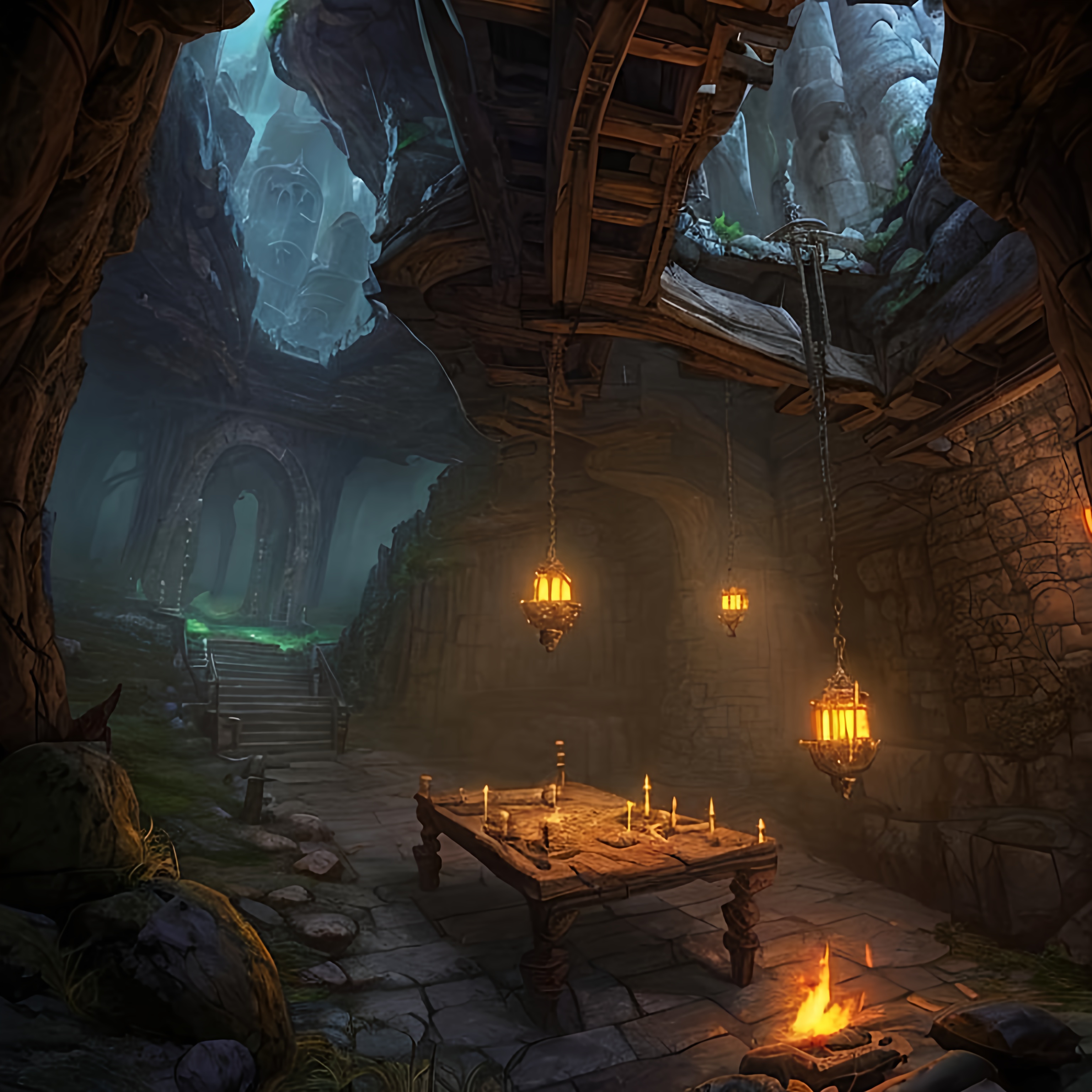
Take a temple: you can be on the floor, up in the balcony or mezzanine, on the dais or altar, or you can climb up on a statue. You can knock over a brazier, urn, idol, statue, offering table, or candelabra, or bang the gong, swing from the chandelier, or cut the chandelier rope and drop it on someone (real chandeliers have ropes, so you can lower them to light or snuff the candles).
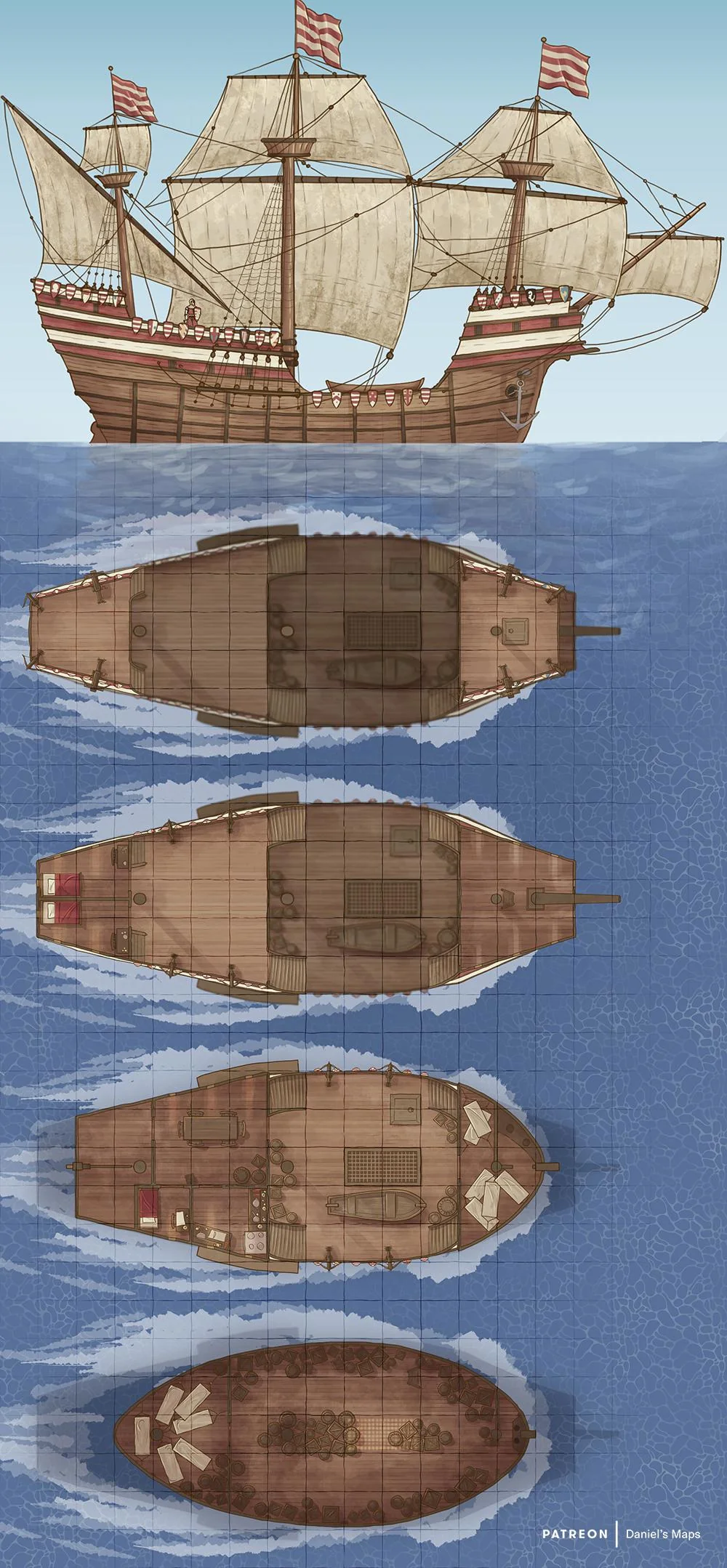
Take a sailing ship: you can be up among the sails, down on the quarterdeck, main deck, or foredeck, or belowdecks, or out in the sea–and in rapid succession. There are ladders, stairs, and rope everywhere; you can cut a rope to drop a sail or to be pulled up among them, swing across the deck, and tie things down or tie people up.
Even a dungeon or ruins should have rooms with stairs to a dais and furnishings that become obstacles. There can be fallen rubble, leaking water, slippery mud, etc.
If the encounter is in the wilderness, find pictures of an interesting locale with a rocky waterfall down an escarpment, a glacial boulder field, a ring of standing stones, or an ancient, gnarled tree.
Verticality, Transformation, & Props
Verticality is the biggest way to improve locations. If you draw a flat dungeon map, try to envision the space and add some vertical elements that become relevant to encounters. Certain monsters could skitter down from recesses near the ceiling on the chains that hold braziers, for example, turning a seemingly flat chamber into a vertical one.
Transformation is another major way to improve locations. Give the heroes hints that they could bring down part of the ceiling, start a rockslide, roll a boulder downhill, break down a beaver dam, slam doors, drop gates, start a fire, or open a drain to transform the area or chamber or injure opponents. You can also transform the encounter location by simply moving it: have the bad guys run into a different chamber or up stairs or a hill, forcing the heroes to follow to a new venue.
Give the heroes props they can move and use. And give them examples by having the monsters move or use them against the heroes sometimes. The classic is dropping a chandelier on top of your enemies or cutting down a tapestry to flop on top of them, kicking over barrels or urns to roll down a slope at enemies, and so on.
Dungeon Art
Dungeon art can help spice up your combat with more interesting spaces that have dimensionality and furnishings you’d never think of on your own. Don’t try to find an image to match the chamber you’ve drawn; find an image that inspires you to design an encounter around it and add it to your map.

Inspiration
I’ve created Flickr albums of interesting places to put in a campaign world and to set encounters or just to show off to players as places of pilgrimage or quest. Some are real places, and some are fantasy art.
Towns & Castles

Wilderness & Nature

Dungeons & Ruins

 zarban.com