

Cantrips, or 0-level spells, are a great idea that, as usual for the system, D&D eventually took too far and made a mess of. But if you like old-school gaming, you can use them sensibly.
Cantrips were introduced (IIRC) during AD&D 1st Edition in the first Unearthed Arcana, having been floated earlier in Dragon Magazine. They were numerous and colorful, and you got four for one 1st-level spell slot. But they were pointlessly narrow (belch, yawn, wink, & cough were all separate, as were flavor, salt, spice, & sweeten), and they had to be memorized as any other spell. So players didn’t use them. In 2nd Edition, they were lumped into one 1st-level spell that lasted several hours—a much better idea, but one that still cost a precious spell slot.
4th Edition gave spellcasters certain spells to cast at-will, all day, and they could do damage. 5th Edition went back to the idea of “0-level spells” but still made them at-will and able to damage. This is astonishing if you’re familiar with the simple, helpful, fun spells they once were, but it’s a rule meant to make spellcasters feel useful all day and never run out of spells. I feel such generosity is part of what makes 5e characters too powerful too soon. And it’s part of a long march toward making resource management—a key part of early D&D—unnecessary.
The New (Old) Cantrips
But there is a sweet spot with cantrips that makes them make sense in an old-school game. Cantrips represent the first attempts by an apprentice to achieve magical effects. They should not be able to do damage or last long. But, these cantrips are such minor dweomers that it actually does make sense that they can be cast at will, once per round, all day.
The default range of this sort of cantrip is 5 feet per level of the caster, and it takes just a second to cast, but no more than one cantrip can be cast in a round. (This means the caster can still take full movement for the round.)
The more magical of effects last just 1 round, but non-magical effects are permanent (a cleaned shirt can still get dirty again, of course). Generally, they can affect an object or collection of objects of about 1 cubic foot in volume.
Last, they cannot affect sovereign materials except where the caster could manually create the effect. For example, you can clean a gold ring if you have it in your hand with a cloth handy. With a cantrip, you can magically clean it at a distance. But you can’t manually alter a gold ring’s material or color if you’re holding it, so alter works only on mundane materials.
Let’s go back to the original cantrip list and scale it back to simplify it.
| Cantrip | Description |
|---|---|
| Candlelight | Produces a magical candle flame that can float at your direction; lasts until you stop concentrating. It can start fires as a real flame. |
| Alter | Change the material or color of an object. |
| Chill/Warm | Change the temperature of an item by 40 F (22 C); permanent. |
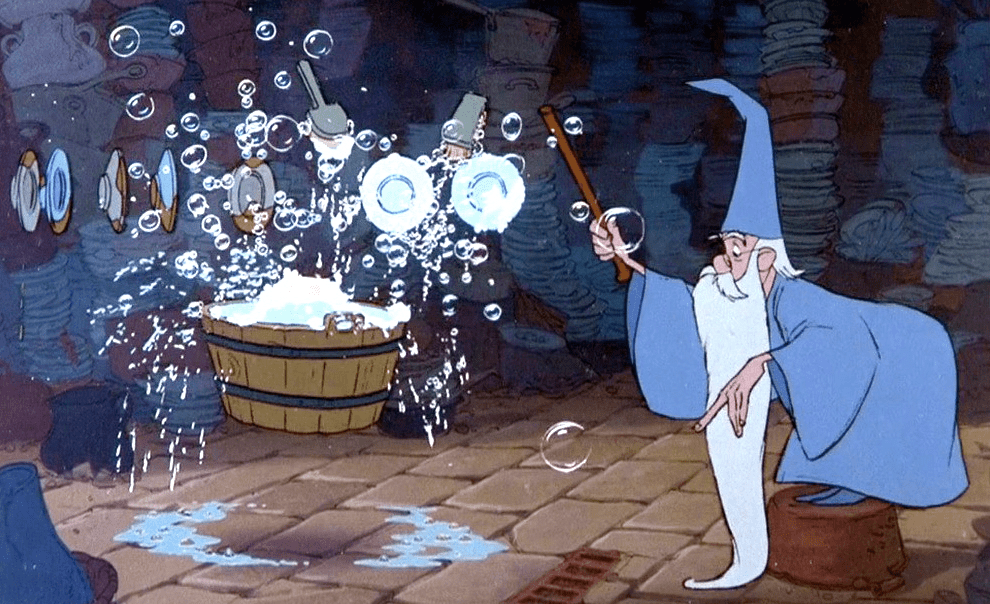
| Clean/Dirty | Make something clean or dirty; permanent. |
| Dampen/Dry | Make something damp or dry; permanent. |
| Flavor | Add good or bad flavor to a cook pot, drink, etc.; spoiled foods are still spoiled; permanent. |
| Gather/Scatter | Gather or scatter a group of small objects; permanent. |
| Jinx | Make a person belch, cough, scratch, sneeze, yawn, twitch, etc., if they fail to check difficulty 15 using charisma. |
| Knot/Untangle | Cause a thread, string, or small rope, etc. to knot itself or untangle itself, including special knots, if you know them; “permanent”. |
| Mark | Make a mark on a solid surface, as with a piece of chalk or charcoal. Lasts 1 round per level. |
| Noise | Cause a creak, footfall, groan, moan, rattle, rap, thump, whistle, tweet, barking, etc. |
| Beckon/Vanish | Bring a small object that is within range instantly to the hand; permanent. Or make a small object in hand invisible (but not silent). |
| Riddance | Eliminate tiny pests (of a mundane sort), bugs, and vermin up to and including mice but not rats; permanent. |
| Flourish | Produce a cascade of sparkles or puff of smoke, any color, with or without an audible pop. |
| Touch | Extend a gentle, invisible manipulation like a tap or twist to one item, possibly with a skill check. It’s not strong; can’t carry things, draw, or write; and doesn’t work in stressful situations like combat. |
| Whisper | Blow a whisper (in a language you speak) to a creature you can see, as if you whispered into their ear. It can’t be heard in noisy situations. |
These little spells can enhance social encounters and make spellcasters seem more magical. Depending on your system, you might restrict them to wizards only or perhaps to only those who cast spells by natural power rather than by careful study.
 zarban.com