

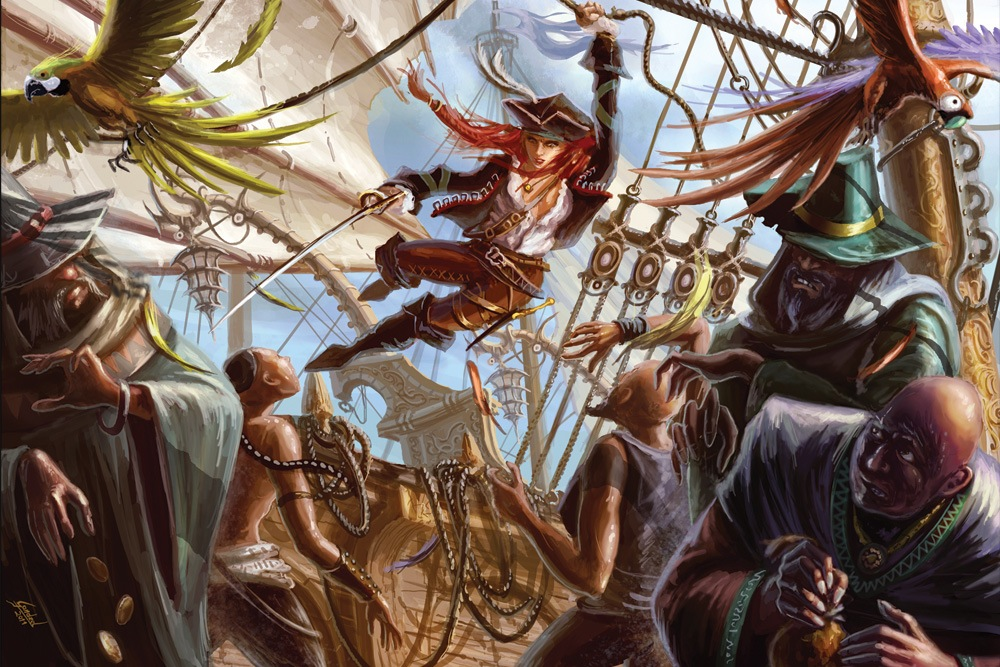
A few months ago, I wrote about how to create the structure necessary for political intrigue in a fantasy RPG like Dungeons & Dragons. But how do you actually write such an adventure?
The first thing you need are some factions, which I’ve also written about. Some can be better or worse than others, but generally their goodness or evilness shouldn’t be obvious. In this example, the factions are not members of a court or secret organizations but merchants, sailors, and officials in a city: Port Thoral.
This is an adventure for a mid-level party.
Smugglers & Pirates
The heroes go to a city where they learn the local baron, Lord Taivan, has high taxes, so the local merchants often use smugglers to avoid them. This shouldn’t be too difficult to engage the heroes in, since they’re likely tax-evaders themselves.
But the merchants of Port Thoral are having trouble with pirates raiding their smuggled shipments.
Now, those shipments that pay the tax and thereby get to fly the baron’s banner are almost never bothered by pirates, because, it is said, the pirates fear the baron’s champions, the Flying Hares. And indeed, from time to time, the Hares capture and execute pirates.
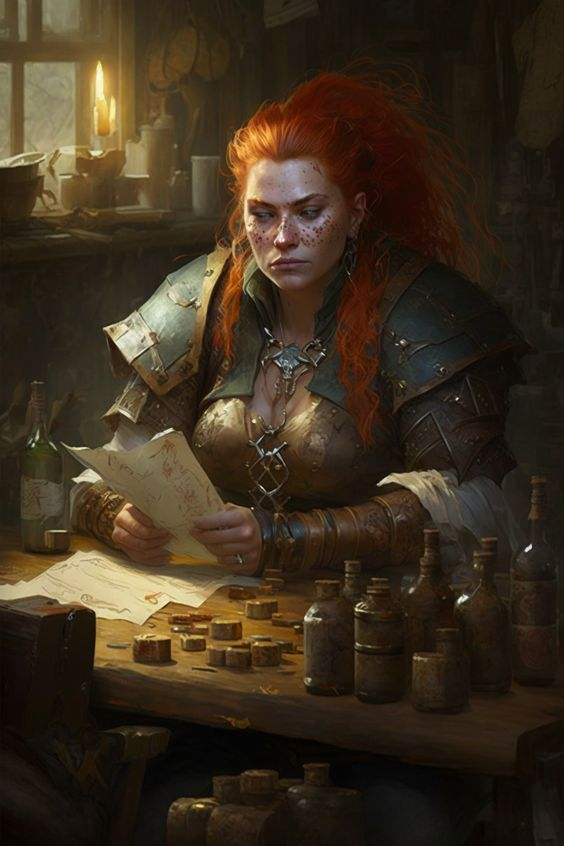
Rather, it is the smugglers’ ships that tend to get attacked–and the higher-value shipments, at that. The Baron’s tax inspector, Magella Benescar, maintains that this is good reason to pay the tax and that merchants who avoid it have only themselves to blame if their shipments are seized. Of course, the Hares also sometimes seize smuggling shipments, since they’re illegal.
It is suspected that Dimastris Invelic, a shady merchant, is the pirates’ connection. He trades mostly in cities further up the coast and is known to sell goods that are very like the ones seized by pirates.
The Secret Truth

In reality, some of the smugglers are working with the pirates, tipping them off to when and where to strike for the best shipments. And those smugglers are also working with Dimastris.
But Dimastris is also secretly working with Magella, because the whole affair is a kind of protection racket for the baron: whomever tries to avoid paying his heavy taxes gets their shipment seized–either by his champions or else by pirates who are also indirectly working for him.
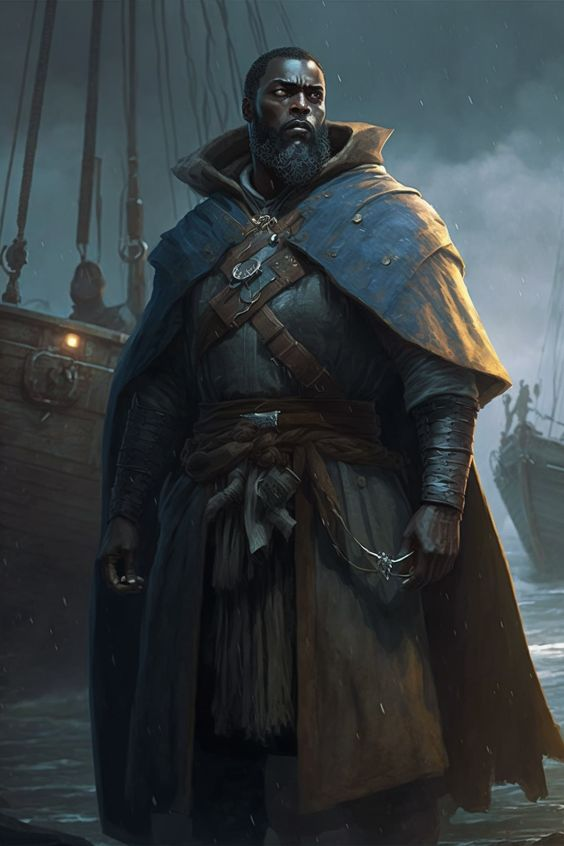
The scheme goes like this: the pirates are tipped off by smugglers in on the scheme and seize a ship not sailing under the baron’s banner. Dimastris and his ruffians examine it and buy it for a fraction of its market value. Dimastris’ ship brings it to a nearby port to sell (not the same one it came from) and gives the baron his share. The Flying Hares fight pirates who aren’t in on the scheme or who try to double-cross Dimastris, and they also seize the shipments of smugglers who aren’t in on the scheme.
Since the baron gets the lion’s share of a shipment seized by “his” pirates and all of a shipment seized by the Hares, he only needs a small percentage of smuggled shipments to be captured to beat his normal tax–especially since “his” smugglers can identify the more valuable shipments. Five shipments of vegetables might get thru, and then a shipment of fine rugs–worth ten times as much–gets seized.
What Part the Heroes Play

Now, the heroes might be brought in by a merchant to fight pirates, in which case they will find the Flying Hares are not happy with their presence. They may be summoned to meet Magella, who will explain the (supposed) issues and how they prefer to handle those issues themselves.
They may instead be asked to investigate Dimastris to uncover his relationship with the pirates. Or they could merely be asked to track down part of a valuable shipment and find themselves embroiled in the politics of the situation.
The heroes might seize a pirate or smuggler ship and find letters between the pirates and the smugglers or interrogate someone who mentions some relationship between two of the parties. But no one person will have the full story, of course, since the baron has carefully put layers between himself and the pirates.
Do the Flying Hares even know Dimastris is in league with the smugglers and pirates? They may be told he merely buys shady goods and sometimes gets bothered by the pirates like anyone else. They may know nothing of payments to Magella by Dimastris.

At some point, the heroes might be invited to dine with the baron, ostensibly to congratulate them on some initial success but actually to size them up. This is essentially one of those scenes in a James Bond movie where Bond plays baccarat chemin de fer with the villain he’s investigating. He should be quite charming.
The baron may then send the Hares to intimidate the heroes or have Dimastris send ruffians to scare or murder them. The pirates may also retaliate. Perhaps Magella has her own bodyguard (a small party of adventurers) get involved.
Of course, not all the smugglers and pirates are involved in the scheme. And even some who are involved might be willing to help the heroes, if they play their cards right. After all, none of these people have strong loyalties. Perhaps the heroes could even get invited to a pirates’ council, in which pirates and smugglers meet to discuss their situation and negotiate certain deals.
The Sheriff & the Judge
Killing anyone who is publicly working for the baron would, of course, result in the heroes getting declared outlaws and being hunted by the county’s sheriff. (This should be made clear up front.) That sheriff might be another player in the intrigue or merely doing his or her royal duty to the king. Indeed the county’s royal judge might well be onto part of the scheme and want the heroes to do some investigating for her and the sheriff. It depends on how complicated you want the scenario to get.

If they play well, the heroes could blow the affair wide open and cause the baron to fall out with the king, bringing the king’s champions and ships to restore law. This might even bring the heroes the king’s gratitude.
It’s possible that the heroes could only uncover the fact that Dimastris is in league with the smugglers and pirates, and they could bring him to justice (that is, fight him and his ruffians on behalf of the judge and sheriff). Or they could learn that even Magella is complicit in the scheme. In either case, the baron would pretend ignorance and thank the heroes for their work… and then make trouble for them some other way.
Wild Cards
Beyond pirates, smugglers, the baron’s champions, the tax-collector and her bodyguard, Dimastris and his ruffians, and–potentially–the sheriff’s men, there might be other threats. Sea monsters, for example, are always a possibility off shore, as are intelligent aquatic creatures like merfolk, but there could also be an additional faction–or even monster–lurking in the city.
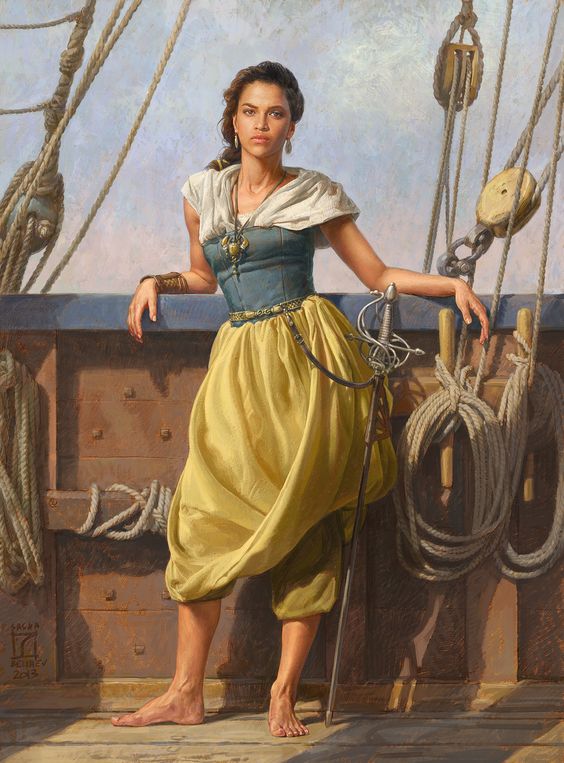
It possible that neutrally aligned creatures may be aware of some of the shenanigans at sea and be willing to help the heroes rather than fight them.
It’s also possible that some pirates or smugglers who aren’t in on the scheme could become allies of the heroes. As with any good political adventure, lot depends on the way the heroes present themselves in their encounters (and how they do on reaction rolls).
Even the reactions of Magella, Dimastris, and the baron could be swayed by charming heroes. But even so, the heroes would merely be used by them to further their own ends, such as by fighting smugglers and pirates who aren’t in on the scheme.
If the heroes get too far off track, you might have an elderly sage or other authority corner them and reveal some secret or chide for missing some connection.
 zarban.com