


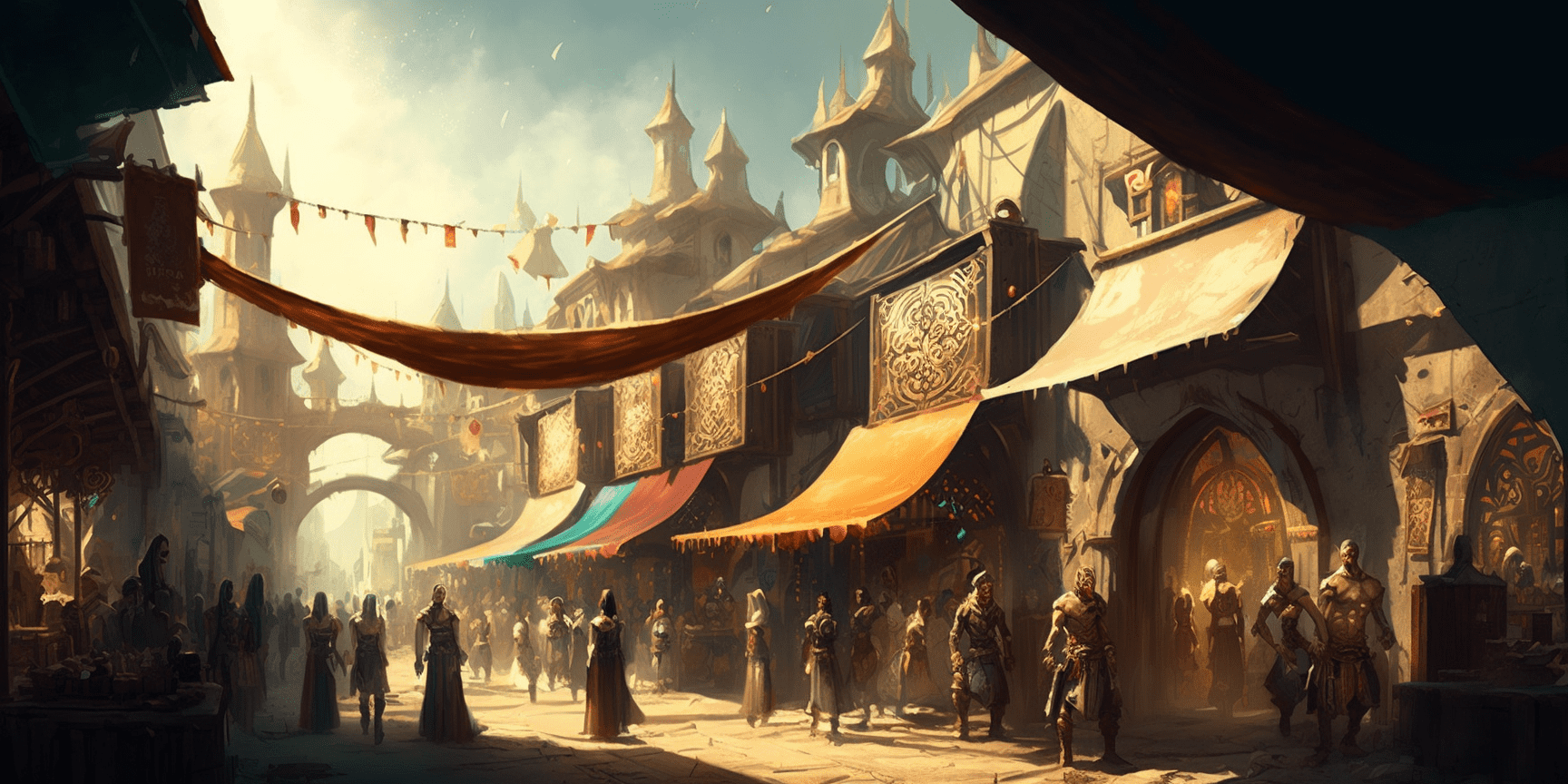
What sort of people and businesses would you find in your medieval (or Renaissance) fantasy city? Your campaign world can work however you like, but historically there was nothing we would recognize as retail stores in Europe, at least not between the ancient Roman Forum and the modern period. A shop was a workshop where you ordered something to be made. You bought unusual foodstuffs and common, ready-made items at the open-air market in the town square once a week. Fine craftsmen would typically bring samples of their work to your home.
Towns vs Cities
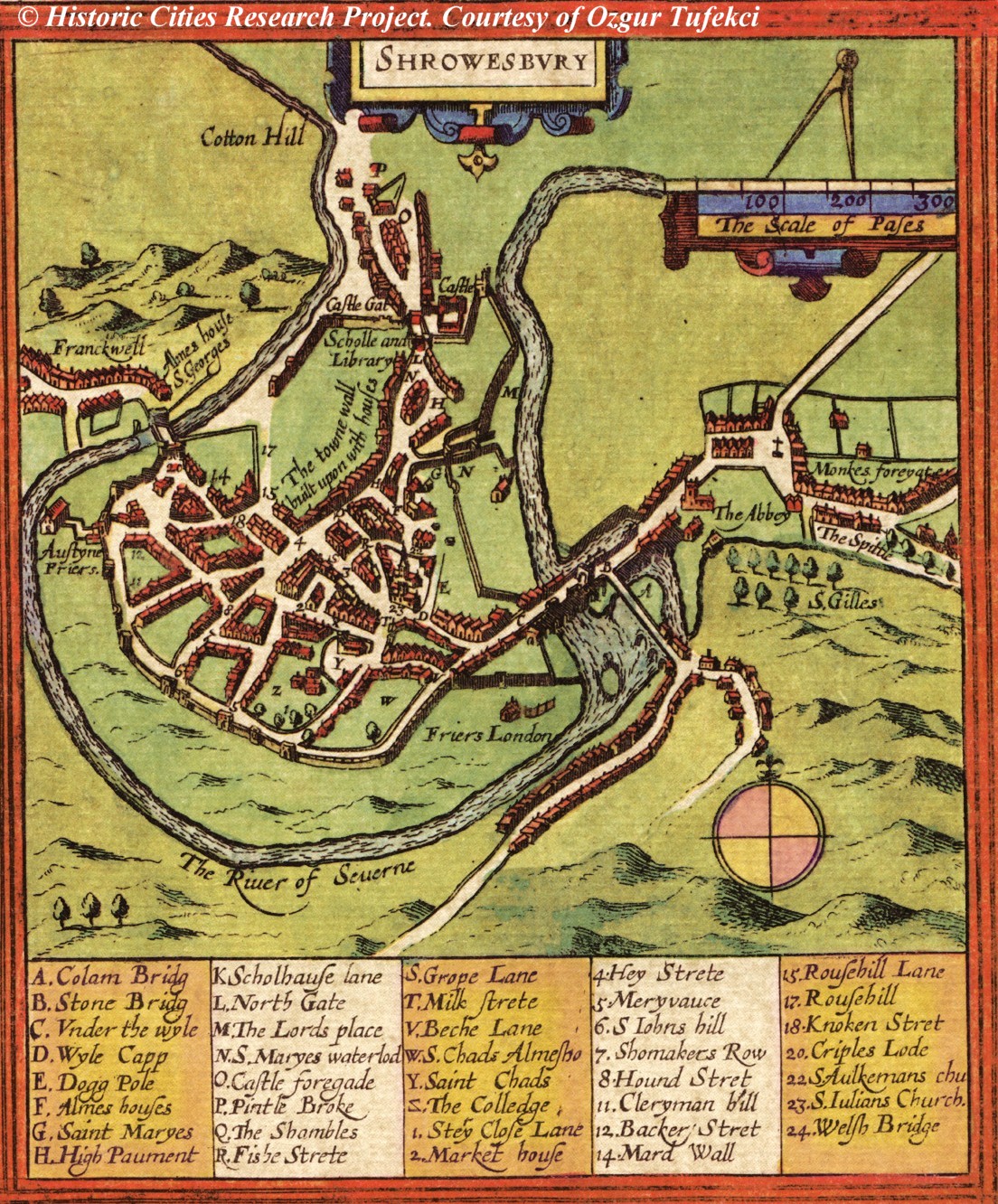
A town or city had its own walls and gates. (Villagers, by contrast, ran to the manor house when attacked.) Towns and cities of medieval Britain were smaller than those in continental Europe. A town might be 800 to 1000 people. A city might only be 2000. York (England’s second-largest city) was perhaps 11,000 in the high Middle Ages; London about 40,000. Some cities of continental Europe were larger, but only Paris, Granada, Rome, and Constantinople were in the hundreds of thousands.
Demographics
A substantial number of townsfolk–perhaps 10%–would do much of their work in the fields and pastures of the manors around the town. (This would probably not be the case of a city.) If you go thru and count householders in this list, especially for trades and crafts of which there were multiple in a town, you would get about 150. If households had an average of 6 members (various combinations of husband and wife, children, servants, apprentices, elderly parent, spinster sister, etc.), that would make a town of 900.
All the able-bodied men of the town would be trained in arms, typically as footmen (especially spears). They often took turns serving as watchmen.
Categories
Townsfolk
Here is my research list of common medieval occupations in a town or city. Those exclusive (or nearly exclusive) to cities are in boldface.
ADMINISTRATORS
- Alderman (member of the town council and, usually, guild council)
- Bailiff (runs a town; usually the same guy as guildmaster) or Mayor (runs a city)
- Constable (runs the town watch)
- Beadle (messenger, minor official, and assistant to a bailiff, reeve, or constable)
- Guildmaster (runs the merchant guild; usually the same guy as bailiff)
- Inspector (weights & measures, quality, etc.)
- Town crier (a part-time position, perhaps of a beadle)
- Watchman (often just townsfolk taking turns)
- Judge, justice of the peace (only in the main city of a shire/county)
- Sheriff (only in the main city of a shire/county)
- Jailer (only in the main city of a shire/county)
- Executioner, hangman (part-time job; only in the main city of a shire/county)
MERCHANTS
Professional merchants and traveling traders would be uncommon in towns but common in cities.
- Cornmonger (grain-dealer)
- Draper (common fabrics like cotton, linen, and wool for clothing)
- Fishmonger (fresh and salted)
- Glass merchant
- Horsemonger, horse-trader
- Hairmonger (horsehair, used as stuffing and fishing line)
- Jeweler (jewelry strictly made to order)
- Livestock merchant, poulterer (fowl, hares, and other small animals)
- Metal merchant, ironmonger
- Merchant broker (dealing with other merchants in a variety of goods)
- Mercer, silkwoman (silk and linen cloth, bedclothes, and other fine textiles)
- Spice merchant (sugar, black pepper, cinnamon, ginger, saffron, nutmeg, cloves)
- Saltmonger
- Wool-buyer
Professions
- Apothecary
- Alchemist
- Attorney (only in a city, especially the main city of the shire/county)
- Armorer (manages & maintains armor & weapons in an armory in case of war)
- Barber-surgeon–2-3 per town
- Physician–1 or 2 per town
- Bridge-, road-builder (only in a city)
- Boatwright, shipwright (only in a coastal city)
- Clerk (counting-house clerk, official’s assistant, etc.)
- Money-lender, banker (often jewelers, grain merchants, or an order of knights)
- Gentleman/gentlewoman who keeps busy as an artist or thinker (philosopher, natural philosopher, naturalist, astronomer, astrologer, mathematician, author, etc.).
- Priest/priestess–3-4 per town
- Abbott/Abbess or prior/prioress (only in a city where there is an abbey or priory)
- Regarder, surveyor (rare in a town)
- Scribe, copyist, illuminator
- Sage, advisor to nobles (rare in a town)
- Tutor, translator (rare in a town)
Shopkeepers
These are people who would serve walk-in customers and, in the case of crafts, commonly keep products on hand for sale thruout the day, as opposed to making items to order.
- Butcher–2 or 3 per town
- Grocer, victualer (fruits and vegetables)–3-4 per town
- Baker, Cook–1-3 per town
- Cheesemaker, cheese-dealer
- Chandler (candles)
- Taverner, innkeeper, tapster, serving girl–3-4 per town
- Bathhouse manager or attendant (may be a prostitute)
- Brothelkeeper/bawd (madam/pimp)
Servants
Even people of fairly modest means could afford a servant or two, often orphans and spinsters.
- Household servant, cleaning woman
- Maid, milkmaid
- Stableboy, groom, horse knave, (at an inn) ostler
- Dog-keeper at a kennel
- Dove-keeper at a dove cote (or other bird-keeper at an aviary)
- Nursemaid (feeding and cleaning children and sick people)
- Lady’s maid (female personal servant for a gentlewoman or lady)
- Valet (male personal servant for a gentleman or nobleman)
- Cook
- Courier
- Apprentice (learning a trade or craft; paid very little, 1-4 in most craftsmen’s households)
Women’s Occupations
These are traditionally filled by women, altho women may fill almost any of the other roles as well. Some of these are repeated elsewhere.
- Laundress
- Cleaning woman, washer woman
- Governess (managing and teach children in a wealthy household)
- Nursemaid (feeding and cleaning children and sick people)
- Wetnurse (breastfeeding infants of others)
- Midwife (caretaker of pregnant and birthing women)
- Bathhouse manager or attendant (may be a prostitute)
- Brothelkeeper/bawd (madam/pimp)
- Prostitute (generally legal, sometimes only outside town)
- Alewife (a brewer of ale, which must be consumed immediately)
- Cook
- Fortune teller
- Peddler (fruit, eggs, cheese, firewood, vinegar, pottery, baskets, flowers, vegetables, spices, sugar, etc.)
- Spinster, embroideress, and other textile occupations of all sorts
TRADESfolk
At certain times of the year, many of these folk would go into the countryside to help tend fields and livestock, especially as plowmen, sheep-shearers, or ditchers, or as common laborers to help at harvest and threshing.
Each town would have 2 or 3 of these; cities several.
- Basket-weaver
- Clothier (fabric maker)
- Fuller, clothworker (fulling, stretching, whitening, felting)
- Hay (animal fodder), straw (bedding) dealer
- Haberdasher (seller of small wares: pots and pans, needles, ribbons, thread, buttons, etc.)
- Joiner (building carpentry)
- Limner (painting and white-washing)
- Waller (construction, mostly wattle & daub)
- Plasterer
- Bricklayer
- Pelter (sells animal pelts to furrier)
- Wire-drawer, pin-maker
- Laundress/washerwoman
- Rag-and-bone man, junk dealer
- Knackerman (disposes of dead or dying animals, especially horses)
- Sewer worker (several, but very large city only)
- Tanner, currier (quite smelly; usually outside town)
COMMON CRAFTSfolk
Like tradesfolk, some common craftsfolk might do part-time work in the country on the manors surrounding the town, particularly at harvest time.
- Blacksmith (ironwork of all types), farrier (specialized in shoeing horses)–2-3 per town
- Buckle-maker
- Bowyer, fletcher
- Brewer, malter, alewife (ale, beer, cider, perry)–2-3 per town
- Brickmaker
- Stonemason
- Carpenter, turner (furniture, cabinets)
- Chapeler, hatter (hats)
- Cartwright, wheelwright
- Cooper (barrels, tubs, and casks)
- Corder (rope)
- Cordwainer (shoe-making)–1-2 per town
- Cobbler (shoe-repair)–2-3 per town
- Dyer (dyes fabric; quite smelly, sometimes outside town)
- Founder (casts bells, etc., rare in a town)
- Girdler (belts)
- Glover (gloves and bracers)
- Horner (animal horn for handles and substitute for glass in windows)
- Hosier, chaucer (hosiery)
- Leatherman (pouches and other leather goods of all sorts)
- Locksmith (mostly very basic, but some made fine locks)
- Netmaker (mostly fishing nets)
- Pewterer (pewter utensils and vessels)
- Potter (cooking pots and chamber pots)
- Pursemaker (purses, pouches, hanging pockets)–2-3 per town
- Saddler, harness-maker (harness, tack, bridle, and saddles)
- Stonecutter
- Spinster (spinning thread by drop spindle or spinning wheel)–5-10 per town
- Tailor, dressmaker (custom clothing)
- Tinsmith
- Weaver
- Wheelwright
- Woodcarver
FINE CRAFTSfolk
Fine crafters would be rare in towns and uncommon in smaller cities.
- Armorer, shield-maker
- Broider, lacemaker (embroidery, lace, and tatting)
- Brazier (brass founder)
- Coiner, minter (large city only)
- Cofferer (coffers, caskets, chests)
- Carpetmaker, rugmaker, tapestry maker
- Engineer (large buildings, siege engines, winches)
- Furrier (buys furs from pelter and makes them wearable)
- Glassblower
- Glazier (windows)
- Graver (engraving and seals)
- Goldsmith, silversmith
- Jeweler
- Optician (eyeglasses, monocles, and spyglasses)
- Mirror-maker
- Luthier (stringed instruments)
- Horn-maker (trumpets and hunting bugles)
- Maker of fine versions of common items (purses, dresses)
- Stationer (books and paper), bookbinder, bookseller
- Stained-glass window maker
- Sword-cutler, swordsmith, scabbard-maker
- Stone-carver or wood-carver
- Sculptor and/or portrait artist
- Vintner (wine-maker)
Street Folk
- Peddler (fruit, eggs, cheese, firewood, vinegar, pottery, baskets, flowers, vegetables, spices, sugar, etc.)–several of various types per town
- Wine-crier (paid to advertise wine and ale quality at a tavern)
- Water carrier (delivers water from a well or pump or river)–several per town
- Link boy (lantern carrier)–several per town
- Beggar (quite rare, except in large cities; people were required to have employment; mendicant friars were essentially beggars)
- Gong farmer, nightsoil man (cesspit cleaner, often required to work at night)–3-4 per town
LABORERS (in and around town)
Nearly all of these folk would also work on the manors outside town, either regularly or at certain times of the year when extra help was needed with plowing, haymaking, harvesting, threshing, and shearing.
- Sawyer (cut logs into lumber)
- Carrier, carter, drayman (driving a cart or wagon)–3-4 per town
- Teamster (manages a team of horses for pulling wagons, plows, etc.)–2-3 per town
- Field workers (many people in the town would work fields around the town)–dozens per town
- Porter (carrying goods on back for others)–3-4 per town
- Tiler, paver–3-4 per town
- Thatcher–3-4 per town
- Ditcher, grave-, well-digger–3-4 per town
- Boatman, bargeman, ferryman–2-3 per town
- Fisherman–3-4 per town
- Dock-worker/longshoreman
Visitors
Here is my research list of common medieval occupations outside a town or city.
Itinerants (Passing thru Town)
- Tax collector, catchpole
- Entertainer (minstrel, juggler, puppeteer, clown, acrobat, bear-baiter)
- Fortune teller
- Friar (traveling cleric)
- Laborer (odd jobs, such as hauling and repairing, and seasonal jobs, like ice-cutting, harvesting, etc.)
- Mercenary captain, sergeant
- Mercenary, soldier
- Pilgrim guide (likely with commoners on a pilgrimage)
- Sailor
- Ship’s commander, captain, officer
- Tinker (repairs to pots and pans, knife-sharpening)
Visiting from a Manor
- Lord/Lady (gentry who possesses land, usually multiple manors)
- Gentleman/Gentlewoman (gentry who don’t personally possess land)
- Knight (common warrior who possesses land, usually 1 manor)
- Yeoman (commoner who possesses land, usually less than a whole manor)
- Bailiff (runs a manor)
- Reeve (minor manor official who supervises the workers)
- Hayward (minor manorial official in charge of fences and hedges and the village green)
- Warden (official in charge of a forest), verderer (minor official who manages a forest)
- Woodward, forester (officer who manages lumbering), ranger (officer who polices a forest for poachers and outlaws)
- Gamekeeper (lord’s protector of game and hunt organizer)
- Collier (charcoal or coal)
- Gelder (veterinarian)
- Leech-gatherer (for blood-letting)
- Lime-burner (for mortar)
- Miller
- Peat-cutter (for burning in lieu of wood, coal, or charcoal)
- Quarryman
- Sheep-shearer
- Woodman (firewood and logs, closely regulated)
- Woodsman (coppicing and pollarding trees to grow poles)

Visiting from Elsewhere
- Foreign envoy and entourage
- Gentleman/gentlewoman (gentry who does not possess land)
- Hawker (employed by a noble or church official)
- Pursuivant at arms, Herald (official in charge of coats of arms and responsible for making official proclamations)
- Huntsman (employed by a noble or church official)
- Knight errant, squire, page
- Noble’s chamberlain
- Noble (baron, earl, etc.)
- Royal envoy
- Seneschal, steward (runs a castle)
- Courtier (gentry with a position in a noble or royal court, such as food taster, jester, huntsman, or usher [manager of servants])
- Miner
- Salt
- Tin or Zinc (used in brass and bronze)
- Lead
- Iron (used in steel)
- Nickel or Wolfram (tungsten, which is just as heavy as gold)
- Copper, silver, gold, or platinum
- Mythril or adamantite

Relationships
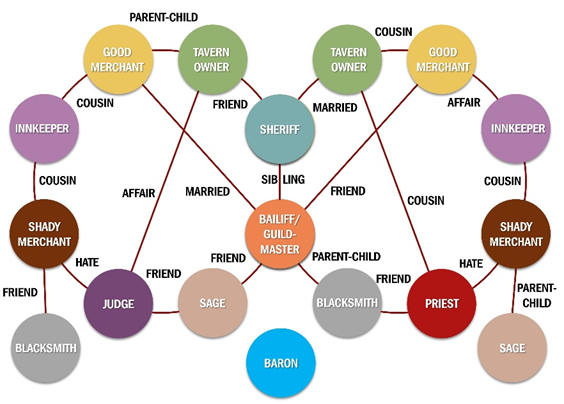
Don’t forget to add relationships between the various characters. This doesn’t need to include everyone in town, but documenting the most notable relationships–particularly between those who tend to have the most professional connections and contact–can be very helpful.
You can find more detail in my post on adding politics to D&D.
 zarban.com