
Movies and TV series create trailers that preview the stories and characters they contain. This is a great technique for hooking audiences that you can use to hook your players and help them decide what kind of campaign they want to play.
Think of how a movie trailer works: glimpses of the main characters doing cool things. A broad shot establishing the landscape. Villains being villainous. Villagers cowering from shadowy threats. The heroes preparing for battle against impossible odds. And so on. It focuses on establishing the basics of the story: setting, conflict, villain, heroes, and cool stuff (don’t forget the cool stuff).
Now, your campaign isn’t about just one thing. It’s less of a movie than a television series, but trailers for TV work the same way. In fact, it’s common for a TV series to open every episode with a montage of just these same sorts of things.
These intros don’t show what will happen in the entire series–the writers don’t even know that. They just show things that happen in the first several episodes, and the opening changes over time as new seasons are written.
That’s something you can emulate as a way to let the players help you decide where to take the game every few levels. You could break up the heroes’ careers into a campaign from 1st to 4th levels, then 5th to 8th, then 9th to 12th, and so on.
The trick is to create a few different “trailers” for campaigns you’re interested in running, then let the players decide which they want to play. You get instant buy-in from them, because they picked the framework of their adventures.
Then you’re ready for the discussion about what rules and mature themes are not in your campaign and a summary of any house rules you intend to use. You need to come to agreement with the players on these points, since some may be thinking of playing a particular class or unusual species.
What Goes into a Trailer
The players want to know what the main setting is like, what the villain (or other central tension) is, and what their role could be. Then have a bullet list of important creatures/people they would meet.
Something like this:
An incursion of giants into the wastes, led by a mad giant, have flushed a flood of lesser monsters into the green and settled lands. The heroes are part of efforts to repel the monsters.
- Many red eyes peering thru the darkness of a cavern
- A grim and dignified gentlewoman calling for defense of the manor
- A ruined temple, half overgrown, at night
- An ankheg bursting out of the ground in a field, terrifying peasants
- A heroic cleric confronting ghouls in a crypt.
- A giant with an axe in the rain, shouting “You! It’s your fault! You did this!”
- Strange, shadowy figures at a railing in a dungeon or castle chamber.
- A heroic fighter in shadows gasping, “They can’t be hit by normal weapons”
- A kindly but eccentric old sage
- Adventurers approaching a tall waterfall high in the mountains.
- Heroes completely surrounded by menacing giants.
- A fallen adventurer’s pack, spilling gold and silver, and three glowing flasks.
- A young spiked dragon atop a ruined tower
Don’t try to summarize every adventure the heroes will have from 1st to 4th level. You don’t know what they are yet. Just pick a few moments you want to include–the cooler, weirder, or more daunting the better. The nice thing is that you’re just describing them, so if they don’t play out exactly as you initially thought, the players won’t know.
So don’t worry too much about letting the trailer get you in over your head. Who’s to say the heroes have to fight that dragon? Maybe they just distract it to rescue its captive. Maybe they just see it. Maybe it’s on their side. The “shot” of heroes completely surrounded by giants may turn out to be just a nightmare or premonition of danger, and the heroes never actually get surrounded because they heeded the warning and avoided it.
Now, they do have to fight the mad giant. He’s specified as the villain, after all. But the trailer doesn’t say how. Maybe the gentlewoman is calling for the defense of the manor against the giants in the climactic adventure, but maybe that call for defense happens in the very first adventure because of a mere goblin raid.
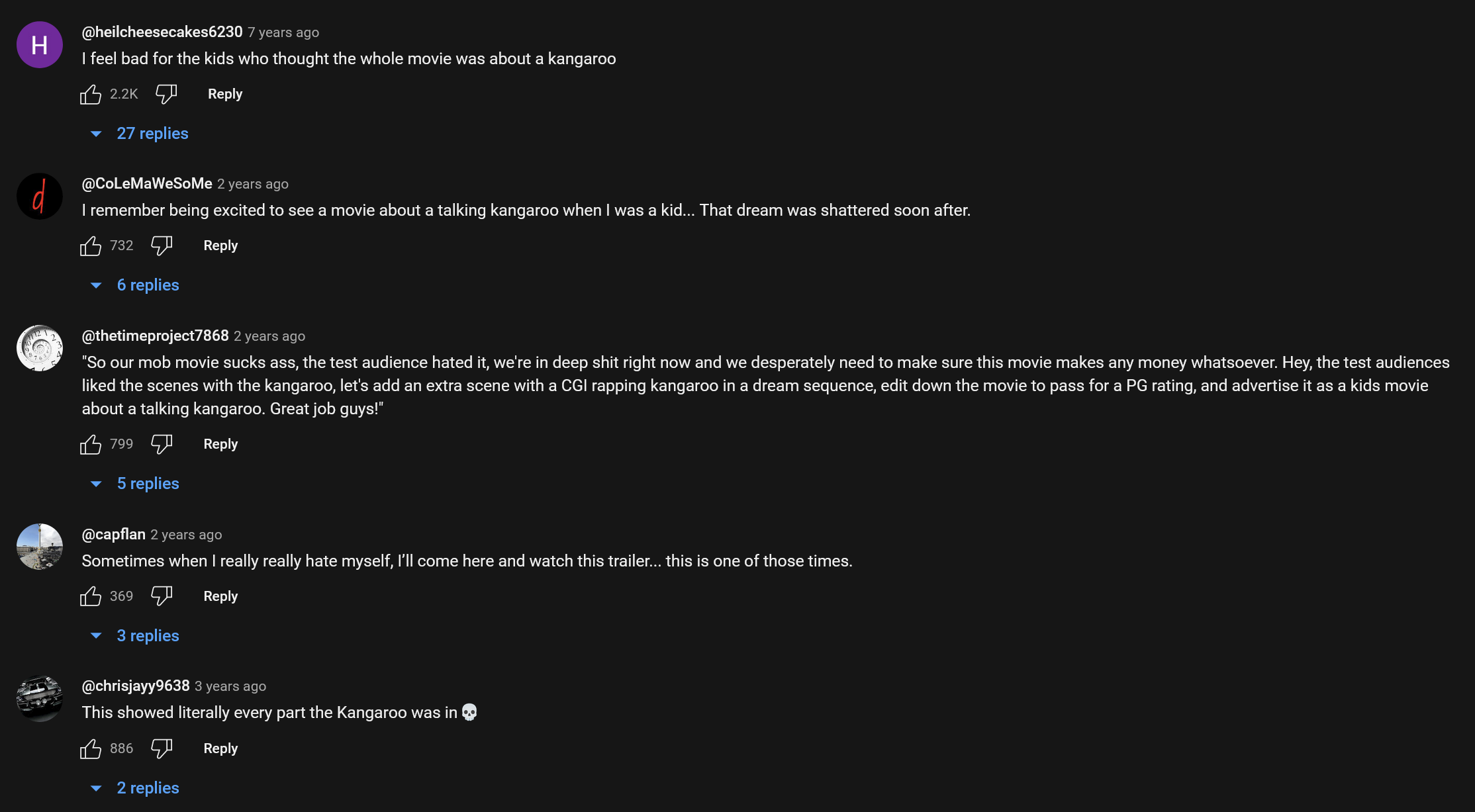
Just don’t put a rapping kangaroo in your trailer if the campaign is not going to prominently feature a rapping kangaroo.
Central Tension
The central tension is usually the villain, but your campaign may not have a specific villain but rather a series of villains. Even so, there’s likely something at the center of the setting that creates tension and generates conflicts.
- Factions or rivalries that act as a backdrop.
- A distant, evil overlord the heroes will never fight, but they clash with his minions.
- A deep mystery the heroes may eventually learn the secret of (but not fix).
Cool Stuff
- A pair of metal-dissolving rust monsters coming for armored adventurers
- A company of well-armed knights marching, banners fluttering
- A figure on a flying carpet whizzing overhead
- Men on horseback, galloping thru the night
- An army of hobgoblins raising their battle cry
- A dark figure lurking in the shadows with a large dagger
- A wizard weaving an awesome spell
- An armored knight lopping off the head of an ogre
- A high priestess performing a healing restoration of a lost limb
- Small figures of adventurers climbing a huge statue carved out of a cliff
- A roguish character swinging on a rope across the deck of a ship
- Two hell hounds gnashing their teeth
- Evil priests chanting in a summoning circle, lit by hellish flames
- A heavy sack splitting open and spilling gold coins and human bones
- A startled adventurer saying, “We’re trapped!”
You’ll need to think about how you might fit these in and what would be happening. But just thinking of cool things for the trailer could inspire your creativity to fit them into the campaign. Asking yourself questions is a good way to get answers. Telling yourself a story is a good way to figure out motivations of NPCs.
 zarban.com