


I created one of these a few months ago to help people build a campaign quickly. You just need to answer a few questions…. or at least roll some d6s. Gavalonia is inspired by 16th-century Italy (Border Crowns), Greece (Low Crowns), and Slavic lands (West and High Crowns) wrapped in a bit of Holy Roman Empire.
This setting might be enhanced with aspects of Acheron’s Brancalonia setting.
Based on a very old post by Jeff Rients.
What is this realm and where do we start?
Itasca, one of the western principalities of the Gavalonian Crowns, a loose empire built on the ruins of the ancient Empire of Gavalon. The cities and castles control the land immediately around them, but the land in between has become lawless wilderness, including such ruins as the ancient capital, Urbus, on the Great Lion River, near the center of the empire. Those cities are places of high magic and politics, but little religion.

Gavalonia has fantastical things like floating castles, aqueducts, flying ships, marble fountains, and cities lit all night by magic. Because high-level spells tend to make wizards go mad, wizards may create cursed magic items or build bizarre dungeons. There are many wild magic zones. The common tongue is Vigente, but the learned use Iominic, the language of the old empire.
Most of you grew up in and around the market town of Pacita, in the foothills of the Delpine Mountains, three days away from the nearest city, Milara, the crossroads of Itasca. You always dreamed of one day crossing the Delpine mountains to the south and visiting Tuscara, fabled for its arts, across the water to Pontavilla, famed for its bridges, and–in the south, Portovinia, capital of the empire.

Where Do we buy equipment? And with what?
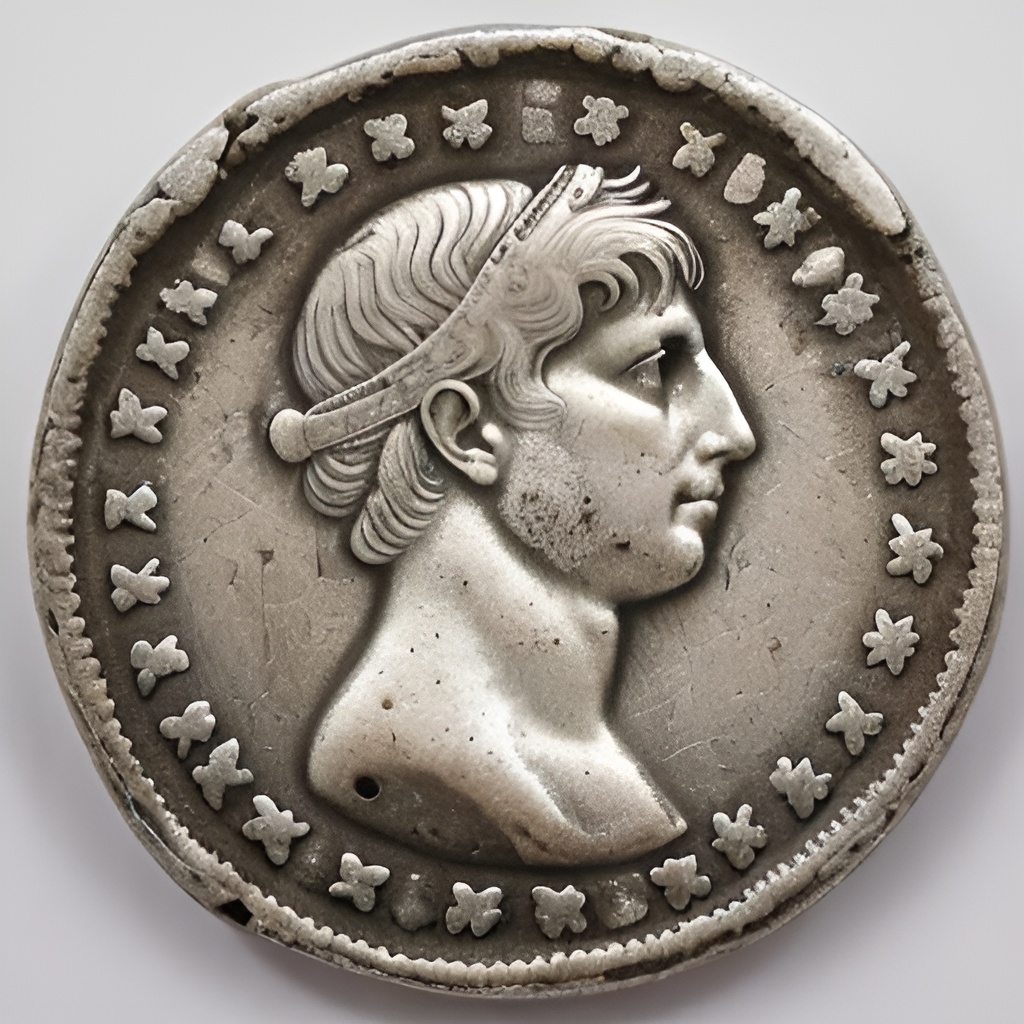
The coins of the realm are silver scudos (minted in several cities) and gold ducats (from Ducatia) or florins (from Florina). However, old imperial silver argientos and gold auros often found in ruins are virtually identical to the current coins in size and weight.
- The piazza of the town of Pacita on market day.
- The forum of the city of Milara on all but holidays.
- The Great Forum of the capital city of Portovinia on any day.
- The Imperial Day festival at Andromati in the Low Crowns.
- The flying storehouse ship of Micalo Timus, wherever it lands.
- The secret Shadow Market in the Alaramian Quarter of Tuscara, when all manner of exotic items is for sale, including the illegal, immoral, and magical, and the wealthy attend in disguise and costume.

Where can we get custom armor?
- Portovinia has expert armorers. Visit their shops on any day. The experience will take time, so order before one adventure and pick it up before the next.
- Milara has very capable smiths.
- Vezzena, to the southwest, can provide foreign armorers who specialize in hides.
- Dromia, pastoral town in the Low Crowns, is the source of good elven armor, when winter weather keeps them indoors.
- The Great Vale in Yeolond has the finest elven smiths.
- The dwarves of Khol are the greatest armorers.

Whom are we going to meet and get to know?
Note: Names are patrilineal, but nobles and royals use a number, because they are typically named after their fathers, resulting in a string of the same name (Marco Marco Marco Marco is Marco Quarto), but independent women use their matrilineal name. However, in the Low Crowns, names are in the more ancient style and followed by an identifier for your profession or other differentiator. In both cases, people are sometimes known by their name and homeland, as “Fedo di Tuscara”, if they are widely known. Mastro/mastra is used of any master wizard.
- Davitio Davitio Regio Principo, the city prefect of Milara, whose ambitions leads him to scheme with shady merchants, smugglers, and even adventurers.
- Elenia Silvana Andrita Slava, the town prefect of Pacita, whose grandmother was bought out of foreign slavery but ran away from indentured servitude and raised her daughter in a forest as a ranger. Her manner is earthy.
- Tomo Dicto Giuvo Branco, the apothecary, who makes exotic plants and monster parts into potions for the right price.
- Mastro Zovius Sagatius, the Elven sage in the wilderness near Milara, who knows so much about so many topics, but especially the Old Empire.
- Dimio Gianno Marco Luco, taverner (and ex-martiale in the army), and his daughter Melita, who gossips about the royals as much as about adventurers.
- Quuto Regio Micalo Vintero, physic of Pacita, a pleasant healer who holds little stock in the old gods (except Prova).
What is the nearest tavern like?
- The Imperial Stallion is known for the finest wines.
- The Medusa is known for its music.
- The Half Auro is known for its storytellers.
- The Desert Trader is known for its foreign clientele.
- The Hammerhead Shark is known for its dangerous clientele.
- The Rose is known for its political intrigue.
What is there to eat around here?
- Sausage, bread, and cheese.
- A bowl of chickpea polenta with sausages.
- A plate of lagana: wide, flat pasta layered with ground meat and white cheese.
- A bowl of semolina gnocchi in white cheese dressed in butter and sage.
- A plate of noodles covered in a sauce of butter and white cheese, or–from the empire’s new colony in the Distant Lands across the Great Sea, “tomato” sauce.
- A feast of tuna poached in olive oil, braised leaks with saffron, and roast suckling pig, with a sugar sculpture of a lordly lion.
What is my cleric’s religion?
Religion is neglected in the Gavalonian Crowns, but physics (doctors) nonetheless get their power from it. Holy days are mere holidays with faded traditions. Physics are given the title Don/Donna, while monks and friars are called Brother/Sister. These, along with nobles, still wear togas for many occasions.
- A physic secretly dedicated to Qualus, god of knowledge, life, and light.
- A physic secretly dedicated to Prova, goddess of war and trickery.
- A monk of Prova, who has left the monastery on a quest in disguise.
- An aspirant of Prova, living the life of a thief and friar.
- A druid of Cimatte, neuter godhead of nature and storms.
- A foreign cleric of Qualus, hoping to revive faith in the gods in the empire.
Where can we get disease cured, curses lifted, and the occasional resurrection?
Any sizeable city will have a hospital or infirmary where healing and other services of mercy can be had for payment. Here and there, other followers of the gods may be of help–if you’re willing to trust someone who is not a licensed physic.
- Don Marco Quinto Parillo Fasto, head physic of Milara.
- Donna Magia Unia Oventia Antia, physic of Portovinia, daughter of the head physic, Donna Unia Oventia Antia Trusia, thought dedicated to Quallus but actually dedicated to Prova.
- Brother Bogio Principo Giomano Mikalo, aspirant of Prova, currently imprisoned.
- Hevestoclas the druid, if you can find him in the wilderness and are willing to embark on a quest.
- Lecate the oracle, who sits atop Mount Polyntia to commune with Cimatte.
- The foreigner Delvac Harcoor, an avowed high priest of Qualus.

Where did all these dungeons come from?
- This region is rich with natural caverns expanded by speaking folk in the Age of Fear and before. Mankind left the caves and built cities, but monsters did not.
- Generations ago, the Bitter Death struck the realm, and the folk of many castles, towns, and villages were wiped out and the buildings abandoned.
- When the Gavalonian Empire collapsed, the provinces claimed sovereignty and warred among themselves, causing many villas and fortresses to fall into ruin.
- The Imperials commonly dug extensive catacombs for their dead, particularly the Endless Catacombs under the ancient capital city, Urbus, now in ruins.
- Troglodytes and dwarves love digging tunnels and mines, and this region is rocky and stable to dig in. When the creators abandon them, others move in.
- In ancient times, the centaurs dominated the steppes and raided many monasteries, leaving them in ruins; they never recovered.
Who is the most powerful person in the land?
Towns and cities are run by a prefect appointed by a council. Above them are cavaliers, then the nobles (seiniors [lords], counts, and dukes). Among the princes, one is elected emperor. Many seiniors and counts do not posses much land but rather run merchant empires or serve as courtiers.
- Emperor Risso Settimo and his wife, Tessinica.
- Emperor Risso the Weak, who suffers from ill health and fights constant intrigue.
- Emperor Risso the Mad, who suffers bouts of madness and fights constant intrigue.
- Empress Tessinica and her husband, Prince Risso Quarto, the prince consort.
- Empress Tessinica the Dark, whose cruelty invites constant intrigue.
- Prince Ellio Dacio Quarto, rich rival of Empress Tessinica.
Who is the greatest warrior in the realm?
- Prince Calo, who rules Giustani [jus-TAH-nee].
- Holbi Warhammer, dwarven champion of Princess Ianna of Massenia.
- Cogan Twiceborn, foreign champion of the underage Prince Tyro of Drache [DRAH-kee].
- Pirolytus Sylvanus, champion cavalier of the elves.
- Cupio Bogio Calo Giomano, ranger of the West Crowns.
- Antima Gianna Evena Evena, heroine of Capolas.
Who is the mightiest wizard in the realm?
- Archimastro Cosimo Giano Edo Petro, the Imperial Archmage.
- Archimastro Dimo Tomo Caro Marco, sorcerer to the Prince of Itasca.
- Archimastra Nervaxa Magista, sorceress and sister to the Princess of Tebas.
- Archimastra Teledonnis Cantripo, mad sorceress of Gold Peak Mountains.
- Archimastro Ancoletas Pyrus, Headmaster of Scolari Telemagias.
- Archimastro Tu Faldor the Wanderer, the Elven archwizard.
Is there a magic guild? Where can I find an alchemist, sage, or other expert?
A sage is a wizard who does more study of arcane lore than practice of it. An alchemist is a wizard who concentrates on potions and magic items than spellcasting. An apothecary is a layman who mixes up salves and rat poison and varnishes.
- Universitas Collegium in Portovinia is the chief school of magic–and indeed all knowledge–in the empire.
- Universitas Milaro is the highly-respected school of magic in Milaro.
- Collegium Ducatia is the school of magic in Ducatia, famed for its wizards.
- Collegium Tuscaro is the elven school of magic in Tuscaro, famed for sorcerers.
- Archimastro Ancoletas Pyrus runs the Scolari Telemagias in the Low Crowns.
- Mastro Sorcam Nivar runs the unlicensed Magisteri Oscul in the Border Crowns.
Where can I hire mercenaries?
- Portovinia, if you catch up with Deja Dobrin, foreign Captain of the Gray Horsemen.
- Vezzena, on the coast, where foreigners enter. Watch your back there.
- In any city and even some market towns, if you’re not too picky about quality.
- From among Princess Inia Milo Quarto’s All-Stallion mercenary company.
- In the rougher parts of Milara, if you’re discreet.
- Try the Greenmen monks in the wilderness.
Is there any place in the realm where magic is outlawed or any other notable Legal hassles?
The law is upheld by armed folk of the watch under the local constable but also by magistrates, who are mid-level wizards.
- The gates of towns and cities are closed locked soon after sundown. And any about after the linkboys have gone to bed are arrested and held until morning.
- The principality of Tebas has outlawed all fire magic.
- You cannot carry weapons on any court administration grounds.
- Injurious magic is outlawed in villages, towns, and cities, except when the place is under attack.
- You cannot wear weapons or armor of war (meaning leather and daggers are allowed) in a city, and they are regarded with hostility in towns.
- Any divine magic but that of the physics is considered evil witchcraft.
What monsters are terrorizing the countryside?
- Untold undead in cities as well as ruins and evil temples
- Giants and cyclopses in the mountains
- Troglodytes in caves
- Manticores and medusas in ancient ruins
- Giant squids off the coast
- Centaurs in the central steppes
What are some points of interest?
- The Fallen Castle, a formerly flying castle that crashed in the countryside as the result of a battle many years ago.
- The Galleria di Confordia in Tuscara, where celebrated paintings and sculptures, many of them centuries old, are on exhibit.
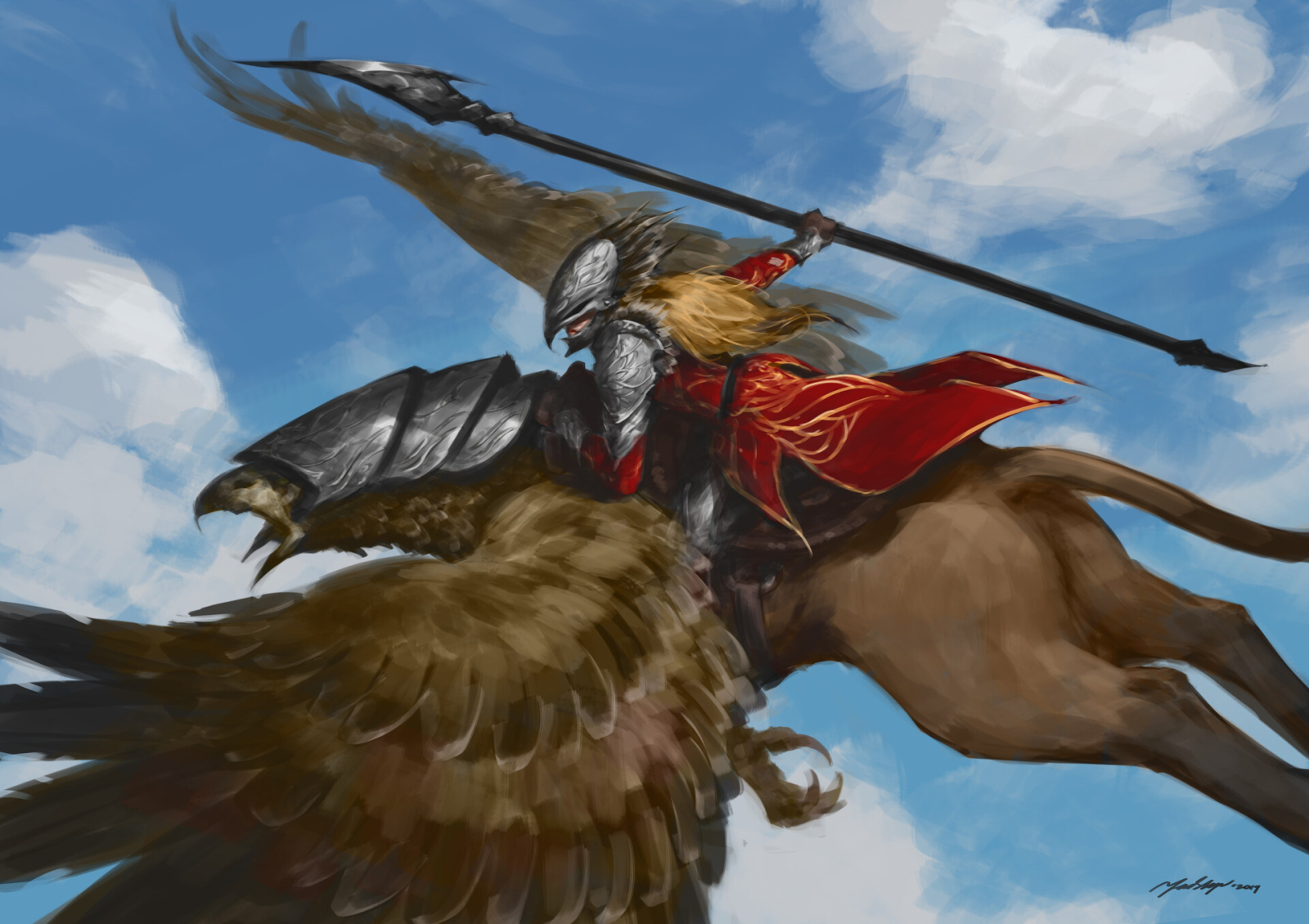
- The changing of the guard at the Imperial Palace in Portovinia, where griffon cavaliers trade off with pegasus cavaliers.
- The Ship of Dessia, the largest ship in the known world, built by the heroine Dessia Antiklas 1000 years ago and still in use as a cargo ship.
- The great marble Palzzi Fountain of Tuscara, whose figures celebrate the gods, unicorns, centaurs, horses, pegasuses, and hippocampuses, horsekind generally being associated with flowing water.
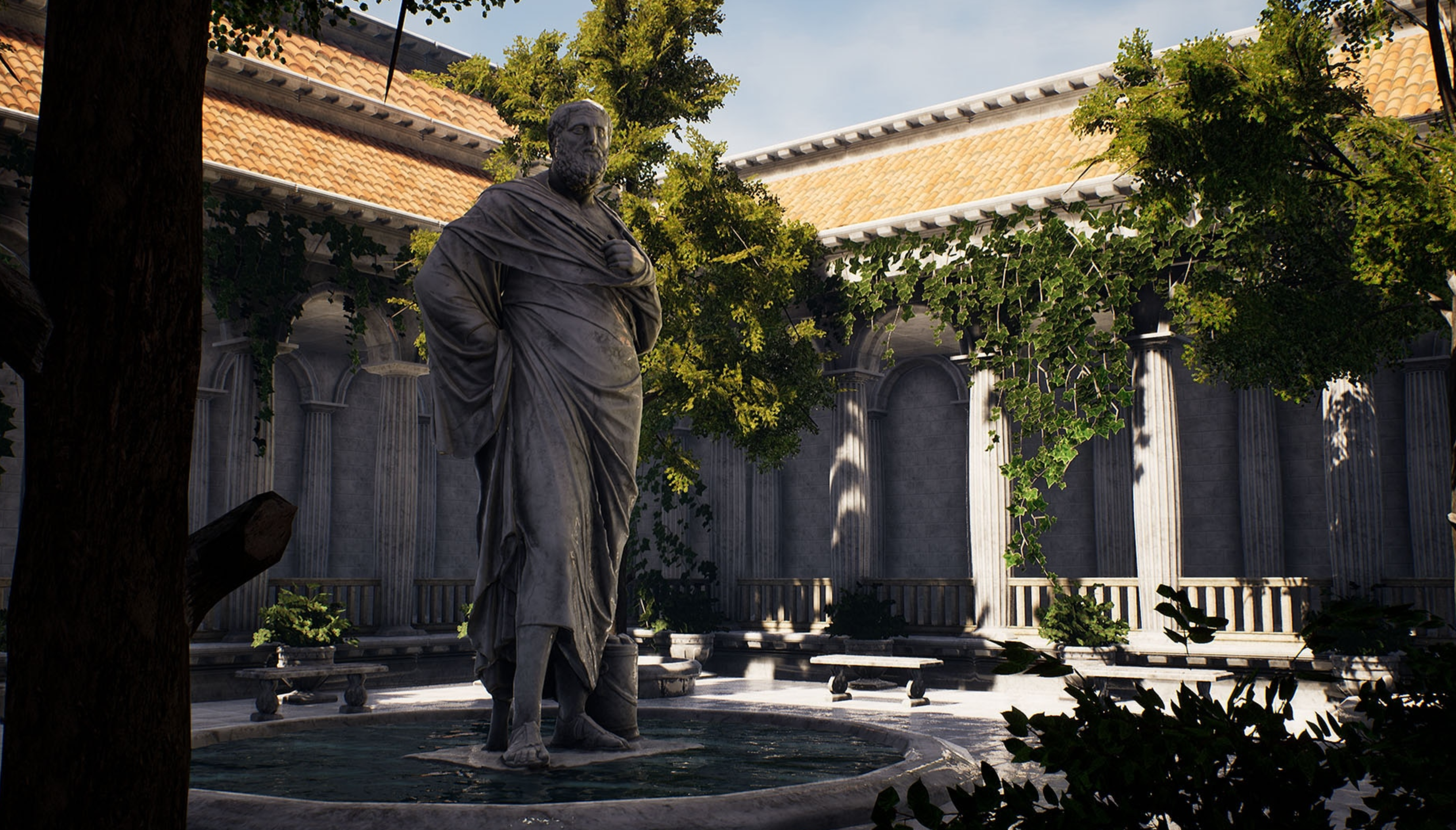
- The Hall of Heroes in Portovinia, where great marble statues of past heroes of the empire stand.
Are there any wars brewing I could go fight?
- The Prince of Benevida has designs upon his late cousin’s lands in neighboring Scolata, a common occurrence across the empire.
- The Alaramian corsairs of the Green Sea threaten trade every day in the Alaramian Sea with their pirate fleet.
- The centaur clans of the steppes seem poised to strike in something greater than a raid, if they can’t be appeased.
- In the Principality of Contua, the Duchess of Florina has challenged the Count of Monte Vida to a “duel of champions” over her broken heart.
- Yeolonders of the neighboring Kingdom of Iominia continue to harass the Western Crowns over their former holdings.
- The giants of the north continue to be a thorn in the side of the princes of the High Crowns.
How about gladiatorial arenas?
- In Milara, Arena Luctatia entertains the people with gladiator-like wrestling and violent games of calcio di bullo (kicking a ball into the opponents’ goal).
- In Tuscara, Arena Gladiatoria still operates, altho the battles are no longer to the death (but still often lethal). Most gladiators are criminals.
- In Ducatia, Arena Scelesto offers anyone the chance to fight a criminal or monster for a prize, and they pay well for captive monsters.
- In Andromati, there is wrestling and skirmishing in the public square (plazza agora).
- In Portovinia, Arena Monstra entertains the public with gladiators fighting monsters, and they pay very well for captive monsters.
- In Alaram, beyond the Gold Peaks and the Fire Wastes, champions fight to the death for the pleasure of the sultans.

Are there any secret societies with sinister agendas I could fight (or join)?
- The League of Night is an association of clerics of Prova and sympathetic others who hunt down and destroy undead discreetly.
- The Cahadi are foreign assassins and spies (Qa’di from Alaram) hired by nobles to assassinate one another or sow unrest in each other’s lands.
- The Shadowmasters Guild is a syndicate of spies, sorcerers, clerics of Prova, and ruffians who seek to rob and harass nobles who rule as tyrants.
- The Shadowmasters Guild is a syndicate of spies, sorcerers, clerics of Prova, and ruffians who rob, pillage, and pirate.
- The outlawed Cavaliers Palatine continue their efforts to be accepted again after they dared assassinate the evil Prince of Tebas.
- The outlawed Cavaliers Palatine, often called the Black Brotherhood, continue to terrorize the countryside after assassinating the good and true Prince of Tebas.
Any legendary lost treasures I could be looking for?
- The Sword of Embrassa di Valenta, which is said to aim true to the heart.
- The burial place of Marcus Gavalicus Eques, the first emperor, which was lost.
- The Ring of Inkatas Venubias, which offers immunity to petrification and poisons.
- The flying ghost ship The Brass Dragon is said to have been carrying a great treasure when its crew was corrupted into becoming undead.
- The Crown of Chakkan the Great, who destroyed the old empire, which would be a great prize to shake at the foreign scum in Tologne across the sea.
- The Treasure of Emperor Virennius, which was buried with him somewhere in the Endless Catacombs under the ruined city of Urbus.
 zarban.com