

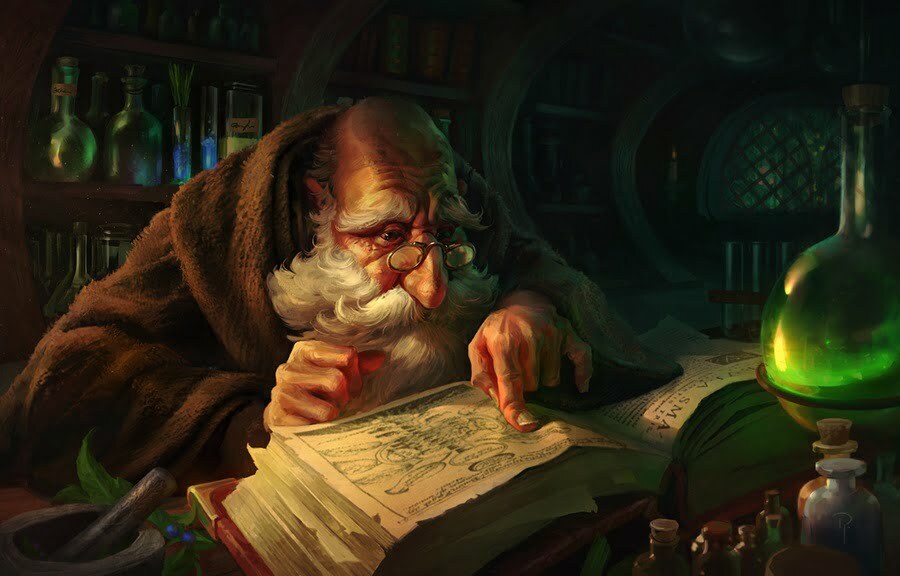
I never really made use of sages back in the old days of playing D&D. If I had thought about it, I suppose I would have liked the idea of a font of knowledge the heroes could consult now and then. I should have made use of them them, and so should you.
The first question to answer is what, in your campaign setting, is a sage? In 1e, a sage was explicitly a magic-user, cleric, or druid of 3rd to 6th level who is an expert in one field but very knowledgeable generally as well. In 2e, a sage is just an expert; no mention of spellcasting ability. In 5e, a player character can have sage as a background. That doesn’t make sense to me.
So I suggest you make sages spellcasters who found they preferred research to casting spells or who got too old for the rigorous discipline of advanced spell-casting. They are therefore usually of fairly modest level, because they spend the bulk of their time studying and researching rather than adventuring and experimenting. They can still cast their spells, but they never advanced beyond 7th level or so. They tend to be people of advanced age, altho elves may not show it.
I imagine other spellcasters would regard them as eccentrics, a bit like Horace Slughorn in the Harry Potter series. Perhaps your sage could have an unfortunate secret like Slughorn’s that links the character to the central tension that acts as your campaign’s backdrop.
Using a Sage
To ensure the heroes seek out a sage, you should invent some questions they can’t answer on their own and have some NPCs point them in the right direction.
- Sages should be able to help identify magic items and give a bit of lore about them or tie them to some bit of lore about your campaign world.
- They should be able to deliver or explain the ramifications of the news of the day.
- They should be able to fish out some old tome or handbook that contains the deep knowledge the heroes need. Maybe the sage can even find a partial map of the place the heroes want to visit and sell them a copy. Or the sage might find a key to some old coded message the heroes have found.
- If the heroes make a map of a dungeon they’ve visited, the sage might buy it from them.
- If the heroes find a book or two, the sage might buy it from them.
Last, a sage is an excellent character to advise the heroes on their next course of action or caution them against some unwise action they’re considering.
Expertise
I suggest you forgo the dice rolling about what the sage’s area of expertise is and the likelihood of knowing the answer. Finding a botanist when you’re looking for a historian or finding a historian that doesn’t know the answer to your history question is a waste of everyone’s time, in game and out.
A sage should still have an area of expertise, but it should be broader than most lists suggest, and a sage’s knowledge should be fairly deep in nearly any topic. You want your heroes to go back to the same sage again and again for answers to life’s questions, especially at first. Why make things hard on yourself by making up a different one every time?
Instead, say that a given sage is fairly expert in all areas except one. Roll on the table below.
| d12 | Area of NON-Expertise |
|---|---|
| 1 | Art & Architecture & Music |
| 2 | Astrology & Astronomy |
| 3 | Botany & Fungi & Algae |
| 4 | Cartography & Geography & Geology |
| 5 | Engineering & Mathematics |
| 6 | History & Legend & Folklore |
| 7 | Languages & Customs & Migration of Populations |
| 8 | Law & Genealogy & Heraldry |
| 9 | Metaphysics & the Undead & Planes of Existence |
| 10 | Oceanography & Weather & Shipping |
| 11 | Zoology & Monster Lore |
| 12 | Religion & Tradition & Acts of the Gods |
It’s nice to sometimes have their regular sage send the characters off to another sage with a deeper understanding of their mystery. You might make up a different sage for each major city your heroes visit. Then the characters can go to the nearest city for convenience and variety.
A sage’s chance to answer a question is based on its obscurity, using his or her intelligence modifier.
- On a natural 20, the sage knows the answer immediately. 100 gp, please.
- On a success, it takes a few hours. Come back tomorrow with 200 gp.
- On a failure, the sage can check again every day, & charges 100 gp per day (payable in advance each day).
- After three failures, the sage doesn’t have the books to answer the question and recommends a different sage, who gets advantage on rolls for this question (and closely related questions) only.
- The difficulty is 10 for general information, 15 for obscure information, & 20 for unknown information that must be discovered or pieced together.
You might also make it so that as they rise in level, the next sage is also more knowledgeable than the last. After all, NBA players don’t go back to their high school coaches for tips too often.
You can have the player pay a sage in gold, perhaps 50 or even 100 gp–hand-copied books are very expensive, and sages can’t function without plenty of books. They may also need space to work on experiments to answer some questions. And a sage might occasionally ask the heroes to look into some question or solve some mystery (and perhaps for future answers rather than pay).
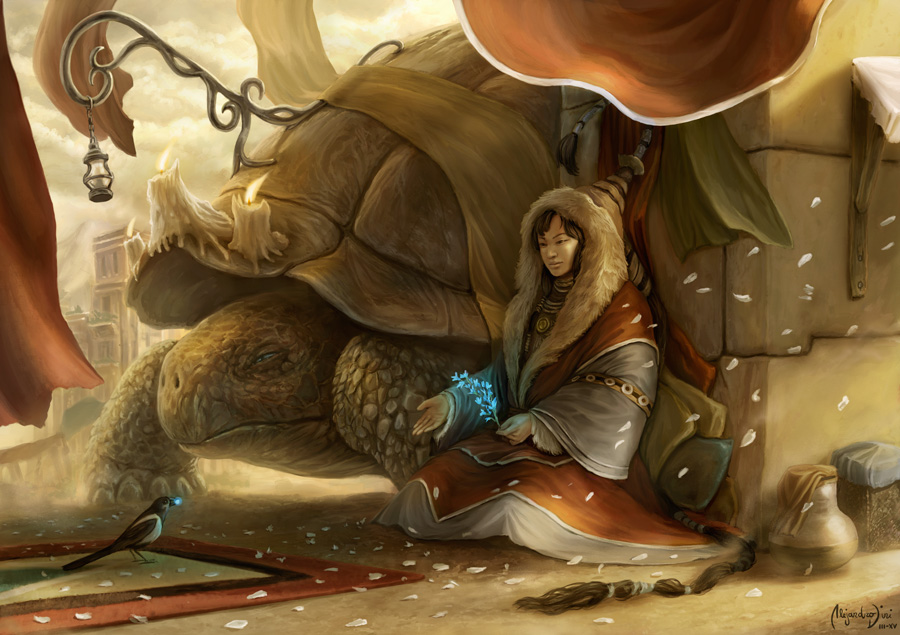
8 Sages
Sages are often of fairly modest level, because they spend the bulk of their time studying and researching rather than adventuring and experimenting.
1. Quanus the Wise
Quanus is a clean-shaven, bald-headed man who enjoys a discussion on any subject. He asks as many questions as he answers. His principle area of expertise is history, legend, theology, and traditions of this realm and beyond. He is a 6th-level wizard.
2. Fidela Tempest
Fidela is incredibly knowledgeable about beasts and monsters, but she is surprisingly well versed in general knowledge as well. She is a willowy spinster with an odd accent. She loves monster carcasses and body parts and may require them as payment. She is a 5th-level druid.
3. Harcourt Fallows
Harcourt is an expert in the law and how it is affected by the kinship of nobles. He is quite fat and enjoys a good tale of derring-do but tends to drone on about the goings on at the royal court. He has definite ideas about how the only real courts are noble courts, and the courts of law are mere conveniences. He is a particularly good source of help getting a coat of arms or identifying one. He is a 5th-level cleric.
4. Toz Mantel
Toz is a 6th-level cleric with a foreign accent. He is an expert on metaphysics, the undead, & planes of existence, and it has made him very philosophical and a bit morose. He is a lean and triangular-faced fellow who often ties questions about this realm back to the metaphysical realm.
5. Idrena the Gray
Idrena is a graceful and lovely elven woman with a deep interest in languages and the migration of peoples that affected language, but her knowledge is broad. She is a 6th-level wizard.
6. FFolks Wildbeard
Ffolks is a fit and manly dwarven engineer who maintains a laboratory workshop at the back of his home, where he experiments with windlasses and model siege engines. On any given visit, Ffolks and his assistants may be putting out a fire or dealing with an overflow of water in a model aqueduct or water mill. He is a 7th-level wizard (or artificer, if you have such a thing).
7. Cink Wetthorp
Cink is a lean, rat-faced fellow of affable disposition with great enthusiasm for cartography and geography and a fondness for unusual rocks and tales of odd geological formation. He may go off track a bit in answering a question by connecting it to other points of interest in the same region. He may accept a nice map (land map, not a dungeon map) as payment for his services. He may also pay heroes (in future answers, if possible) to search a certain location.
8. Lark & Lenia TRuckleburrow
Lark & Lenia are a pair of aged halflings whose combined knowledge is broad and deep, but whose particular joy is botany and particularly fungi. Their half-hole house a veritable garden of mushrooms and toadstools, some of which are quite delicious and others quite toxic. They go on and on about how kobolds and gray dwarves grow excellent crops of fungi and other plants without the need for sunlight to supplement their diets when meat is scarce.

 zarban.com