

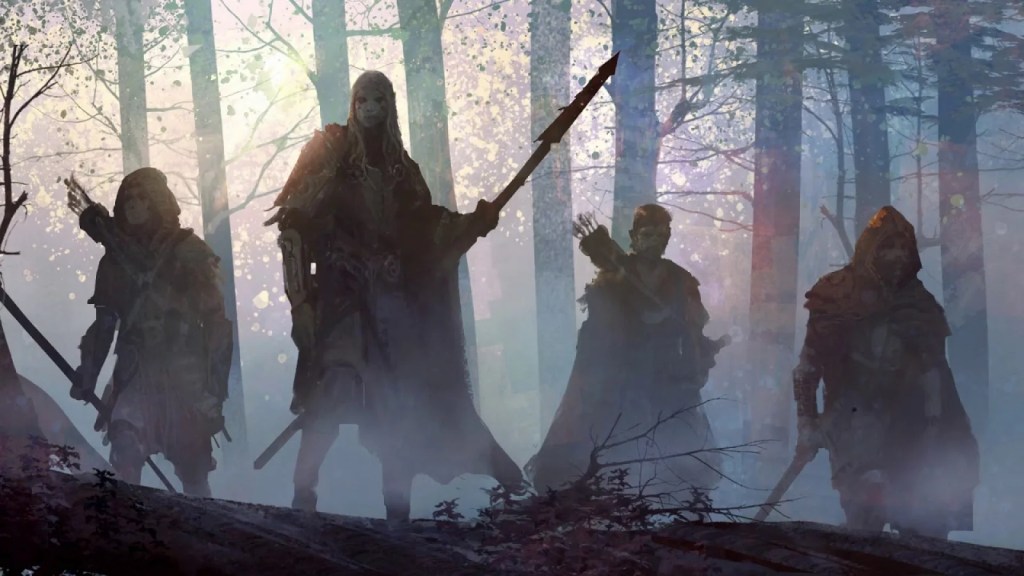
While you’re world-building and cooking up factions and whatnot, don’t forget to assemble at least two or three other adventuring companies. Not only do they make your world feel more lived in, they can be immensely useful.
Information
NPC adventurers are great sources of information and rumors. What did they find in the wilderness they explored? Did they bypass a ruins on the way to deal with orcs? Did they encounter a giant they bribed with food to leave them alone?
Examples
You can use NPC adventurers both to demonstrate what is possible and also what not to do. If your heroes see some NPCs getting knighted for their valiant deeds or showing off magic items, the PCs will get an idea of how things could go for them. If they see NPCs getting declared outlaws for killing an official or for using dangerous magic within the city’s walls, your players will make a mental note.
Legends

Some NPCs should be legends in your campaign world. They can serve as background characters engaged in political intrigue and high adventure. Most nobles should be high-level warriors, given that real feudal lords were both landlords and warlords.
They can also serve as examples of what could come at later, high-level play but also as benchmarks for the PCs to measure themselves against. If Master Sorcerer Calcon was named to the High Council of Sorcery, one of the PCs might one day achieve the same. If Sir Andric is killed by the Firedrake of Montiparo, the PCs might decide to avenge him–when they are higher level.
Such legends are a good way to incorporate big, dramatic monsters or armies into adventures with low-level PCs. The legends can task them with just holding one gate against the foes there, while the rest of the battle rages elsewhere.
Spares
NPC adventurers who scale with the PCs can be used as spares for your own heroes’ party. If your company’s ranger is killed, the party could recruit the ranger from another company.
If the players want to take on some wyverns next, they can meet up with the ranger, who can say “My companions wish to go into the desert, chasing rumors of the lost tomb of Ankhahamon, but I want revenge on the mated pair of wyverns who killed a young girl from my town.” Now the character has a bit of backstory as well as some motivation that matches your players’. You can hand over the character sheet, and the NPC becomes a PC.
Rivals

NPCs can also be rivals of the PCs. If the PCs decline a bounty or ignore a certain rumor, an NPC company might pursue it and win the treasure instead–or return embarrassed failures nursing their wounds.
They could show up during an adventure, trying to beat the PCs to the treasure. The rivals might join a hostile faction or already be part of it and end up fighting the heroes. Or they could show up to help the PCs win an encounter you miscalculated and then demand equal shares of the treasure.
Allies
When the chips are down, the PCs may be able to call on other adventurers to help them out. They could band together against the otherworldly Gorbus the Blood-Drinker. Or one party could pursue the top of the Lamp of Thallicar while the other pursues the bottom, so it can be assembled to use against the Demon Horde. This is the opposite of those cases where the NPCs are rivals and take up whatever adventure the PCs declined. The PCs choose which adventure they prefer, and their ally NPCs help by doing the other one.
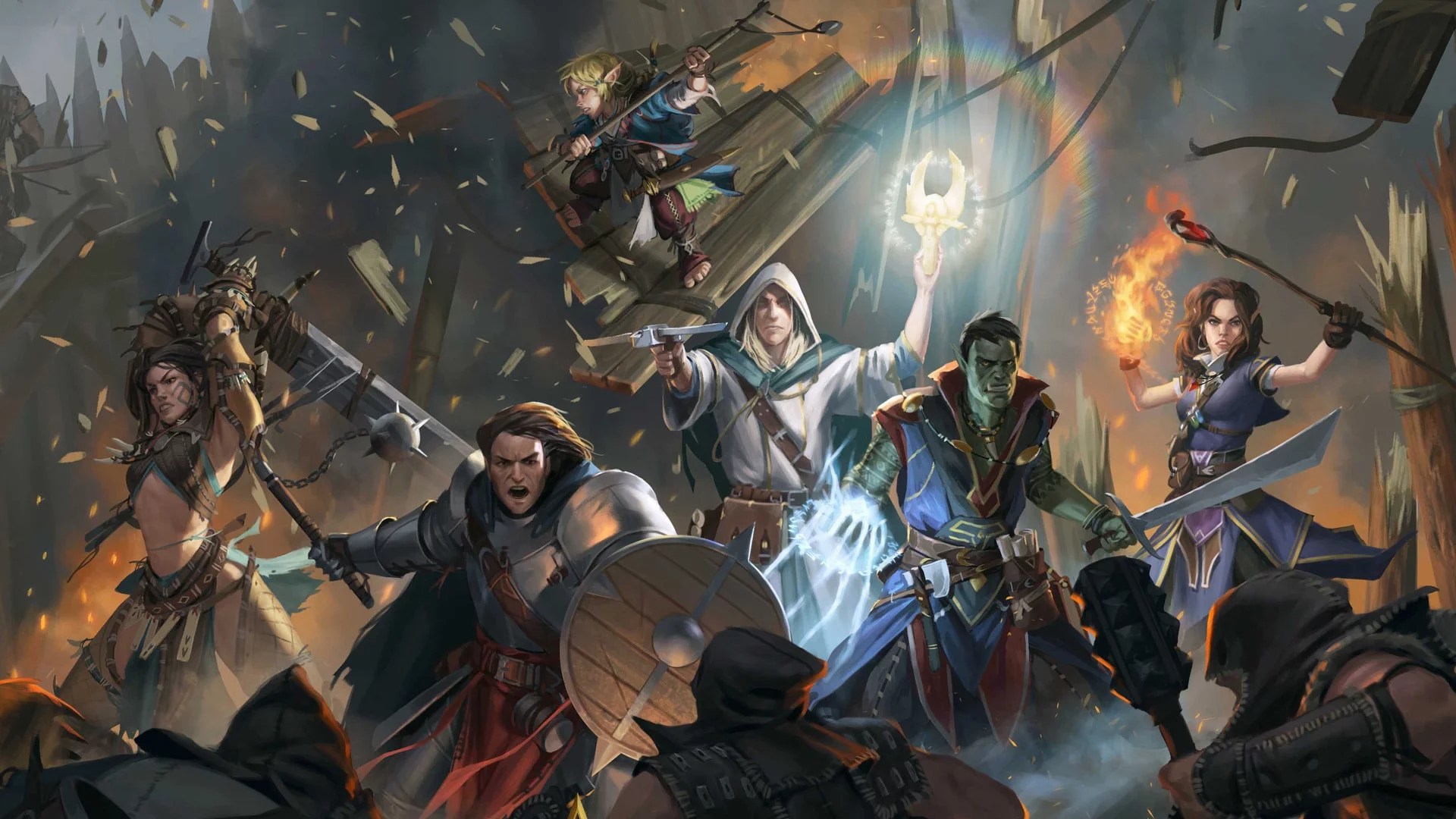
Introducing NPCs
The PCs can meet NPCs anywhere that it’s convenient. After all, if the PCs are there, other adventurers might be there, so don’t just seat them at the next table in the tavern.
They might be met along a road, on a wilderness trail, near a ruins they were checking out, in a crowd at a city event, at the trial (or execution) of an outlaw, etc.
If you want the the PCs to be well-disposed to them, have them help the PCs in some minor way without asking for anything in return. They could share information, advice, or equipment.
If you want the PCs to consider them rivals, have them accomplish something and get the credit, glory, and treasure, which is likely to make the players jealous.
Only if you want the PCs to consider them enemies should you have the NPCs actually do something nasty that affects them. It can even be indirect, like causing some trouble that prompts the city officials to announce that weapons can no longer be carried in the city.
 zarban.com