

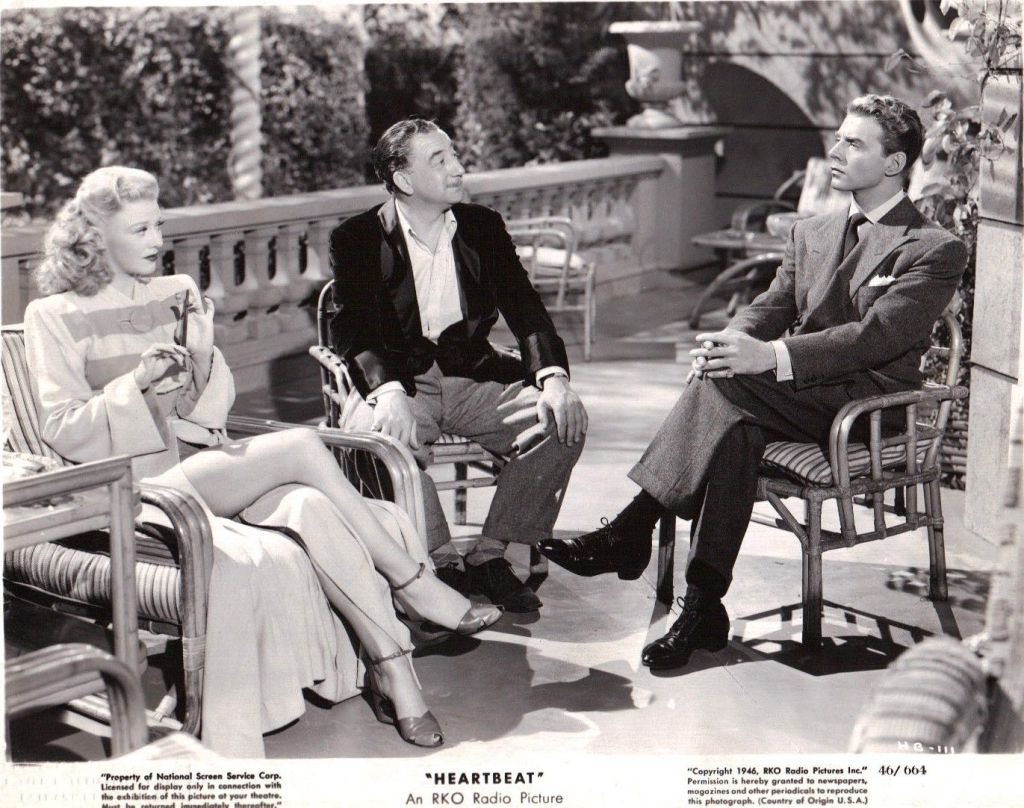
An escaped reform school girl gets mixed up with pickpockets and becomes entangled with and falls for a diplomat.
I’m breaking down movies by their three-act structure. What is three-act structure? I explain it here.
Note: I break the story down into five-minute blocks to make it easier to see the length of each section. Rough time codes follow.
Prolog
Professor Aristide runs a school… for pickpockets. 5
Aristide takes on another pupil, who proves himself by stealing money planted by Aristide as a test. Aristide does more teaching. 10
Act 1
Aristide mistakenly takes on Arlette–a reform school runaway–as a pupil when he mistakes her stealing bread for stealing the money (introducing the main hero). He teaches some more. 15
Arlette confesses to another student that she couldn’t steal. They agree she needs a fake marriage (the need) or, being only 17, she would be sent back to reform school. On the street, Arlette steals from an ambassador… badly (the inciting incident). 20
Ginger Rogers was actually 35 at the time, old enough to have a daughter of the right age. She was 31 when she played a young woman pretending to be only 12 in The Major and the Minor.
The ambassador catches Arlette hiding in a movie theater. Rather than take her to the police, he takes Arlette to the embassy, where he explains he needs her skills (the call to adventure). She pleads to be let go (refusing the call), but he and his friend, the baron, dress her for a ball, because the alternative is jail (the motivation). 25
Act 2
At the ball (entering the extraordinary world), the ambassador passes Arlette off as his niece. He asks Arlette to steal a man’s watch, that of Pierre de Roche. 30
This introduces the other hero a bit late. It might have been better to replace some of Aristide’s teaching with a brief scene of the ambassador and baron spying on Pierre and wishing they could do something. Aristide is, after all, a non-entity in the conflict.
Arlette gets a look at Pierre’s watch. Pierre talks to a friend, Roland. Arlette tries to get out of stealing from Pierre. 35

Arlette is spotted lifting Pierre’s watch while dancing. Inside is a picture of the ambassador’s wife, which she removes (into the wilderness of the scheming, cheating society types). The ambassador is thrilled to find no picture of his wife in the watch, as was rumored. He demands Arlette replace the watch, and she does, while dancing with Pierre again (plot twist 1). 40
The baron dismisses Arlette with a payment. Pierre insists on driving her. Roland taps Pierre for cash, and Pierre offers to let him stay at his house while he’s away. Pierre drives Arlette around, stops (at his own house), confesses his feelings, and kisses her. 45
This is very inappropriate behavior. Don’t tell underage girls you’ll take them home and then drive them to your house and try to kiss them.
Pierre takes Arlette to her “uncle’s house”. She lies about returning to boarding school Geneva, but it turns out he’s going there himself, and suggests they travel together (a crisis!). She waits for him to leave and slips away. 50
Midpoint
Back at Aristide’s school, Arlette changes but is confronted by Aristide. When he later learns from two of his men who saw Arlette steal Pierre’s watch, throws her out for apparently withholding loot (an extended crisis!). 55
At the train station, Arlette confesses the whole affair to Pierre (rallying her courage). By mistake, she ends up on the train instead of him. That night, having gotten off the train at the first stop and walked back, Arlette arrives at Pierre’s house, and he insists she stay in his guest room. 60
Arlette explains her marriage plan, but Pierre is still angry. The next morning, Roland shows up. Pierre suggests Roland marry Arlette, and he’ll finance Roland’s new start (plot twist 2). 65
Pierre tells Arlette of the plan for the fake marriage, and she agrees. He tells her she can stay in his house as well as Roland while he is away in Geneva. Pierre leaves but has second thoughts and returns home. Arlette and Roland seem to have settled in. 70
Pierre plays the guest in his own home, and Arlette shows she has learned from Roland how to be a society hostess. Roland asks for money and claims to be falling for Arlette. Pierre becomes jealous. 75
Arlette tries to charm Pierre, but it doesn’t work (the defeat)….
Act 3
…The ambassador’s wife visits and assures Pierre their affair remains a secret from her husband. She becomes suspicious, and Arlette parades a new dress in front of her (turning the tables on her rival). When the ambassador’s wife demands Pierre return her picture, Pierre shows her it has disappeared from his watch–whereupon he finds Arlette has put her own picture there, which charms him (the secret key). 80
Pierre has a change of heart, but Roland insists that marrying Arlette would ruin Pierre socially, and he relents. At the courthouse, Arlette backs out of marrying Roland. 85
Angered by the failure of his plan, Pierre rejects Arlette and leaves for an embassy reception (a last-minute setback). Angered by Pierre and his scheming, cheating friends, Arlette goes to the embassy reception. 90
Pierre changes his mind again, but Arlette is gone. Arlette hobnobs at the ball, putting fear into the scheming ambassador, his wife, and the baron. 95
All the mind-changing is too convenient to the plot. Pierre’s capriciousness is practically the real villain.
Pierre arrives and dances with Arlette. He confesses his love and asks her to marry him (resolving the central conflict of Arlette needing a marriage), and she agrees she’s just the person to get him out of scrapes (resolving his own need, altho it’s a bit manufactured). The ambassador and baron are too afraid that Arlette will expose their scheming to oppose the match and agree to play along with Arlette as the ambassador’s niece. 100
Epilog
Pierre and Arlette marry. (very brief)
 zarban.com