


I wrote awhile back about where all the dungeons come from in your fantasy RPG. The first entry talked about the tunneling humanoids. But I’m further inspired to differentiate these.
Now, I didn’t delve into any of the various splatbooks about humanoids or any version of the Monster Manual or its siblings. These is just my own conceptions of the various species of humanoid monsters and their lifestyles.
Keeping Monsters Monstrous

Personally, I dislike cute or weirdly hot monsters. Goblins or orcs (or even half-orcs) as player characters get “startrekified” into looking like humans in monster makeup. I like my monsters nasty, dirty, and pretty dumb.
The definition of a “monster” is a creature that eats (or otherwise kills) humans.

Monsters in my campaigns are immune to the plague that wiped out a big percentage of humans and some other civilized peoples many years ago, and so they feasted on the corpses and took up residence in the abandoned structures. As a result, the heroes live in something of a dark age, surrounded by creatures who consider them prey.
Of course, not all evil humanoids are monsters. Some are merely willing to hurt humans and other good creatures (perhaps leading to their deaths) for their own gain. Evil humans, dwarves, and elves fall into this broader category of simply “evil humanoids” that also includes humanoid monsters.
But any intelligent creature can be bargained with, if someone can speak their filthy tongue. If you look more prickly than juicy, a band of orcs may well accept some sort of deal to move off and hunt elsewhere rather than die at the end of your spear.
Goblins
Goblins make camp next to a hill and dig into it to create a warren where they sleep during the day. If possible, they expand a natural cave system or mine, so their tunnels are often haphazard and sometimes connect to passages and chambers occupied by other creatures. Being subterranean creatures, they prefer temperatures around 55° and so are less active outdoors in mid-summer; sunlight is so bright to them that they may wear helmets with tiny slits or avoid daylight altogether.
They may also take over abandoned buildings, especially if they have cellars, which the goblins can expand and connect underground. At night, they occupy the camps, making weapons and such. They post perimeter guards and retreat into their warren if attacked. They capture young dire wolves and raise them to be mounts.
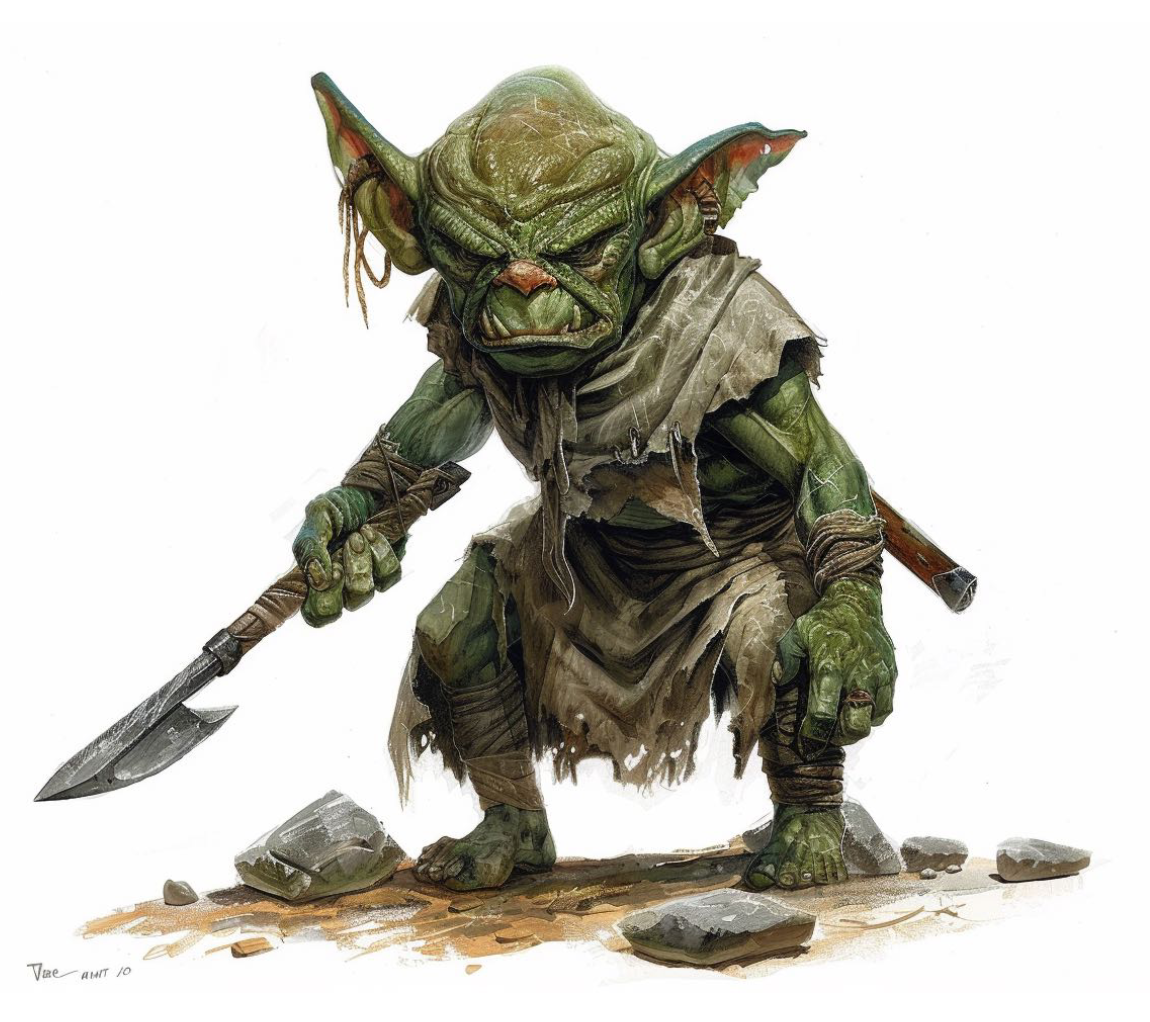
Goblins live on hunted prey, including people, as well as stolen livestock and foodstuffs, and they forage extensively for nuts, berries, fruits, mushrooms, and even plants considered toxic or otherwise inedible to civilized people. They cook a little, generally roasting, but also happily eat decaying meat. They’re not good at making fire and so don’t cook very regularly.
They occasionally raid civilized villages, mainly chasing the villagers into the safety of the manor house so they can carry away foodstuffs, weapons, armor, wood, tools, and textiles. They may seize and occupy a halfling village permanently, since they like the dwellings built into hills, but they typically dig deeper and connect the halfling holes together to be more like their warrens.
Goblin females and young often live apart from most males much deeper underground and are brought meat by the males. The young grow into runty warriors in a matter of months, and some females live as warriors among the males, hardly distinguishable from them.
Kobolds
Kobolds dig extensively but erratically into mountains, seeking ore they can trade mostly to dark dwarves for food, weapons, and tools. They create an extensive system of barracks and other chambers in addition to mine shafts. Like goblins, they prefer temperatures around 55° and so rarely venture on the surface in summer and, pained by bright light, never during the day.
They live on moss, mushrooms, algae, worms, and other things that can grow without sunlight (often growing on organic waste), as well as bats and livestock (mostly rabbits and pigs) they feed such food and the occasional hunted prey, including people. They do not cook or otherwise use fire. They fear fire in quantity, including campfires and torches, but lanterns attract them, since it means possible prey.
From time to time, they attack a lone trader and, when they have finished with him and his load of foodstuffs, fill the cart with ore and leave it to be found by surface folk. They do this in hopes of starting a trade relationship. And, indeed, certain unscrupulous merchants buy cheap human goods (including spoiled foodstuffs) and leave it for kobolds in the hills–a dangerous business.
Kobolds are egg-layers. Their leathery eggs start out about the size of a human fist, one or two per female, and are placed in a bed of vegetation, dung, and meat scraps (essentially a hot compost pile) to absorb nutrients and stay warm. They grow rapidly for several weeks and split open to reveal a new kobold about 75% of its eventual size; after a few hours it can walk and even run and hungers for meat. Young kobolds are quickly taught the use of tools, weapons, and traps, and in a few weeks are indistinguishable from mature adults except by their smaller size. Kobold females are outwardly identical to males, and the creatures even spontaneously switch gender to even out the tribe, if too many males are killed.
Orcs
Orcs tend to make camps in abandoned ruins and use existing cellars and other underground chambers (often expanded or connected) as a kind of keep they can retreat into if attacked. They mostly sleep thru the day in their underground chambers and are active at night. They are not as industrious as goblins or kobolds are, but they maintain guards and send out hunting parties with haphazard organization. They capture young giant boars and raise them to be mounts.
They live on stolen livestock and foodstuffs as well as hunted prey, including people and monsters, and–rarely–forage for nuts, berries, fruits, and mushrooms. They will eat decaying meat but don’t prefer it. They cook, particularly roasting and boiling, and have little fear of fire. They commonly raid traders and travelers to carry off people, livestock, and foodstuffs. They rarely attempt trade except with other monstrous tribes of their own kind.
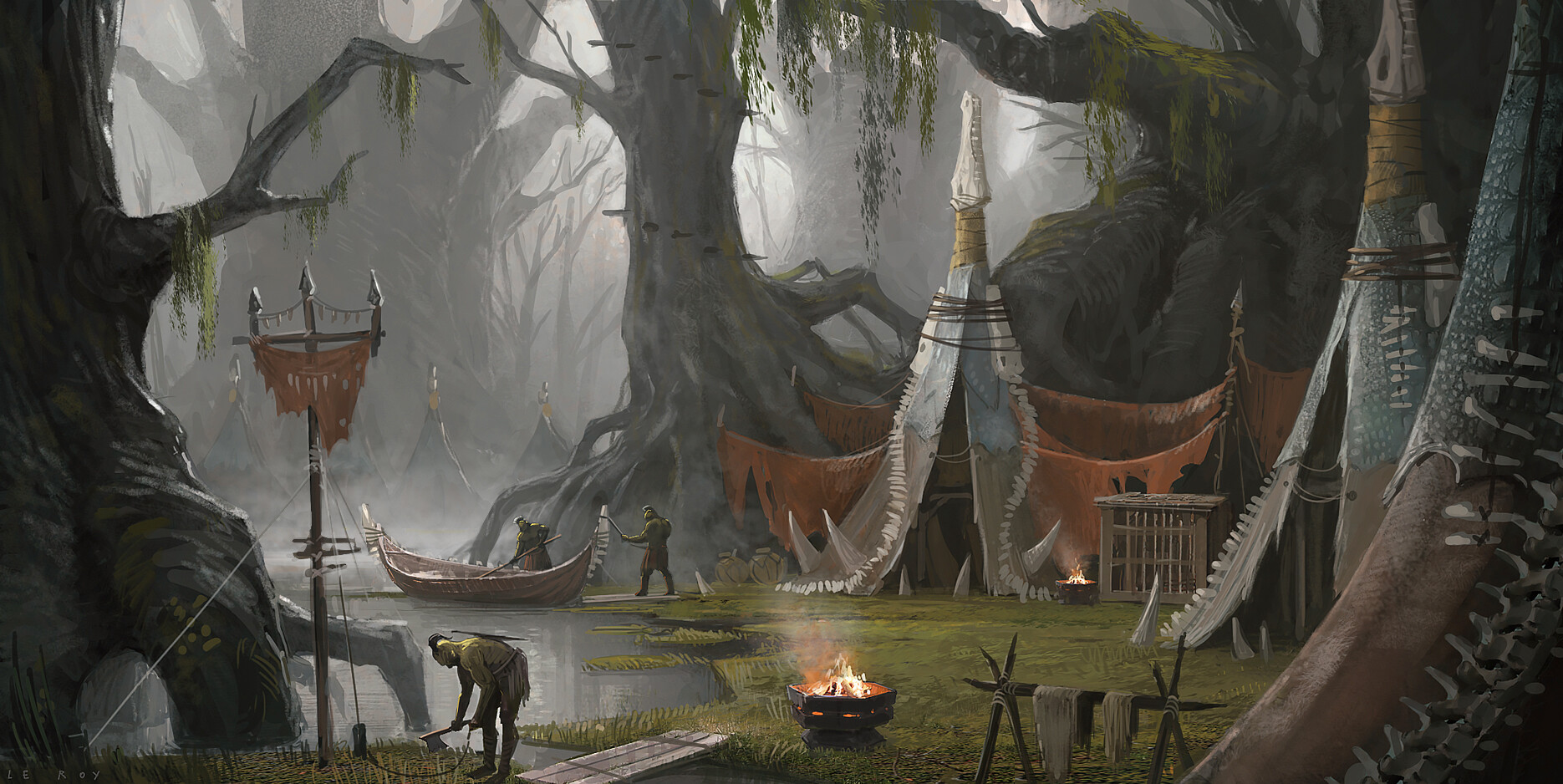
They will sometimes overrun and occupy human villages, manor houses, monasteries, and such that suit them. They especially like human- and dwarf-made underground halls and are particularly fond of monasteries built into the sides of mountains and hills.
Orcs bear live young in litters of two to four which grow so rapidly, if kept fed, that they’re able to become warriors in a few months. Orcs lie low during this time, which reduces their chances of being attacked. So, much of the time when adventurers would encounter them, there are no “young” in an orc camp. The females and young are usually kept hidden, away from the main orc camp, and often go out foraging, but they’re so stealthy they’re rarely encountered.
Hobgoblins
Hobgoblins occupy ruins or seized structures and use underground chambers mostly for storage. They may repair or even build fortifications, such as ditches and walls. They man them with guards and send out scouting parties and hunting parties with good organization. They may ride captured horses as well as dire wolves.
They live on the same sort of foods orcs do, but, like their goblin kin, happily eat decaying meat. They are competent at making fire and sometimes use it against their enemies.
They commonly raid civilized villages, manor houses, monasteries, and such and occupy them while gradually slaughtering the occupants for food. They especially like capturing small towns and monasteries, but do so by stealth and storm, not siege. They’re fond of ale, beer, cider, and wine and will drink even poor versions of them or ferment grains or fruit to make them.
Dark Dwarves
Most dwarves dig halls as keeps and use the stone to build surface buildings and fortifications. Deeper down, or separately, they dig mines for gems and ores. Dark dwarves don’t bother building surface buildings.

They live on many of the same underground things kobolds live on, but apply themselves methodically to cultivating them. They don’t care for fire but use it regularly to smelt ore and forge iron and other metals, but less so than other dwarves.
They don’t eat people, but they’ll take prisoners to try to trade them for goods and foods with surface folk. They’re especially fond of ale, beer, and cider and will drink even poor versions of them.
Dark Elves
The most unnatural of the dungeon dwellers, dark elves live in large natural caverns, where they cultivate the same moss, mushrooms, algae, worms, and other things that kobolds do, as well as cave fish and bats and the flesh of beastly monsters they hunt.
They rarely venture out of their deep caverns, and only at night to hunt bears, deer, boars, certain birds, and small game. They keep extensive and disciplined guards and foraging parties, much like surface elves of the wilderness. They raise giant spiders as mounts as well as a few other cave creatures.
They cook their food and revere fire. They don’t eat people, but they will take prisoners to try to trade them for goods with surface folk. They are especially fond of cider and wine and make good-quality versions of their own.
 zarban.com