


Procedural puzzles are a matter of following one piece of evidence to another until you arrive at a full picture of an event or some other solution. Use this sort of thing sparingly, and don’t chain too many together. Players are too unpredictable to assume they will follow or even find all the clues in a chain.
And keep in mind that puzzles of all kinds are easier and more fun when you’re in the mood and choose to work on them than when they are thrust upon you as an obstacle to your real goal, so keep them simple.
1. Registry Lookup
The heroes might be given some advice to look up a person or thing in a registry of some sort. This gives them information they need to take their investigation to the next level.
Checking a registry that then provides the information you need is a fun bit of procedural business that feels like authentic sleuthing. And it can yield shocking information about parentage or true identity.
- A church’s birth or death records
- A guild’s membership list
- An apothecary’s potion recipe book
- An inn’s guest book
- A historian’s chronicle
- A law court’s legal records
Of course, a registry can often be replaced by a knowledgeable NPC, such as a sage, official, or local priest.
2. Assembly/Repair
Another type of procedural puzzle (really just a general predicament) is when the characters find something in pieces that should obviously be whole, and they have to assemble or repair it. The parts should be obvious clues, but aren’t useful in themselves. This could be:
- A torn-up letter or broken stone tablet.
- A book missing its final page, and the final page, which means little without the context of the rest of the book.
- A flat object that, when set in place on a map, reveals what’s important thru holes.
- A half-finished, broken, or partly disassembled machine.
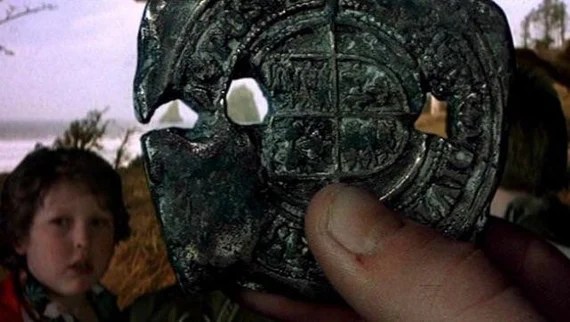
For many of these, you can make pieces out of paper or cardstock and let them physically assemble or arrange them. For complex objects, one clue can be a picture or diagram of how it should look. Or the heroes need two items to accomplish something, and they find one complete unit and one unit (perhaps a mirror image) in pieces.
For others, you might created a mini-game they have to solve to say they’ve repaired or assembled the item.
3. Trail of Bodies
Another way to run a mystery or thriller is for the heroes to discover a secret at roughly the same time as the villain. Then the heroes can sort out the clues but often be one step behind the heavies, frequently running into their handiwork. Now you don’t need the heroes to find and interpret individual clues, just to follow the bad guys’ trail of dead bodies and ransacked rooms.
At some point, the heroes will probably catch up to the bad guys and recover all the clues the baddies have gathered. Then they just need to puzzle out the final solution.
You can even turn this into a virtual dungeon. Evidence found at the crime scene points to locations A & B. Evidence at A points to B & C. Evidence at B points to A & C. Evidence at C points to the perpetrator.
4. Jumbled Puzzle
In this type of predicament, the heroes gather multiple clues they can’t make sense of without one particular final clue, a key of some sort. This final clue can be something like a cipher key, which allows the heroes to decipher messages that reveal everything. As soon as the heroes start encountering encoded messages, they’ll know they need to find a key. This will tend to drive them forward. Finding the key is a thrill.
The coded messages should be very clear and informative. They should answer the various nagging questions the heroes have. Of course, the key doesn’t have to be a literal cipher key. It could simply be a signet ring that finally makes the connection between some perfectly readable incriminating messages and the person sending them (“The owner of the owl signet ring is Jarzell!”). Or it could be an NPC coming forward to volunteer the connection between the strange goings on and the person behind them.
5. Process of Elimination
The simplest mystery/puzzle of all, this merely entails checking each possibility until the correct one is found. It’s important that the heroes know that they have all the possibilities, since if there may be others they may think they need to keep searching for additional possibilities rather than start examining the possibilities themselves.
These can come in the form of:
- A set number of suspects in a crime.
- A known number of locations where something could have been lost or hidden.
- A known set of things, like trying several keys to find the one that fits the lock.
- Taking statements from witnesses and identifying the one that doesn’t fit.
Combining Procedural Puzzles
Note that any of these can be just one puzzle of a larger adventure. You can give the heroes regular clues they can understand and follow as well as some that require a key.
These examples are build almost entirely of procedural puzzles, but yours should probably mix procedural puzzles with combat and other kinds of puzzles.
The Dead Merchant
The heroes discover a dead merchant with clues that point to a treasure, but when they find others to identify the body, they learn the killer took the vital clue: a key the merchant always wore around his neck. They then learn there was just a break-in at the merchant’s home. Following in the killer’s wake (a trail of bodies), they find at the merchant’s home that a hidden strongbox was opened, and they also turn up a mysterious torn note. They piece together the prop note you made (assembly); the writer was a priestess agreeing to guard the treasure after performing the funeral for the merchant’s second wife, but the piece containing the signature is missing.
An NPC points out that they can look up that death in the church’s death registry to find the name of the priestess (registry lookup). That leads them to go to the priestess to ask what she knows, which prompts her to explain things and provide the key connection the heroes need (jumbled puzzle).
It turns out the merchant’s stepson badly desired the treasure and vowed to one day have it, so the merchant entrusted it to the worthy priestess. The stepson eventually killed the merchant to get strongbox key but found the strongbox contained only the letter from the priestess (which the stepson tore up in frustration, retaining the signature portion). When the stepson came to her with news of the death and the signed portion of the letter, the unwitting priestess duly handed over the treasure. But the stepson can be caught on the road… with his dangerous companions.
Along the way, there could be a couple of combat encounters tossed in, both with monsters (random or somehow sent by the villain) and with thugs hired by the murderer.
The Lost Treasure
The heroes learn of a treasure supposedly lost during a siege of Castle Glerran. But the castle was ruined in the siege many years ago, and its location is forgotten. They consult a sage to identify its location (registry lookup) and narrow it down to three possibilities. One by one, they travel to each location until they find the ruins (process of elimination).
Encountering various perils and predicaments and minor treasures in their exploration, the heroes stumble on clues in the form of an encoded message and a map (jumbled puzzle). Eventually, they find the lord’s counting house (a place where treasure was kept and counted), where they find a secret vault with the lord’s codebook. They decode the message to discover the treasure was hidden down a well used during sieges, located in the dungeon. They locate the well using the map (registry lookup).
Braving further perils in the dark dungeon passages, the heroes find the well, but they have to repair its winch using tools and parts they find nearby (assembly). Then they can raise the treasure and claim it.
 zarban.com
Leave a comment