


Magic weapons present a couple of problems in D&D and similar fantasy RPGs.
First, there is the problem of PCs having too many magic items. Getting them is always fun, but even consumables can stack up if you save them for “the right moment”. If you require heroes to attune to magic items, you can limit how many items they have the ability to use to how many they can attune to.
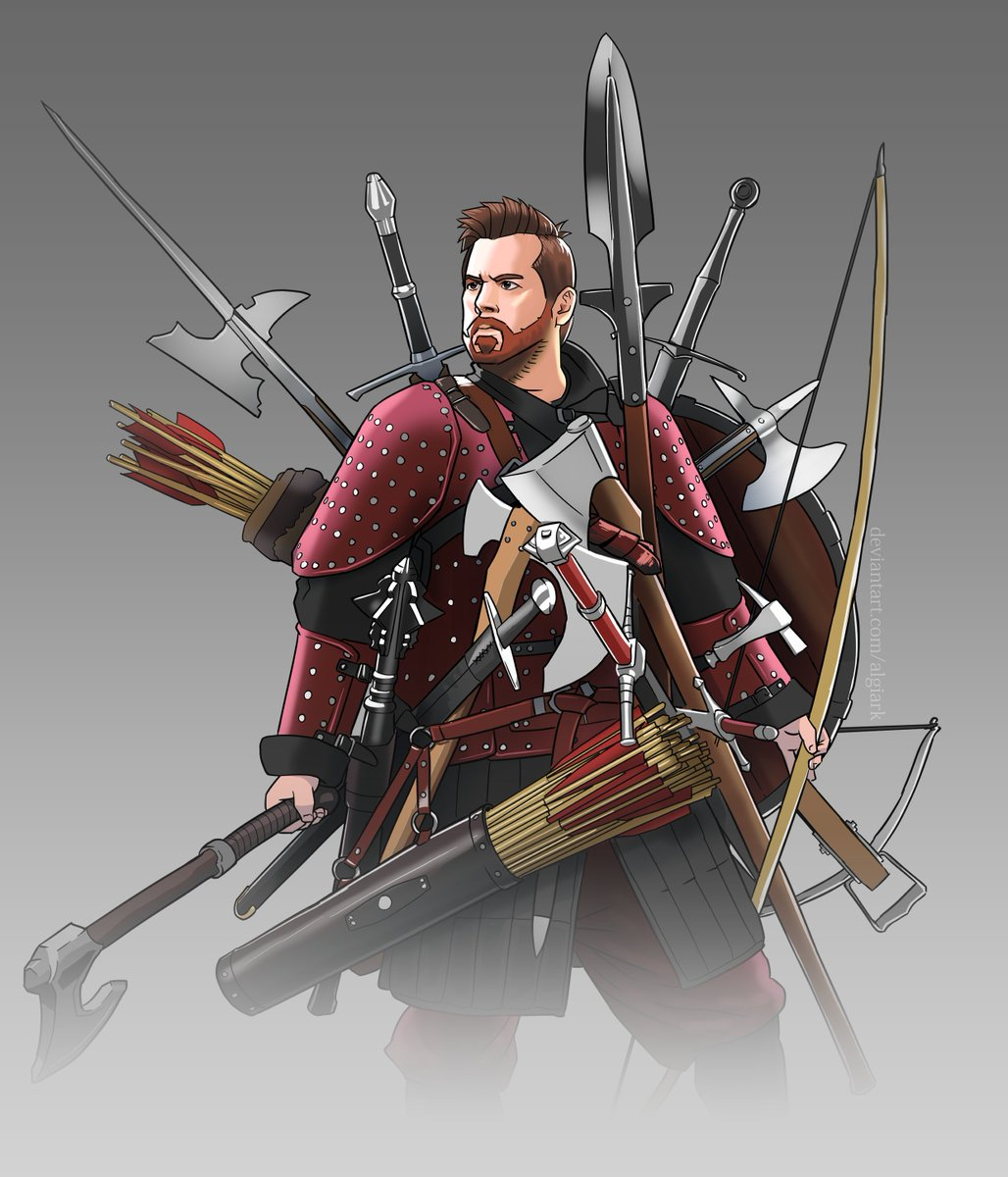
- Heroes must attune to magic items other than potions and scrolls before being able to use their magical properties.
- They can attune to no more than three magic items at a time.
- They must rid themselves of an item in order to free up a slot. This includes loss, breakage, selling, donating to the temple, etc., but not loaning out or “leaving at home”.
- Attuning takes 1 day.
- A magical weapon’s base bonus doesn’t require attunement.
Second is the problem of magical weapons not seeming very magical as the character advances. A +1 weapon is great at level 3, but pretty ho-hum by level 5. If you make sure weapons improve or get replaced over time, you solve this as well and may not even need to formally adopt attunement.
1. Circumstances Improve Usefulness
As the character advances, he or she naturally takes on greater challenges. This makes a magic weapon more useful. For example:
- +1 axe, +3 vs aberrations, +5 vs beholderkin
- +1 spear, +2 vs monstrosities, +4 vs giantkin
- +1 mace, +2 vs undead, +4 vs fiends
- +2 bow, +4 vs flying creatures
- +1 sword, +2 vs spellcasters, +5 vs lichkind
- +2 crossbow, +4 vs behemoths (any 4+-legged creature of 8+ hit dice), +5 vs dragons
The greater the bonus, the more specific the opponent type should be. Undead come in a wide variety, from low hit dice to quite high, so a modest bonus is appropriate. But liches and their like are very rare and very powerful, so a high bonus is appropriate. Of course, when you give such an item to a character, you are obligated to plan adventures where it will come in handy. Learning your sword is “Lichbane” is an omen.
This is an old-school D&D technique, but multiple bonuses are a little hard to keep track of, since the player has to guess at the creature’s category. “Wait; this thing casts spells? My spear is +4 against spellcasters. I should have done 6 more hp damage for those two hits.”
2. Deeper Attunement
Some magic items could have additional features that only become apparent after the hero has had more time to become accustomed to it–and it to the hero.
- After one day, a magic item’s first feature is revealed (including if it’s cursed).
- When wielded by a 5th-level character, the item’s second feature is revealed along with its name (if not already known). The item may speak or exhibit telepathy (a feature in itself) or introduce itself by runes appearing on the haft or in a vision or by influencing the character to meet a sage who knows of it, etc.
- When wielded by a 7th-level character, and after a quest revealed by the item is completed, a magic item’s final feature is revealed.
This allows a magic item to grow with the hero. But here is the part that makes it work: the player decides if the item is legendary and does so merely by continuing to use the item. If the player decides the character sells or sacrifices their +1 mace, that mace will not later be revealed to be a mace of disruption.
You might even say that heroes get maybe five attunement slots, but some items (particularly weapons) can use a second or even third slot. The hero gets a strong feeling about an accomplishment unlocking a potential deeper attunement and can choose if “spending” the slot on that feature is worth it.
3. Visions of Grandeur
Or the character can learn that the item will reveal additional powers once he or she accomplishes some specific task, such as finding its missing gemstone or returning the lost relic of Saint Ustis to the Capital Cathedral. The task should be related to the item’s type and/or history in some way, such as once having been wielded by Saint Ustis.
“That critical hit you got really made you feel connected to your axe now. It’s giving you the feeling that if you could relight the Forge of the Ages and immerse it for a moment, it could become even more powerful.”
You may even offer the player options (via a sage) by saying “ancient Illuvian weapons are often especially good against undead, giants, or lycanthropes, which is revealed once used against a powerful creature of that sort. Which direction do you feel the weapon is drawing you toward?” And that determines the next adventure. That “which direction” question is important, because it makes it clear to the player that the choice is theirs.
If you want to be more explicit, you can have the sage say that such weapons are neutral and can be “trained to hate” the monster type that it will bite harder against. One advantage of this is that the bonus can be different for different characters; so the dark elf warrior the hero took it from might have been getting +4 against humans, but the human warrior PC can switch it to, say, trollkin.
4. Purchased Improvements
You can also let heroes improve their weapons by paying a high-level wizard to cast further enchantments on it. You might combine this with another method and say that paying a little money “unlocks” a feature already within the weapon. Or you might just let them choose from a short list of abilities or bonuses against certain creatures for a fat price. You could even say that Dolfa the Tall can pay to change her +1 axe, +2 vs reptiles, +5 vs dragonkin into a +2 axe, +5 vs reptiles, vorpal vs dragonkin.
Let the heroes ask around for a powerful sorceress known for enhancing weapons and see what she asks. A quest might be required as well as cash.
Other Options
Aside from improving a given weapon, there are options for swapping one for a better one.
Donate & Replace
You can instead allow the heroes to donate a magic item to their church or temple and get a vision of another item they’d rather have (basically Visions of Grandeur, but for a weapon yet to be won). It can be a better item, because they still have to go on the adventure and fight its (evil) owner to get it. It has to be something they’ve heard about (from, say, three rumors you give them); don’t let them browse the core books and pick anything.
Break & Replace
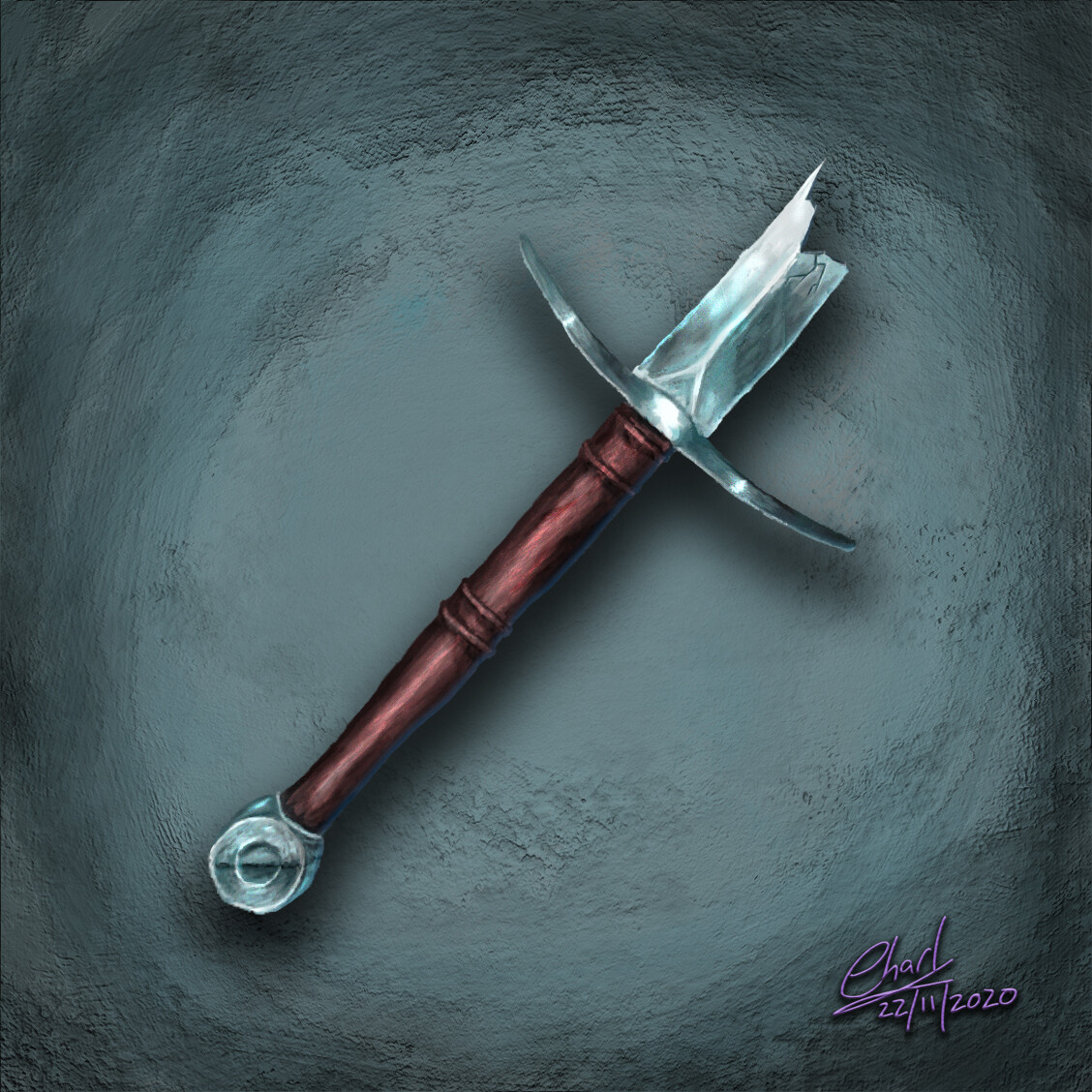
Another choice is to allow a character break a weapon and then find a better one. Starting at perhaps level 4 or 5 and perhaps only once ever, a character can break a weapon on a natural 1. In the next session (or even the one beyond), the GM should salt a new and better weapon into the campaign by putting it in the hands of a bad guy. It’s important that the player be deprived of a magic weapon for a significant time, so getting a replacement could even be a side quest.
It was on Loan anyway
The hero–especially a cleric or paladin–might be entrusted with a magic weapon as a temporary matter as part of a reward for completing an adventure. Then they can simply give it back when they find a better one.
Bonus: All of the Above
You can create some custom cards that each describe one of these methods of level up an item, and the players can each choose a card (or be randomly dealt one). Then each of the players gets a different experience that improves their weapon.
 zarban.com
Leave a comment