

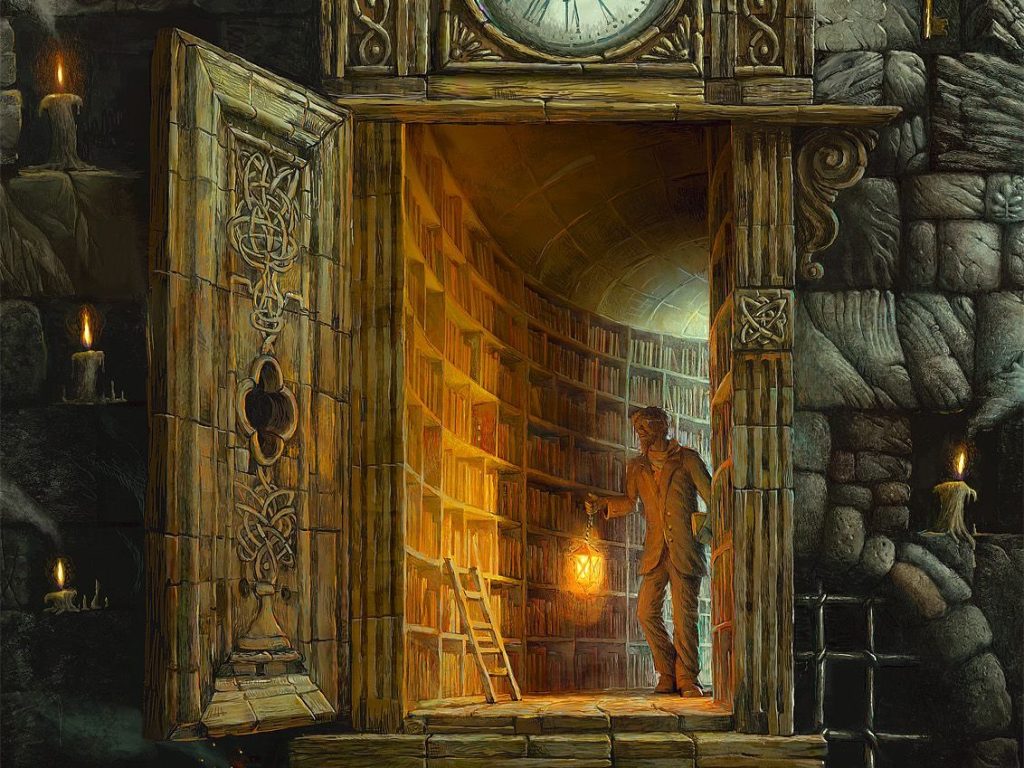
When your players roll a success for finding a secret door or a trap, what is it that gave it away? Don’t just tell them they found a door or trap; tell them they found an indicator. Then they need to explain what they do to turn that indicator into a discovery. This is sometimes called the “nesting doll” or Matryoshka technique.
Note that most indicators can indicate either a secret door or a trap, so the players need to investigate with caution, but once they do, you hand them the answer of which it is. But finding a secret door or trap doesn’t mean the heroes can automatically open or disarm it. That’s where the role-playing comes in, and they use their wits to figure it out.

- Draft: An air current comes thru a crack or sucks torch smoke into a crack.
- Crack: There is a visible outline.
- Water: A water leak has left a small puddle, moist surface, or dry stain.
- Loose stone: A suspicious stone or brick here is loose or missing.
- Handprint: A grubby hand or fingerprint (or footprint) near the mechanism.
- Thunk: A hollow sound when rapping on that spot.
- Clank: A little noise can be heard from whatever is on the other side.
- Scrape: Scrape marks on the floor leading to it.
- Color: The surfaces are slightly different colors.
- Shadow: A shadow is broken across the surface, betraying the meeting of two parts.
- Texture: There is a texture difference on the adjacent surfaces.
- Metal: Part of the mechanism (a hinge, catch, chain, etc.) is slightly visible.
- Cold: It is a different temperature than the surroundings.
- Wear: Part of the material disguising it is worn away.
- Grease: There is a spot of grease here.
- Trigger: You found the disguised catch/lever, not the door or trap itself.
- Scratch: A scratch doesn’t continue across the surface next to it.
- Smell: The smell changes here. Is it… fishy?
- Movement: Something moved that shouldn’t move when touched.
- Déjà vu: You recognize an aspect of the mechanism from another door/trap.
 zarban.com
Leave a comment