


Autonomy in RPGs is the feeling that you’re writing the story you’re living and that your decisions matter to the future development of that story. And in particular it means being motivated to do the things you’re doing.
If the GM chooses the next adventure every time, the players are basically given the choice of whether to walk, run, or dance their way thru the maze. Because they sat down with the understanding that they were going to go thru a maze, that’s enough for most players most of the time, but they would have more fun if they had more meaningful choices.
Now, to be sure, the “maze” I’m talking about isn’t just a dungeon. It may be the GM’s pre-determined narrative. The GM presenting a complex narrative arc for the campaign—something common today in modern D&D—is mostly fine, if that’s what the players want.
A lot of old-school gamers throw away the narrative and play a sandbox game in the name of freedom. But without motivation, this won’t feel like autonomy, but rather like throwing a dart at the map.
Either play style—narrative or sandbox—can work, as long as the players are allowed to choose it and given motivation and meaningful choices within it. I explored this theme when I recommended you make your campaign a democracy and when I described how to go from sandbox to saga.
Intrinsic Motivation
Studies show that intrinsic motivation is the most powerful. These are motivations that come naturally from the characters (or players) themselves, as opposed to offers of reward from NPCs or implied by rumors. Intrinsically motivated adventures should still have rewards, of course, but in the form of surprises. Good motivations come in three principal varieties.
1. The Heroes Get Curious
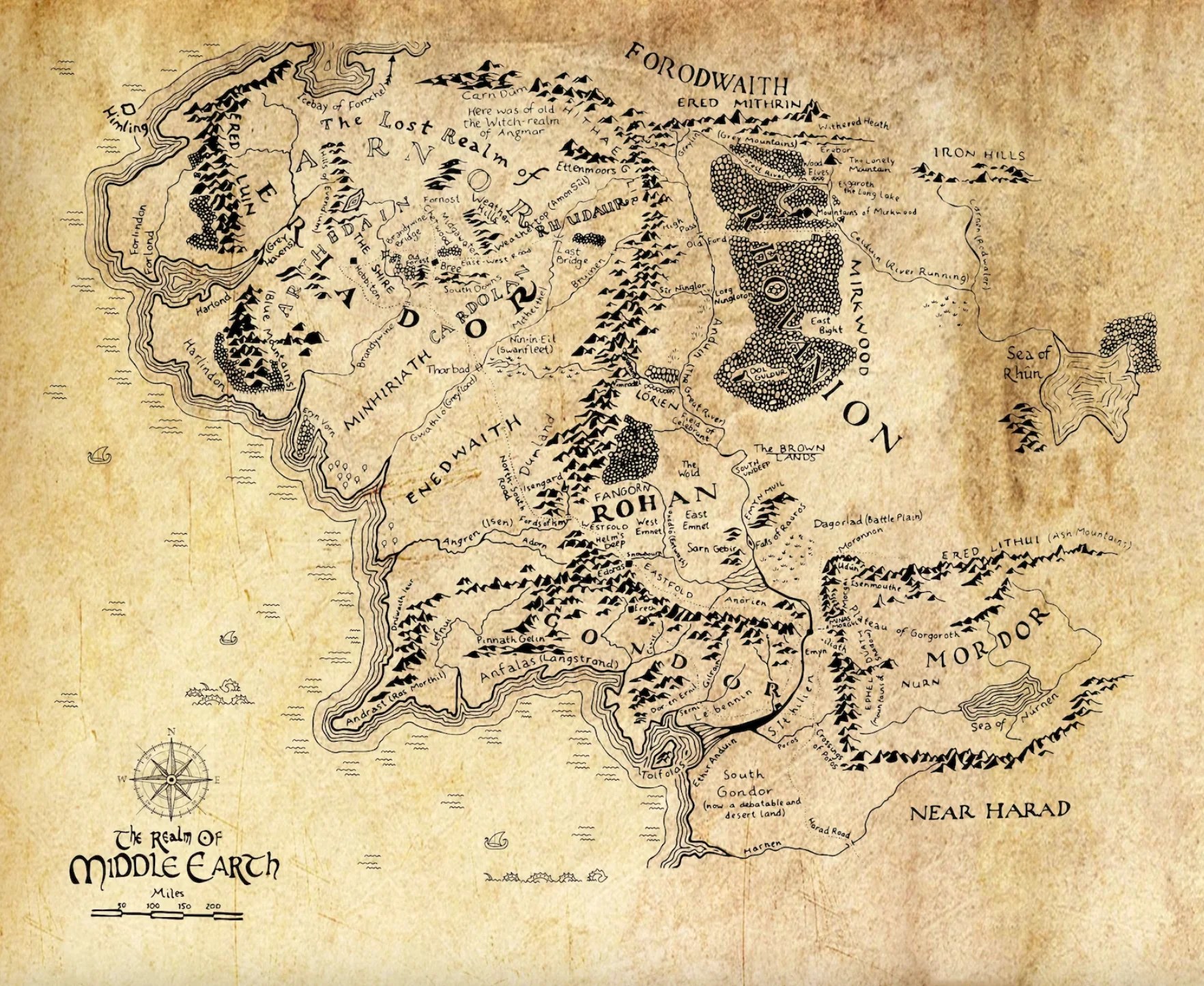
This is the best motivator. Show the players a map with intriguing points of interest—not just cities, but mysterious ruins and such of a particular age known for a particular type of treasure. The heroes should also hear bits of lore and gossip here and there and become curious about a place, treasure, villain, or mystery and decide to look into it more deeply and learn what treasure may have been hidden or lost there. A few more clues should lead to a plan and a decision to investigate thoroly.
Or they could find a map or puzzle solution on one adventure that suggests they have a key that will make the adventure it’s tied to a lot easier.
2. An Ally Requests Help
It’s also common for heroes to “get mixed up in” an adventure by accident, mistake, or because they’re soft-hearted or loyal to a friend. The heroes will typically befriend a helpful NPC and be willing to help him or her with a conflict or mystery. The best way to make friends with player characters is for the NPC to help them or give them aid or a useful gift soon after meeting them.
It doesn’t have to be help for the NPC specifically. It could merely be that the NPC suggests the adventure to the heroes and gives a little background beyond the rumors floating around. The players will be more receptive to it from an ally.
3. A Rival Issues a Challenge
An NPC—someone the heroes already have a rivalry with—challenges the heroes. This can be a direct challenge, complete with mockery. If the heroes don’t accept it, the rival will do it. Or it’s something of a race, and they’ll both go after the treasure or bad guy to see who can be successful first.
Or it can be a rival who tries to convince an authority figure that the heroes are less likely to succeed than they are, so the rival should be given the quest. This can generate a desire in the player to prove himself or herself and take on the adventure or quest out of spite. (If the heroes shrug and let the rivals do it, the NPCs should succeed and get a fine prize to make the players envious.)
Extrinsic Motivation
Extrinsic motivations are those that come from the promise of reward or punishment. They’re inferior to intrinsic motivations, because people work toward the reward, ignoring everything else, and then lose interest. These motivations tend to ice out intrinsic motivations, because they usually have a fairly strict time limit. So, you usually can’t have both at the same time (unless the heroes are fine with the princess getting eaten or the evil overlord taking over the realm).
1. A Person of Status hires the heroes
This a common motivation in modern RPGs but smacks of day labor and common employment. The sheriff of the shire or agent of a noble engages the heroes to do a job for a specific reward. Less commonly, a high-status NPC becomes a patron for the heroes, sending them on jobs and rewarding them appropriately. Patronage has the advantage of being historical, since it reflects vassalage.
2. A conflict must be resolved or disaster will result
This is very common in heroic adventure movies and novels but quite rare in RPGs, perhaps because it feels negative and forced. The GM is wielding a threat to something the heroes care about (or are supposed to care about). This sort of thing can be use as a motivation under a couple of conditions:
- It’s clear that it happened because of a fair roll of the inter-adventure “events die” (something you roll between adventures, a natural 1 indicating a disaster).
- It’s optional, because the disaster isn’t too bad.
In the second case, maybe it’s not the heroes’ home town but a neighboring town that’s under threat. Then it becomes an opportunity for heroism, especially if it’s clear that if the heroes don’t take up the challenge some NPCs probably will (roll for it) and will probably succeed (roll for it).

Outcomes Shouldn’t Be Predetermined
The most important factor in ensuring meaningful choice is that the outcome of the heroes’ efforts—whatever they may be—cannot be predetermined. This is where taking a narrative approach is most dangerous: the desire to build to a dramatic ending with a satisfying conclusion can turn into the GM telling a story the players can’t really influence.
The way to avoid railroading like this is to have the adventures scale up and proceed logically from one to the next. The heroes are free to approach each problem however they want, but one conflict follows from the previous, and each is larger than the last.
Let’s say a faction or monster is threatening the city and must be defeated….
- If the heroes choose to engage with this villain (as opposed to wandering off on a different path), they’ll likely defeat it.
- This defeated villain is then revealed to have been a henchman of a greater villain, who unleashes champions to threaten the whole shire—with some success✽. If the heroes choose to try to avenge the innocent, they’ll likely succeed again.
- The greater villain has an army that must be defeated before he can be confronted and defeated.
✽ This success is important, because it establishes that the power of the villain is real and creates the classic crisis and defeat characteristic of a good second act.
It’s important that the adventures connected in this way not follow too quickly or you’ll have the modern D&D problem of PCs rising from 1st to 20th level in twenty weeks. Instead, allow time for the villain’s forces to reorganize and form new plans.
Of course, at the end of the first and second adventures, the heroes may become interested in some other rumor and never finish this mini-campaign. As a result, the villain may succeed in taking over the shire, which from the players’ point of view was at least partly their fault for interfering in the first place. NPCs may even blame them outright for triggering it or letting it happen.
Emergent Narrative Should Still Build to a Crescendo
Of course, any campaign, no matter how open and free, should ideally build to a dramatic conclusion. But that conclusion should come naturally from the situations the heroes have chosen to put themselves in. If they buy a ship and become corsairs instead of taking on the rising menace of an evil overlord, they should probably end up fighting a kracken for the life of the princess, not being called back to settle a war of succession when the king dies. They chose sea adventure, and sea adventure they should get.
The game works in your favor here, since the heroes get more powerful and can handle bigger challenges as they advance in level. It’s just your job to make the campaign finale meaningful and dramatic. It’s shouldn’t just be tougher; it should answer mysteries; settle long-standing disputes; and change the landscape.
But what will be more meaningful are the personal conflicts that may be resolved. Joining forces with a rival to defeat the kracken is more meaningful than defeating the kracken alone. Recovering your father’s bones is more meaningful than defeating the dragon who carried him off.
Making adventures bigger but also tying them back to previous, more personal events means first introducing those personal events here and there along the way. If you let the heroes kill every rival and best every challenge, you won’t have shadows from the past to draw upon to ramp up the personal drama at the end.
 zarban.com
Leave a comment