

With the pre-release reviews of the new D&D Player’s Handbook, the topic has come up again that Wizards of the Coast have changed “race” to “species” for character creation. The official explanation is that they have explain it every time (we mean “human race” and, you know, the extremely common phrase “elven race” and whatnot). The real explanation is, well, it’s a loaded term, which is why they always have to explain they don’t mean “black people” and “white people”.
I say fine, change it. But “species”? Is this biology class? Traveller?
Ancestry
Pathfinder uses “ancestry”, which is quite good. Maybe WotC doesn’t want to use Paizo language, but they’re using stuff like “you acquire the prone condition” which is very much the language of Paizo and certain off-world replicants (not Leon, but definitely Roy and Zhora).
This is the one that feels the most authentic. You could write it into a line of dialog for a character in a medieval fantasy novel. “Tarciran? What is his ancestry?” “Elven, m’lord, of the Highwood.”
Heritage
I also like “heritage”. That suggests not only ancestry but upbringing. So it would be natural to include wood elves and high elves, deep dwarves and surface dwarves, and five kinds of humans (plains, desert, forest, tundra, and coastal).
Lineage
“Lineage” is okay and pretty authentic-sounding for the genre. But it suggests more the specific family line rather than a people.
Bloodline
And I like “bloodline”, which suggests not only ancestry but family status. So it would naturally include whether your family was nobility, gentry, or common. I’m a big fan of making most heroes members of the gentry. It makes their starting money make sense and encourages a background of family pride and scandal; plus it affords a logical path toward nobility.
Kin
Similar to “bloodline”, “kin” evokes thoughts of family as well as blood ancestry. It’s closer to family, tho, and might further encourage a family background for the heroes.
Imagine drawing up a family coat of arms, dressing your servants in your livery, and so on. Fun stuff rarely used in D&D but highly flavorful and pertinent to the genre.

The Broader Question: Demi-humans?
There is a broader question here that I find myself struggling with, personally. In old D&D, humans were “humans” and elves, dwarves, halflings, and gnomes were “demi-humans”. It’s an awkward term that isn’t used anymore, but it was sometimes useful.
I now use terms like “civilized folk” and “people”, differentiating these from “humanoids” (goblins, orcs, gnolls, and such), which–to me–are human-like in shape and having a crude social structure but who eat people.
My definition of “monster” is similar: creatures that want to eat us (or take our souls or whatever). That separates them from “beasts”, meaning natural animals we have in the real world, who pretty much avoid us where possible.
This isn’t strictly true, of course, since many big cats, crocodiles, and grizzly bears would happily prey on us if we didn’t have fire, guns, and jeeps. And carnivorous dinosaurs would surely agree, if they were around. But bears aren’t going to try to take over a town for the purpose of eating us.
It would be nice to have a better term that would encompass humans, elves, dwarves, and such. Maybe “good folk” would work, suggesting that civilized folk are basically good, sometimes neutral, and only occasionally evil. And “humanoids” are commonly neutral or evil and only rarely good and also interested in eating us. But honestly those aren’t very good terms.
Hybrid Ancestries
Personally, I dislike half-orcs, half-elves, and the like. And the kind of hybridizing that sometimes goes on in modern D&D–where any humanoid can breed with any other–is bizarre. It suggests that all humanoids are actually the same species, which means they should already have bred themselves into just a handful of sub-species, like dogs before humans started selectively breeding them.
Changlings
One idea that I kind of like is borrowing “changlings” from European folklore. The idea is that elves have a weird propensity to sneak into a village and switch their infants with those of humans, resulting in elves brought up by humans and humans brought up among elves. This could be what a “half-elf” is in your campaign.
Why would they do this?
- They’re fascinated by humans.
- They consider it an honorable gift (they switch infants among themselves, too).
- They think it will strengthen the social bonds between humans and elves, which is important, because–as chaotic creatures–they don’t put much stock in treaties.
- Humans have a special value or status among them.
- They’re looking for one particular prophesied human child.
The Truth About Elves & Orcs
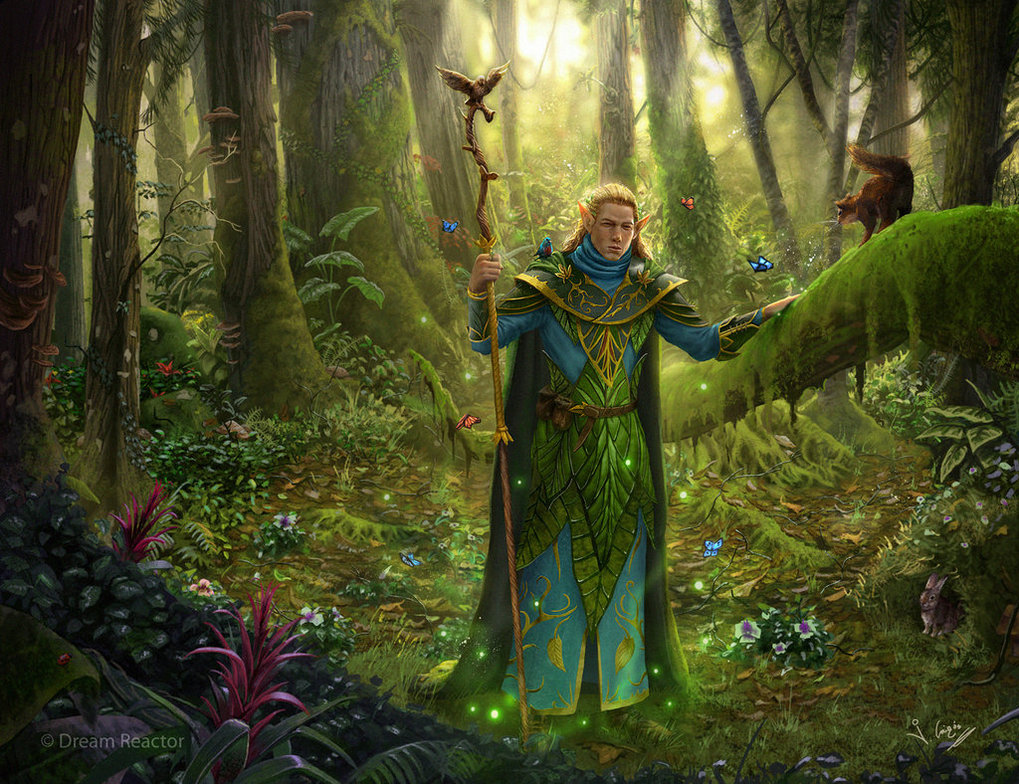
Another idea I kind of like is the one (from Tolkien) that orcs were created by magically corrupting elves. In original D&D, orcs were about the same height as elves and somewhat slight of build; not the weird, hulking ogres of modern D&D. So maybe half-orcs are the offspring of an orc and an elf, not a human.
That’s a bit more biologically understandable and more intriguing, if you like the old-school half-orcs. I much prefer the old orcs, myself, altho I say their faces are only vaguely pig-like, not literally piggish.

 zarban.com
Leave a comment