

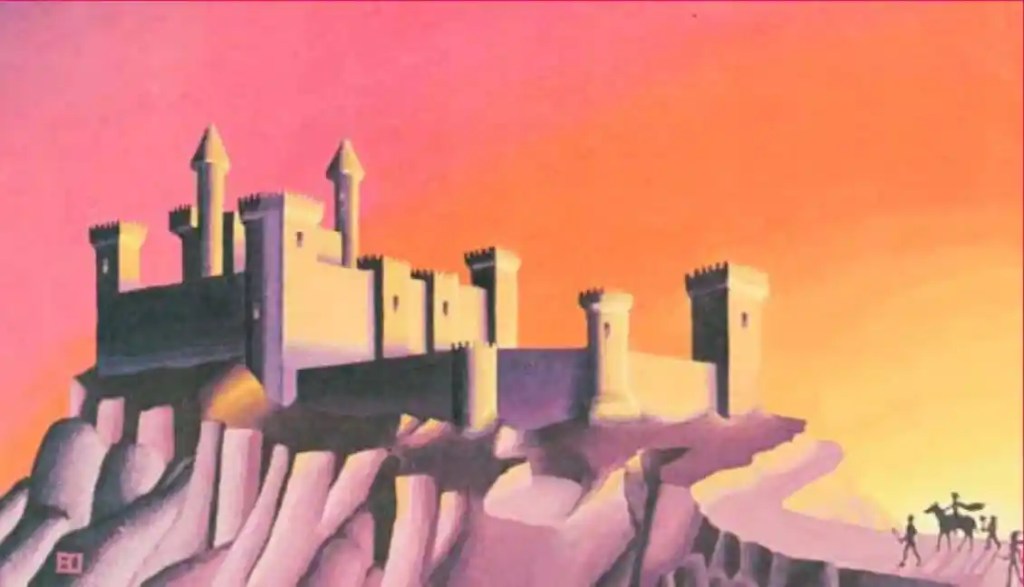
OSR stands for “old-school Renaissance” (sometimes “revival”), meaning a return to the values, play style, and, often, rules of old-school fantasy role-playing games, especially D&D in the 1980s.
There are several “retro-clones” of original D&D and AD&D, but “old-school” pretty much stops with AD&D 2nd Edition. After that, the game was bought by Wizards of the Coast, who put out far more complex versions of the game that diverged from the core values and play style of the original.
Characteristics of Old-School Gaming
So what characterizes old-school gaming?
Character-building is Light
The game is about what you do, not what you are (that is, minimal or modest character building).

Play Style
Exploration is the core of adventures, not linear plotlines the GM cooked up. The game is largely about dealing with a series of puzzles and predicaments. A little melodrama goes a long way (romances, politics, betrayals, grand revelations, prophecies, etc.). Don’t get up your own portable hole trying to be like YouTuber actual-plays.
Rulings Over Rules
You need enough rules that the GM isn’t constantly having to think up how to deal with situations that were always likely to come up and not so much that the GM is constantly having to look up the rules to see how stealth is supposed work. Rare situations and edge cases of common situations don’t need more rules, just overarching guidelines for the GM to make a ruling.
Resources Matter
Generally, resource management is somewhat important. That is, you at least pay lip services to torches, rations, arrows, spell slots, material components, encumbrance, etc.
Of Retro-clones & Rules
Retro-clones
The point of retro-clones (most closely associated with old-school “revival”) was to allow modern gamers to play the old adventure modules with little or no conversion, because the old rule sets weren’t widely available anymore. In these games, you’ll typically track rations and torches and carry not only a weapon but spikes, rope, and a 10-foot pole, because you’ll mostly be exploring dungeons, and tricks, traps, puzzles, and predicaments are common. To stay compatible, they offer clunky, old-school mechanics like attack matrixes and descending armor class.
Old-School Essentials, Basic Fantasy, and Labyrinth Lord mimic Basic and Expert D&D (BX D&D or OD&D). OSRIC and Swords & Wizardry mimic AD&D 1e. Of Gold & Glory mimics AD&D 2e.

OSR Its Own Way
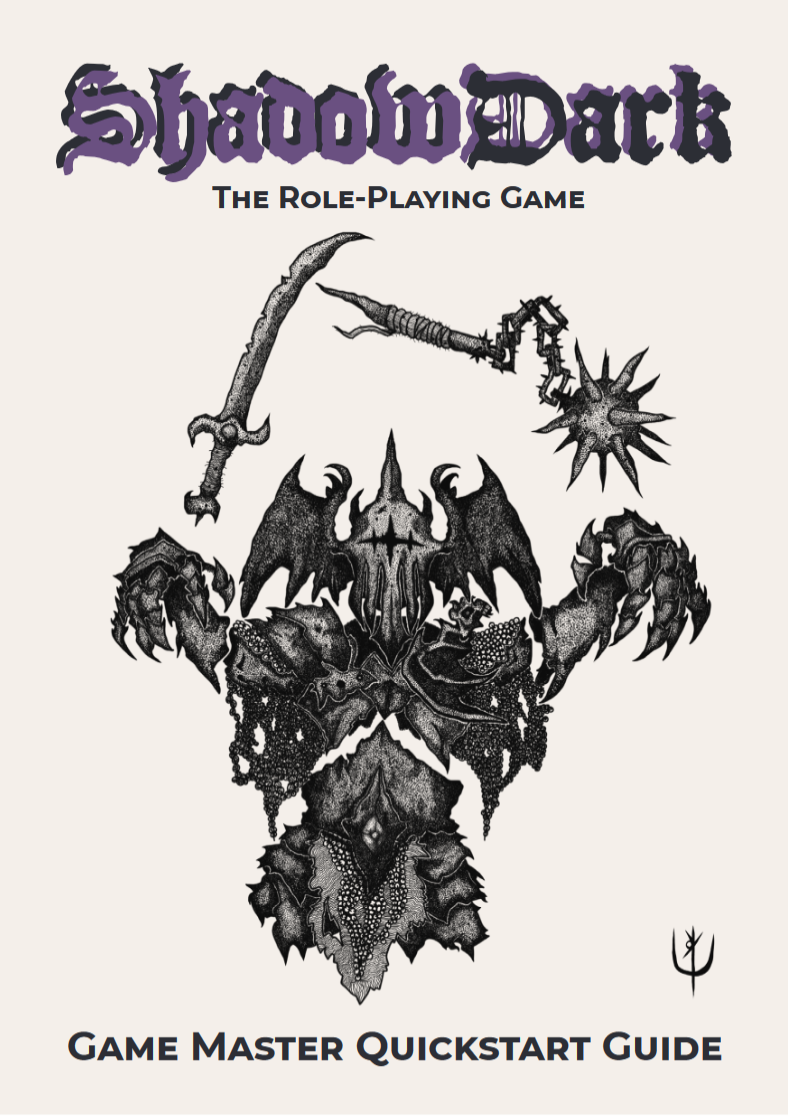
But many recent systems try to capture the values and play style (and art) of the old game without trying to be compatible with old adventures. After all, a lot of old adventures were pretty amateurish, and a decent GM working with modern examples can create something better.
In these games, supplies and resource management typically takes a back seat to cinematic action. Magic is often dangerous. Old-school mechanics are usually ditched for d20, roll-high mechanics with ascending armor class and attack bonuses.
I would put Dungeon Crawl Classics, Shadowdark, and Hyperboria in this category.
New School
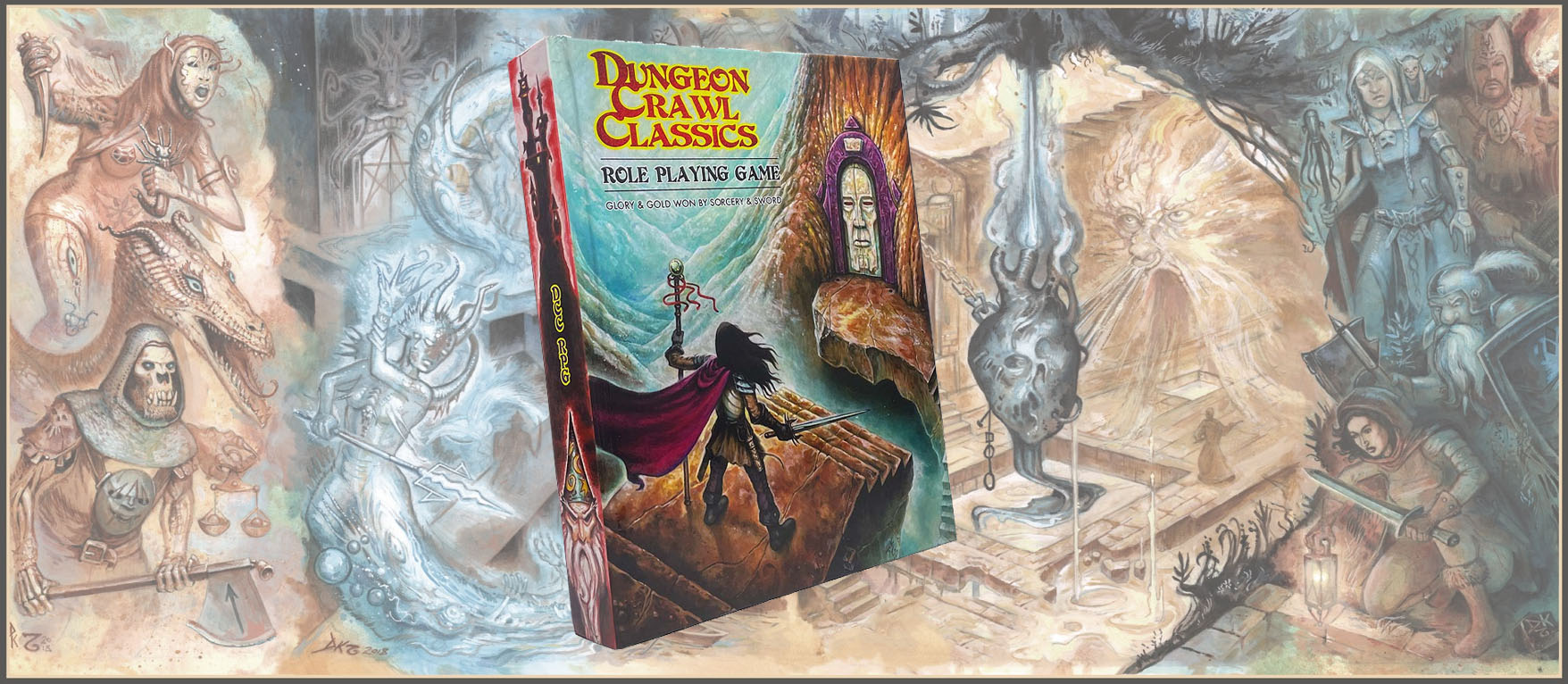
A third type of system is one that deliberately diverges from old-school play style in some way, often seeking to proved grim and gritty play, perhaps with strict resource management or more lethality. And they typically have unique–often minimalist–mechanics and art. They’re sometimes classless, characters merely having whatever skills they choose. Often, humans are the only playable creature. Magic is often dangerous–altho some systems are so minimalist that they just recommend you use spells from some other system.
There’s some belief that original D&D was quite lethal, but that reputation is less fact than legend. (Players quickly learned to negotiate or run away from really dangerous encounters.) But these games often lean into the dark, low-fantasy esthetic. Not only will you typically track your torches, you may only be armed at first with a farm implement.
I would say Knave, Cairn, Black Hack and Five Torches Deep fit this category.

OSR-adjacent
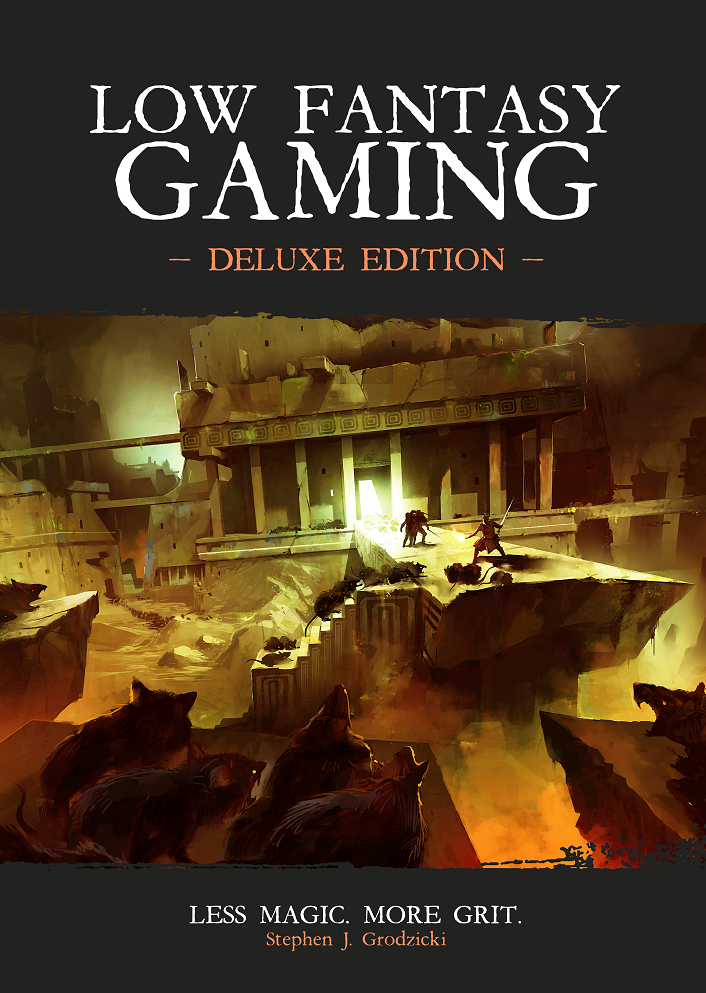
A fourth type of system is not usually classed as OSR, and that’s those that kind of imagine what TSR might have done with AD&D after 2e. They typically feature modernized mechanics (d20, roll-high) with modern elements added (such as feats) but not in such abundance that the system gets crowded with rules and overwhelmed with options.
These games go for heroic and cinematic feel but nevertheless with a nod to puzzles and predicaments. And they may eschew Vancian magic for spell point systems.
I’d put Low Fantasy Gaming, Heroes of Adventure, and Castles & Crusades in this category, and it’s my preferred type of game system.
Non-OSR
Modern
And, of course, firmly in the non-OSR category are modern games that mostly ape modern (Wizards of the Coast-era) D&D with various “fixes” but often emphasize some mechanics (usually combat) so much they become cumbersome. Pathfinder is a copy of D&D 3e that has developed in parallel with later D&D. And Tales of the Valiant and Nimble 5e are explicitly fixes for and compatible with 5e.
Daggerheart and Fantasy Age are other variations on the d20, roll-high theme as well, and take most of their cues from modern D&D (4e, in the case of Fantasy Age).
Postmodern
Getting even further from the heart of OSR are systems that reimagine modern D&D and try to go it one better. These may be just as complicated and nearly as overblown as D&D itself and suffer from being so different that D&D gamers reject it for being alien and off-putting (or embrace it for being alien and off-putting).
They may eschew hit points or attack rolls or other core D&D concepts. These games are risky, because they’re often under-playtested and may therefore break in actual play. (Hint: If most of the rules are about character creation, it’s probably not going to play well.)
I’d put 13th Age, The Burning Wheel, Conan 2d20, Mythras, Broken Empires, and Cypher Fantasy in this category. MCDM’s Draw Steel takes a lot from D&D 4e but may (once it’s released) actually be different enough to be called postmodern. DC20 is a hybrid of Pathfinder 2e and D&D 5e that may likewise turn out to be postmodern.
Something Else
Apart from these games, OSR enthusiasts sometimes reference other games that aren’t very similar to D&D at all. These games may have a later or more fanciful setting and/or wildly different mechanics from D&D. They sometimes verge on story-games, where the players have strong influence on the events that happen to their characters, not merely how their characters react to events created by the GM or the dice.
Blades in the Dark, which is specifically about criminal enterprise in a perpetually dark and haunted Victorian city, is in this category. Mausritter is a classless system about mouse adventurers. Bunnies & Burrows is a class-based system about rabbit adventurers.
 zarban.com
Leave a comment