

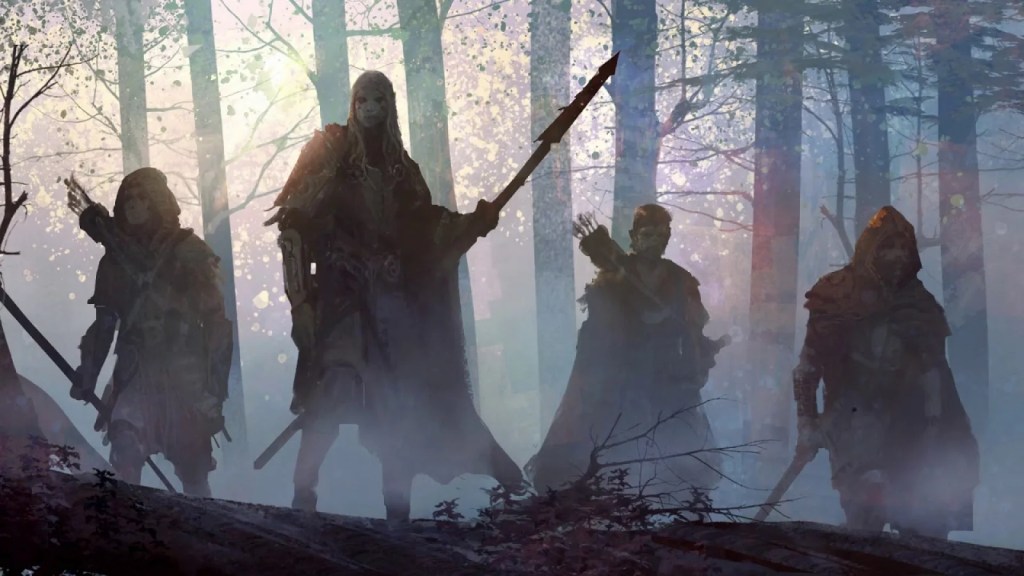
Most adventuring companies won’t do one and only one type of work. But these ideas may help you decide what principal work a given company will pursue initially and what allies and enemies they might develop. Just defining themselves as something should help players decide to take on an adventure, because “this is what we do”.
You may decide the heroes need a charter from the local noble or city council legally establishing their company before they can engage in trade or certain other adventuring—not at first, perhaps, but it’s something to become a short-term goal.
It’s also possible the heroes are initially engaged in these pursuits separately (as character background) but come together as a team to pursue some other goal. Perhaps the fighter was a hired champion, the rogue was a retainer for monster hunters, the ranger tracked down criminals for the sheriff, and so on.
1. Treasure Hunters
Most old-school adventurers could be classed as “treasure hunters”. They may go from town to town, seeking rumors about hidden riches in the area. Fighting monsters, avoiding traps, and solving puzzles are incidental to their true goal, but such perils are nevertheless integral to their adventures.
The heroes may find it most practical to hire several retainers to accompany them. Travel thru wilderness requires food and other supplies, a cart to haul it, a teamster to drive it and to see to the riding ponies, porters to raise tents and gather firewood, and men-at-arms to guard it all while the heroes are delving into dungeons under ruins.
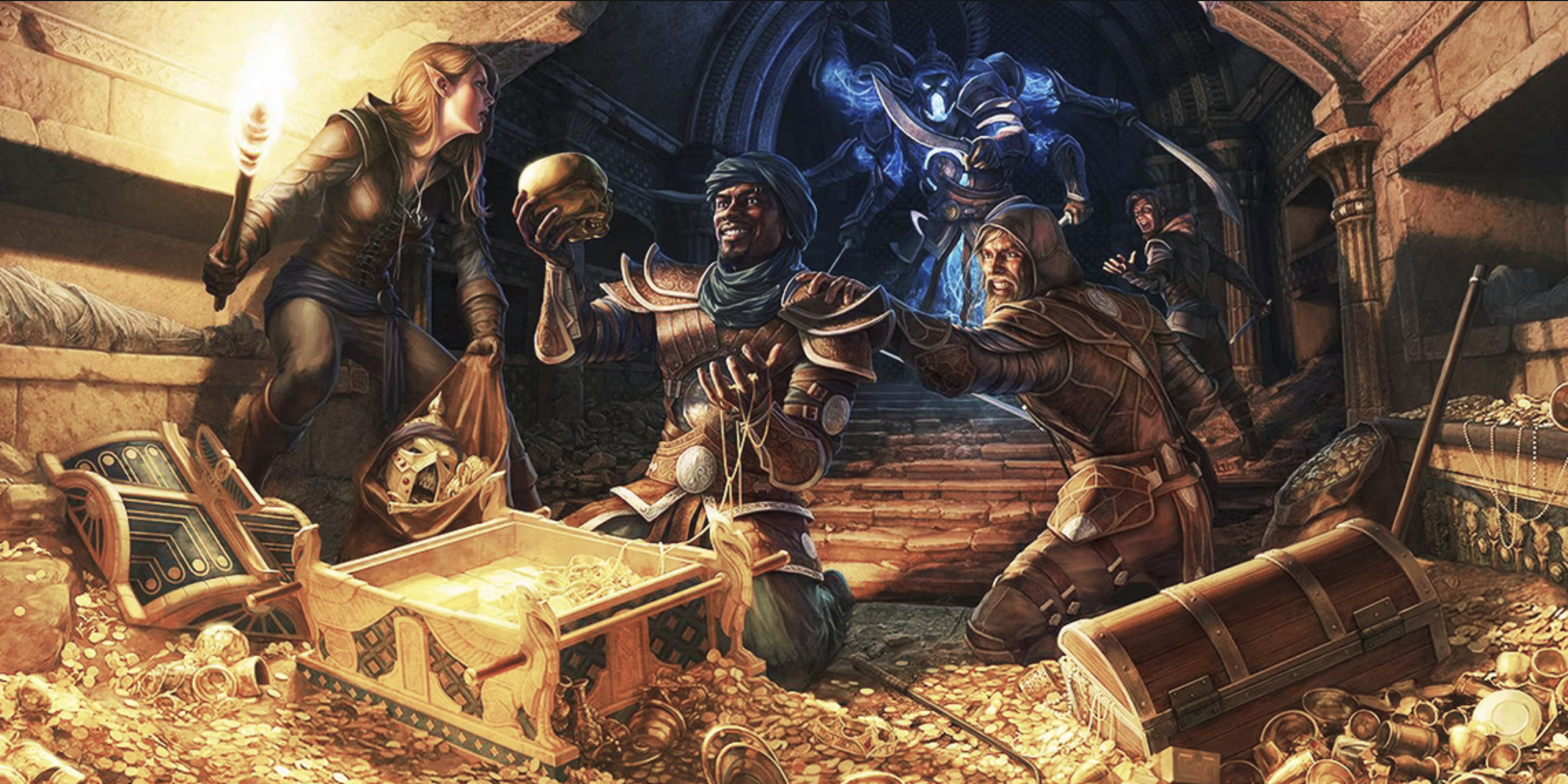
Such heroes may meet various townsfolk and sages who have knowledge of lost treasure but may also run afoul of rivals and perhaps even nobles on whose land they trespass to explore ruins and dark passages.
They might:
- Be invited to explore the ruins on the land of a friendly noble.
- Illegally raid the dungeon under a ruins on the land of an unfriendly noble.
- Explore a ruins they find in a wild land once part of the Old Empire.
- Be enlisted by the church to seek out a lost artifact in an abandoned monastery.
- Venture to the Desert of Tombs and explore the tomb of an ancient sorcerer-king.
2. Monster Hunters
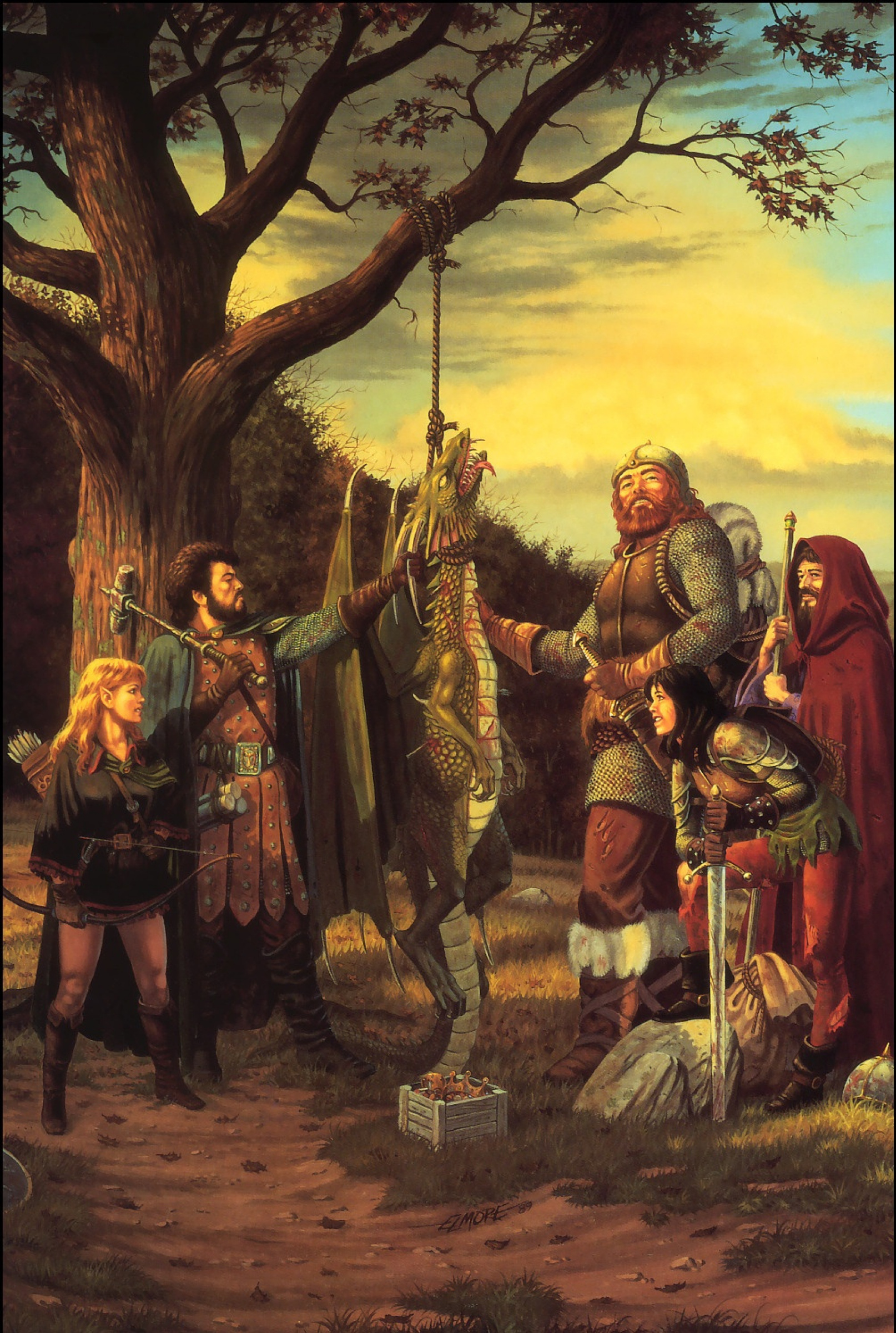
The heroes may be less interested in treasure than in glory. They may seek out rumors about troublesome monsters in the area in order to root them out for glory and perhaps pay from the local noble or bishop (with some sort of deal in place if they come across a lost treasure). In some cases, there may be a bounty on some particularly troublesome creatures terrorizing travelers or the manorial fields.
The heroes may also take on jobs from alchemists and wizards who need rare items for potions or spell components, like the heart of a giant bat or the eye of a beholder. They might even take a job finding and capturing alive a wild animal or monster for some nobleman’s menagerie or eccentric wizard’s labyrinth. As with treasure hunting, retainers can be of good use while the heroes delve into monster lairs.
This would naturally put the heroes in contact with higher-level NPCs who can act as mentors as well as employers and also some low-level authorities who pay bounties for this sort of work. Eventually, they could be offered manorial land (a fiefdom) if they tame it and set up a stronghold to protect it.
They might:
- Try to slay an ogre who menaces travelers on a road that borders the wilderness.
- Seek out a troll to harvest its blood for an alchemist who makes healing potions.
- Take a job capturing a giant falcon for a nobleman’s collection.
- Hunt the bulettes plaguing the countryside.
- Slay the dragon who has long been the scourge of the shire.
3. Man Hunters
The most dangerous game of all is man, so some adventurers could take on the hunt for outlaws and bandits. They could go from city to city, asking about rewards that are being offered for such things. With a reputation as investigators and not just trackers, they might get asked to determine who committed a high-profile crime or a series of smaller ones. (Juries were once expected to do their own investigations, so they could get made a jury.)
Depending on the realm, heroes might be engaged to hunt down rogue wizards or clerics of evil gods or even lycanthropes or other monsters who commonly hide in human form.

As with monster hunters, the heroes might find it practical to hire retainers to help them. Even traveling light for speed, they might need a couple of characters to hold the horses and mind the supplies. There isn’t a great future in bounty hunting, but stalwart types could transition to serving the sheriff directly, working for a nobleman as a bailiff or even become knights.
The heroes would naturally meet plenty of low- to mid-level officials who pay the bounties, as well as other adventurers who are either rivals for the bounty or dangerous friends of the hunted people. Perhaps a lord wants an outlaw brought in dead or alive, but perhaps the lady wants to protect him because he’s her lover, the very thing that made him an outlaw in the first place….
- Hunt down an outlaw in the royal forest.
- Fight bandits who prey on travelers in the wilderness.
- Capture the evil knight who conspires against the baron.
- Investigate the murder of a county judge.
- Bring the pirate king to justice.
4. Shire Guard
The company could be a part of the shire/county/provincial guard, working for the sheriff, council, noble, bishop, or other official to maintain order. They could be given duties to patrol roads and forest trails, report monsters and crimes, deliver important messages and packages, escort officials, transport criminals to court, and hunt predators and outlaws.

This position comes with a degree of authority but also responsibility to an official who may have an agenda all their own. There would be little pay for such a job (but they would likely get room & board in a castle), so it might only suit the heroes for their initial adventures, but the short and specific duties would make for a nice variety of brief adventures to get the characters started.
Additionally, the official nature of their work would put the heroes in contact with local officials, judges, royal envoys and inspectors, merchants, and certain lords, nobles, and church officials—all contacts of good value in their later adventures.
- Detect and report the incursion of a tribe of goblins.
- Escort a prisoner from one town to another for trial.
- Deliver a delicate package from one lord to another.
- Assault a den of thieves.
- Lead the militia in the defense of the shire against invaders.
5. Merchant Traders
Commerce in the Middle Ages was an adventure in itself. Weather, bandits, pirates, authorities, rivals, and such made for many a harrowing tale. The heroes could form something a shipping company, delivering trade goods from one city to another. Or they could form a trade company, finding opportunities to buy low in one city and sell high in another. Of course, they could also be asked to deliver people, animals, or monsters. At first, they could operate as an overland caravan and later buy a ship.
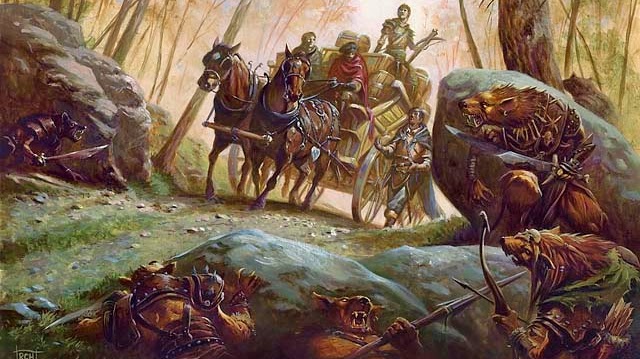
Of course, any caravan or ship will need crew to manage the supplies and maintain the carts and horses or the vessel. The heroes could avoid this at first by being the hired help, but their pay won’t compare to the profits their employer sees. If things go well, the heroes could make their fortune in trade, become guild-masters, and run (and defend) a city for the local noble. On the other hand, they could become smugglers.
Obviously, such travel would be endangered by bandit sorties, wandering monsters, escaped live cargo, and weather and terrain disasters, such as snow and flood. The heroes would engage with important NPCs like merchants, guild-masters, and manorial and town officials (who will want a cut of the profits as taxes).
- Escort a shipment from one city to another.
- Find, secure, and deliver a shipment of a rare commodity.
- Haul goods thru a dangerous mountain pass.
- Ship goods thru a dangerous strait.
- Slay a beholder and sell its carcass to a wizard.
6. Champions
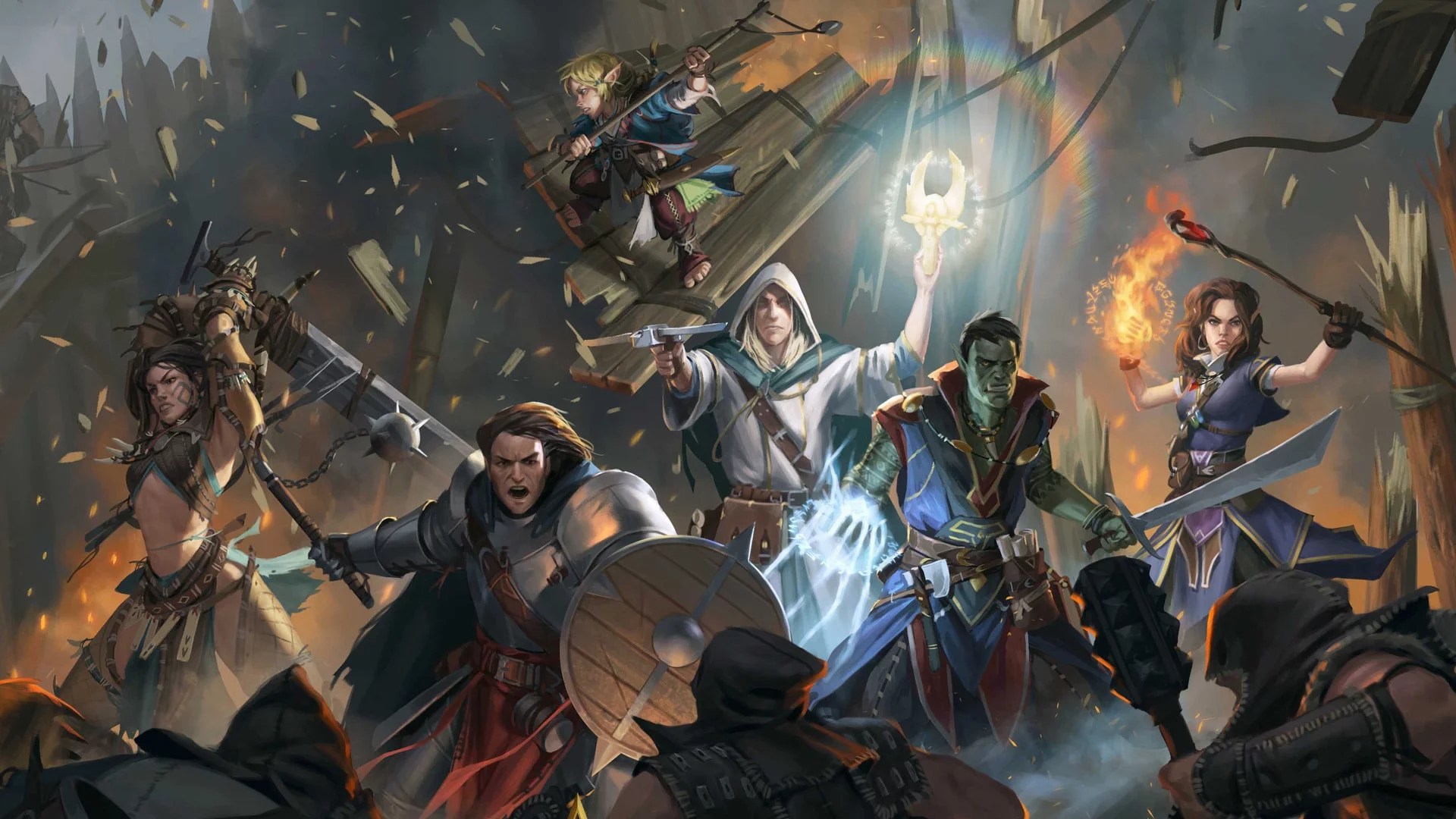
The party could be retained by a patron (noble, bishop, diplomat, or merchant) to be his or her personal champions when the need arises. (Even in cultures with codified laws, champions might be necessary to enforce them.)
The NPC not only gives assignments and requests but also offers rewards (including magic items and even land). Champions become loyal and valued members of the household, helping to maintain order and put down attacks by monsters and raiders.
- Guard the lord’s lands and help stop monsters and raiders.
- Explore some ruins on the patron’s land.
- Act as a bodyguard for the patron during travel.
- Foil a sinister plot against the patron.
- Settle some dispute between lords to avoid a war.
- Fight a proxy duel or trial-by-combat for a patron’s honor.
- Quest to retrieve an heirloom for the patron.
- Rescue an heir[ess] related to the patron.
- Fight in a non-lethal tournament or arena under the patron’s banner for a prize.
Acting as champions would naturally bring them into the circles of wealth and nobility. They might develop enemies who are also champions or the patrons of champions they’ve defeated.
7. Spies
As opposed to being overt champions of a noble or official, the party could be retained by a patron to be spies and be covert agents of a faction. Their duties could even include investigating crimes, either covertly or overtly.
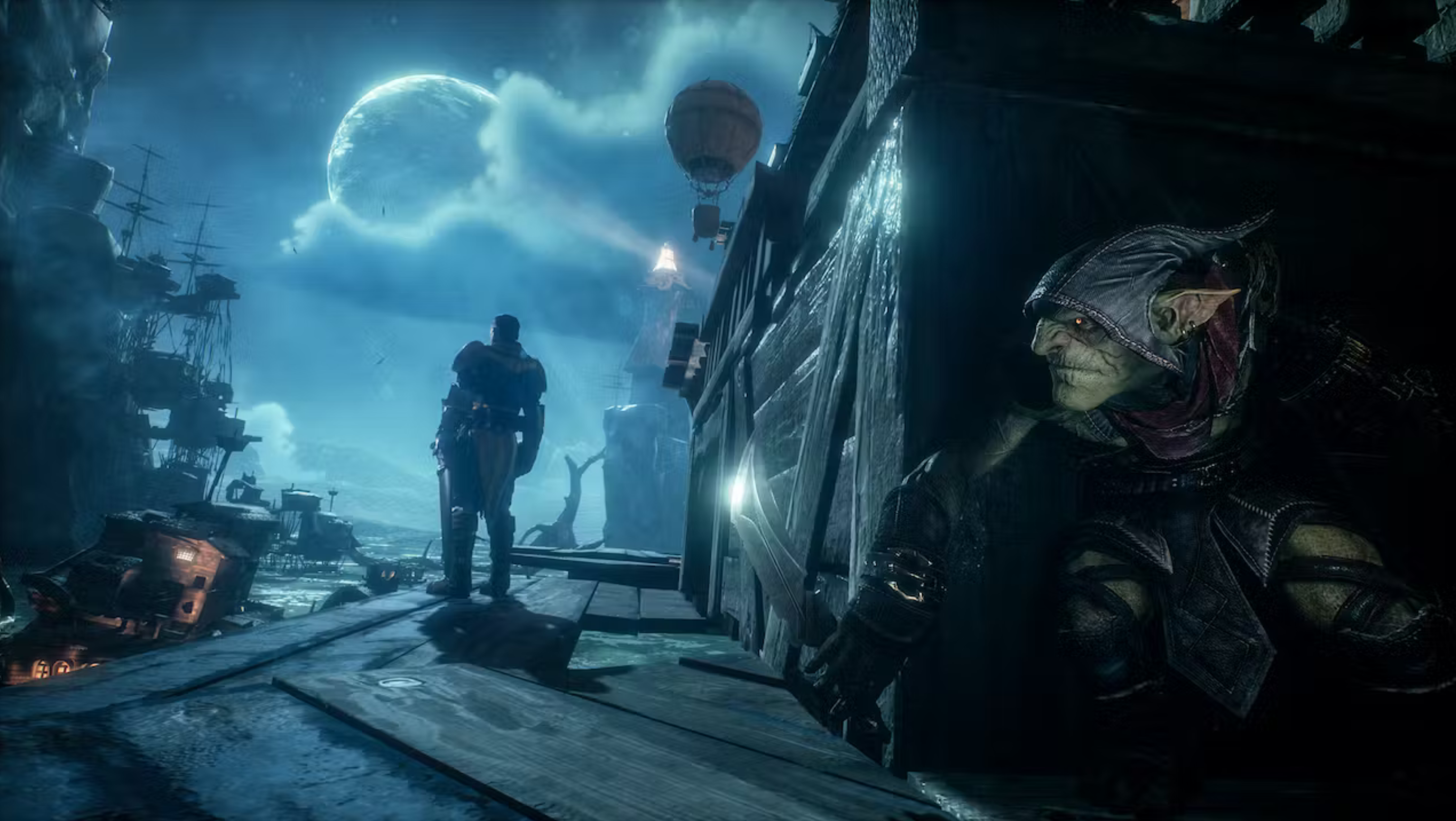
Spies become loyal and valued members of the household or faction, helping to sniff out conspiracies, tax dodgers, and foreign plots. They might be employed to:
- Sow discontent or foment rebellion in a rival’s lands.
- Report on or interfere with a rival’s trade or war preparations.
- Guard the lord’s lands and help stop uprisings and foreign spies.
- Influence the line succession in the patron’s or a rival’s lands.
- Avenge a murder or other wrong.
- Infiltrate a den of thieves.
- Make deals with certain monsters.
Ultimately, the heroes might develop into trusted champions and act publicly for the patron. Acting as spies would naturally bring the heroes into contact with all manner of officials, nobles, and merchants–scrupulous and unscrupulous. While working in a rival’s lands, they would need to meet with a handler and/or send and receive coded messages and perhaps smuggle things across the border. They might develop enemies who are also champions or spies for a rival.
8. Mercenaries
The company could also be a group that hires out for any dirty job, including fighting legitimate rulers on behalf a rival who wants to take his lands or pulling off a heist for someone who regards something as a treasure that the PCs don’t (monster body parts, a tome of arcane knowledge, a piece of art, etc.). Mercenaries could be:
- Hired as temporary guards for a high-level prisoner being transported.
- Hired as escort for a valuable shipment of goods.
- Hired as guards for a high-status person traveling thru dangerous territory.
- Hired to protect a town from marauders or to provision by ship a town under siege on the landward side.
- Driven to become marauders or pirates, especially if it was sanctioned by one king against another (making them privateers).

Mercenaries might turn into loyal champions, if they develop a good relationship with their employer and don’t gain a bad reputation for being thugs and raiders. Or they might eventually rise to captain a veritable army of mercenaries that would help them tame a wilderness and build a stronghold of their own, gaining them lands and titles.
Their enemies would naturally be other mercenaries, as well as certain noblemen whose plans they’ve foiled, people they’ve raided, and even the bandit gangs and monsters whose territory they patrol.
9. Explorers

Similar to merchant traders, a company of explorers would face weather, pirates, and rivals, but also the monsters and natives of whatever land they explored. If your world is flat or bowl-shaped, what is beyond the edge? If it’s a sphere, can the heroes circumnavigate it?
The heroes could explore by sea or merely overland or underground. They could even travel by airship or flying mounts. They could:
- Make their fortune by finding a new trade route or discovering an unknown land.
- Map and/or explore some barely known land across the sea.
- Seek to make contact with a civilization beyond the mountains or sea–or inside the world.
- Be asked to capture foreign beasts for the entertainment of a patron.
- Be asked to capture exotic monsters for their parts
The heroes would engage with important NPCs like rivals, merchants, expert sailors, cartographers, sages knowledgeable about distant lands, and even rulers who might fund a large venture. If successful, their book might become a famous work of natural philosophy and their maps invaluable treasures in themselves.
10. Burglars
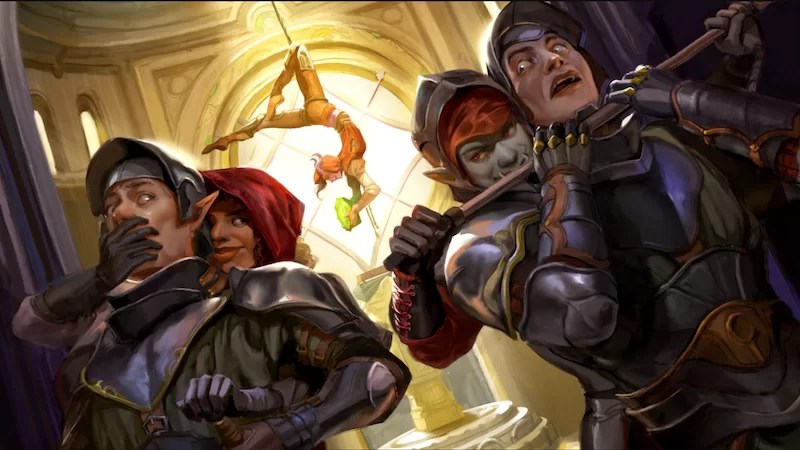
Depending on the campaign, the heroes could be criminals or gentlemen thieves. Perhaps they rob from the rich to give to the poor. Or they loot the temples and tombs of rival faiths. Or they are part of a faction that penetrates the vaults of nobles and bishops to steal the pieces of a great artifact to save the realm.
A religiously motivated campaign of this sort could be a chance to play a rare combination of cleric and rogue.
Perhaps they must be extremely discreet, replacing treasures with copies and leaving no corpses so that no one knows quite what is going on, and they use stealth and magic to cover their tracks. Or perhaps a little spilt blood is the price they must pay to save the kingdom from the clutches of the Unholy Alliance.
The heroes would naturally make enemies among those they plunder, but they might also find more selfish criminals opposing them.
 zarban.com
Leave a comment