


Classic adventures, particularly iconic in James Bond films, often feature the heroes meeting the villain early in the story. They size each other up, feel each other out, and decide how much of a threat, if any, the other is. If you tried this in Dungeons & Dragons, the heroes would likely just try to kill the villain immediately. They don’t have the doubts movie heroes have or, indeed, scruples about committing murder in public. But there are ways you can do this anyway, and it can really enhance your adventure.
Meeting the villain the final confrontation is much more satisfying if the heroes don’t just know the villain by reputation but have instead already spoken with him or her.
1. Mere Stranger
If the heroes meet the villain early on as a stranger, they can form an opinion of him or her founded on personal experience. The villain may be odd, ominous, overly formal, creepy, or otherwise off-putting but not actively hostile and perhaps even hospitable.
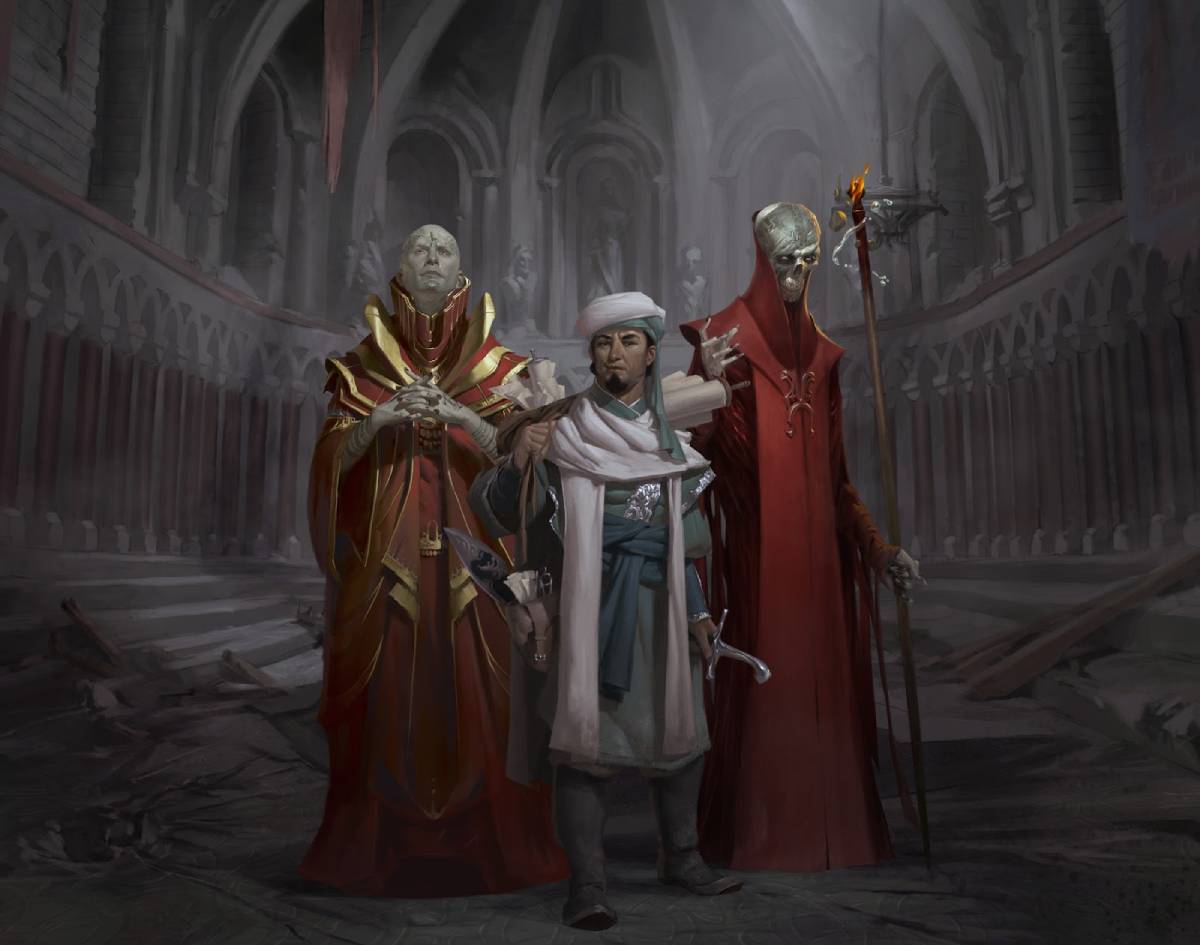
The heroes might encounter a lord who, recognizing their social status, invites them to dine and stay overnight with him instead of pushing on to an inn, but subtle hints leave them mistrustful. Only later to they learn he’s the dark knight all the locals are frightened of.
2. Secret Identity
Among the most obvious ways to avoid the heroes immediately killing the villain is to keep the villain’s identity secret. This is very common in murder mysteries. The villain is somewhere among the six or eight guests at a party, members of the household or staff, etc.
Then when the villain’s identity is revealed, the players will find out if they put the clues together and guessed correctly or if they were fooled. There is a certain feeling of betrayal if the villain turns out to be someone they liked. (But it shouldn’t be someone they trusted.)
If the heroes were fooled, it helps to include the red herring in the confrontation scene as the villain’s dupe, patsy, or prisoner. Then the heroes get to rescue the innocent person they thought was guilty and battle the real villain. That helps ensure they players get the full story in the form of a villain monolog or the innocent’s explanation.
3. Disguised Identity
Secondary to the secret identity is one where the villain appears in disguise when first meeting the heroes. The villain can be masked, polymorphed, covered by an illusion, merely dressed as a peasant, etc.
Then, when they meet again in a final confrontation, the heroes see the villain in full glory or true form. This can be a little tricky if magic is involved, since the heroes could detect it during the initial meeting and ruin the ruse.
4. Surrounded by Guards
If the villain arrives in style and is surrounded by guards who will protect him or her, there’s little the heroes can do about it. The villain can sneer, threaten, and warn the heroes off.
This can be tricky, tho, since players can sometimes throw caution to the wind and hope for a kill followed by a wild chase they may escape. While this can be a fantastic adventure in itself, if you aren’t ready to GM it, it’s very tricky. And just a couple of bad dice rolls it can be a horror show.
5. A Delivered Message
The villain’s message can be delivered by a henchman, either literally giving the heroes a letter or a magic item that displays an illusion, or simply speaking the message him- or herself.
It can be delivered in person or thrown thru a window, or even tied to the neck of a monster the villain controls.
6. Divided by a Barrier
It’s also common for heroes in movies to “meet” the villain early on by telephone or even by a conversation thru a video screen. You can do this with a magical mirror of far seeing, crystal ball, divine vision, smoky apparition, or merely divided by a wall of force.
The heroes may or may not be certain of the villain’s identity, but they can be as suspicious as they want, because there’s no way they can hurt the villain. The villain can be masked, hooded, cloaked in shadow, polymorphed, covered by an illusion, wrapped in fog, or–if their identity doesn’t need to be secret–fully exposed.
7. Across a Chasm
A simpler version of the magical mirror is seeing the villain across a chasm, raging river, poisonous pool, or some other obstacle. This allows for a conversation but not much other interaction.
You have to take care not to allow the heroes to sling deadly spells at the villain, so this may need to be reserved for encounters when the heroes are still low level or are otherwise depleted. Perhaps they’re in a wild magic or anti-magic zone.
8. Captured by the Villain’s Henchmen
While this is common in adventure films, it generally works poorly in RPGs. Players value their agency above all else–including their character’s life–so they will react irrationally to being captured, even if all you want to do is have the villain taunt them and then foolishly allow them to escape.
The only practical way to do it is to use magic or drugs to capture the heroes while they’re unconscious. Then the villain can confront them when they awaken (and proceed to leave them unattended in a what amounts to an escape room). Your players will still hate it, but their characters won’t literally commit suicide in protest.
One way to make it work is to make a side deal with the players. If they’re cool about this cut scene, you’ll give them a boon:
- A magic item
- Cheating death
- The culmination of a heroic duty
- The reversal of a serious failure
 zarban.com
Leave a comment