


I wrote previously about ways to handle religions in Dungeons & Dragons and similar fantasy RPGs. This is more general advice about how to incorporate religions into your campaign.
Keep it Light
Going to deep into the history of religions or conflicts among the gods in your campaign world isn’t likely to help your players care about faiths in your campaign setting. Keep it light and simple. Don’t trap yourself into thinking each of the nine alignments needs its own deity. There’s no reason a lawful good character and a chaotic good character can’t worship the same benevolent deity and just disagree over how important rules and promises are.
Maybe there’s only one good god and one evil. Meanwhile, druids and other neutrals worship (and draw power from) nature, and there’s no actual deity. But maybe that evil deity appears in various forms to its many minions. Or maybe there isn’t even an evil god; evil creatures simply worship demons and devils, witches, and bigger, more horrible monsters.
Make the Gods Untouchable
While its true that some sword-and-sorcery literature suggests that heroes can confront and even defeat gods, it’s best to keep deities out of arm’s reach of player characters. Perhaps a final adventure that caps the campaign involves defeating the Dark Lord, but that being is not a god but a powerful henchmen or, at most, and avatar of a god.
The reason is that gods are inherently so powerful that they should command gigantic armies, super-powerful guardian monsters, and such. And their own powers should be so vast as to be virtually immeasurable. It’s hard to play that in a way that makes a meeting between the god and the heroes make any sense. In many religions, just beholding a god or goddess in their full glory would kill a mortal.

Give the Faithful Drive
Make it a tenet of the good religion to destroy evil temples & restore (or recover artifacts from) good temples. Give clerics and paladins bonus experience points for doing these things.
Make it a habit of evil creatures to destroy or desecrate good temples. Make them sacrifice good creatures to their evil gods. Make them try to use their evil powers to gain control over others. Make them actively evil so the heroes are stopping specific plans and projects from hurting innocent people or nature.
Make Use of Demons & Devils
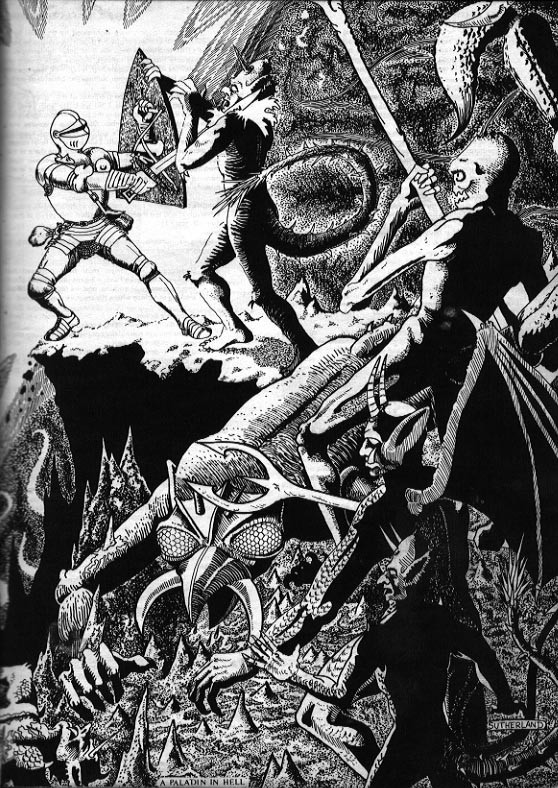
AD&D 1e had a lot (probably too many) demons and devils. These are cool creatures that aren’t your run-of-the-mill random encounters. Active evil temples should usually be able to summon a demon/devil for help. Summoning fiends should be one of the ways they wreak havoc on good folk. Then the heroes can fight such fiends or stop a hellgate from opening or whatever.
Fiends make great guardians, because they can be summoned when needed, so it doesn’t matter how old the temple is. There just needs to be a trap or magical ward that does the summoning.
But don’t make these creatures be just evil bags of hit points. They should be more like ghosts: incorporeal spirits who do evil by mind and body control, corrupting promises of power, and so on. They should only take physical form against those who are too weak to fight back competently or when forced to do so by, perhaps, a powerful cleric. (Turn undead ability but something like “compel fiend”.)
 zarban.com
Leave a comment