


Castles can be very large, but most were quite small and manned by just handfuls of men-at-arms. They tend to be near a city or town that supplied the castle and always on the highest ground, often near or even surrounded by water.
As a general rule, a castle has a curtain wall with towers around a bailey and often a keep. A tower is taller than it is wide (for example, 50 feet high, 25 feet in diameter). A keep is a tower-like building, often wider than it is tall; the image above is really a keep. If the bailey encompasses a whole town or city, it’s really a walled city with a citadel, which often a whole castle but can be just a keep.
- Curtain wall with gatehouse (having a second story to attack those entering thru holes in the floor) and towers at the corners and sometimes between the corners.
- Bailey with several buildings
- Stables and blacksmith shop
- Aviary (falcon mews/dovecote)
- Kennel
- Bakehouse and well
- Barracks and armory
- Storehouse
- Icehouse
- Chapel
- Keep
The keep was the largest and often tallest tower and housed the family and their personal servants. It often had a steep staircase to the entry hall. Sometimes, the keep was the only thing built, resulting in a fortified tower.
- Entry hall (second or third floor)
- Guard room (above entry hall, with portcullis winch and murder holes in floor)
- Gallery (hallway sitting room with many windows)
- Great hall (same floor as entry hall; might instead be in the bailey)
- Library
- Kitchen, buttery, and pantry (not far from great hall)
- Servants’ and guards’ chambers (ground floor or first floor)
- Family bedchambers, garderobes, and latrines (top floor)
- Solar (family sitting room with more windows)
- Private chapel (large castle)
- Counting house (office, top floor or one below)
- Bailiff’s chamber (sleeping chamber and office to run the castle)
- Treasury (vault in the dungeon or tower)
- Cellars and dungeon (with well or cistern, wine cellar, larder, storage, cells for captives, and family crypt)

Sometimes, instead of a keep, stone buildings were built against the inner walls. This was more comfortable but less secure, so it was reserved for locations that were less likely to be besieged or which were more defensible for other reasons (being at the heart of a peaceful realm, on an island in a lake, atop a mountain, etc.).

The Great Hall
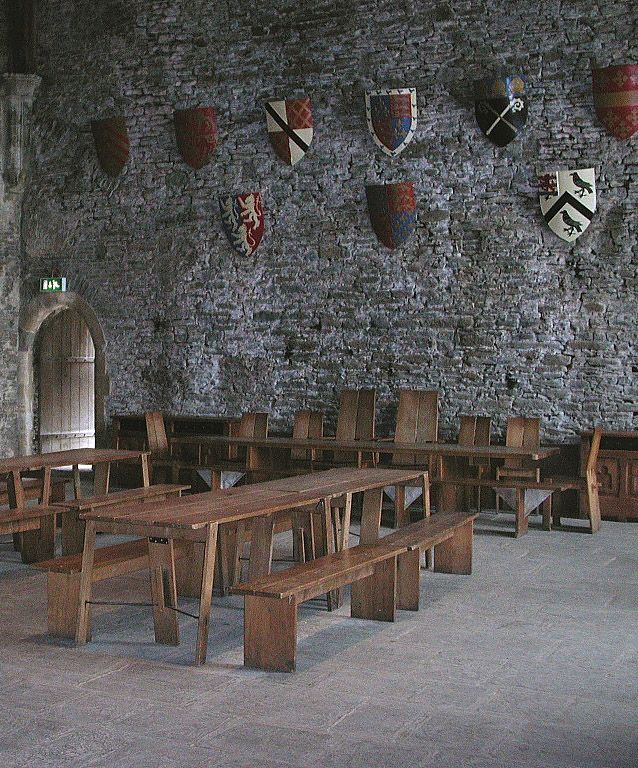
The great hall of a castle is its main feature. In smaller castles and in manor houses, the great hall is where servants and perhaps even the lord and lady sleep. Trestle tables are set up for dining and moved out of the way for other activities.
In larger castles, the family had their own bedchambers, altho their personal servants often slept on the floor beside them.
In a royal castle or palace, the great hall may also be the throne room, or the throne room may be a separate, smaller room for special activities.
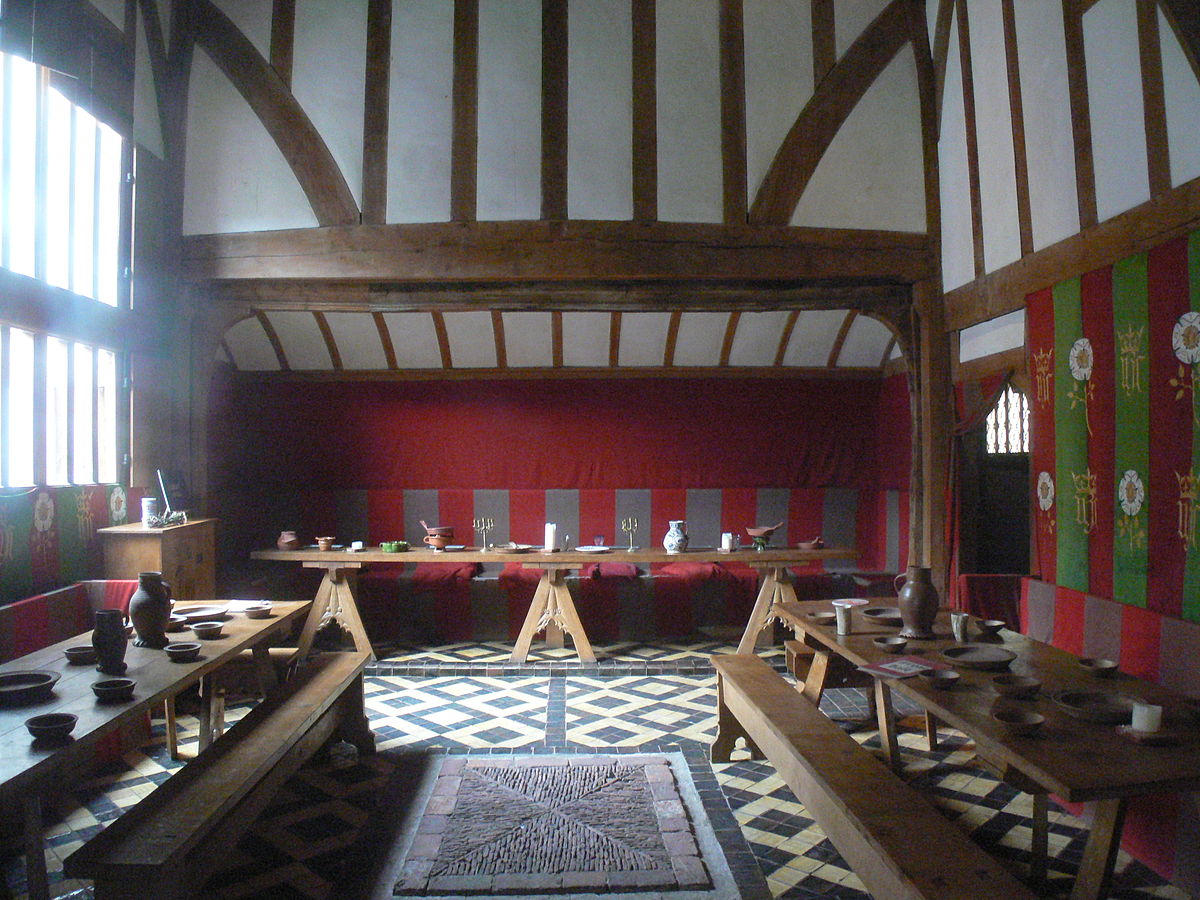
 zarban.com
Leave a comment