


Cities in the Middle Ages were very small, typically 2,000 to 10,000, with capital cities reaching 50,000 to, in a few cases 500,000. But they tend to have a number of things in common. See “Who’s in Your City?” for details.
Every district would typically have its own taverns and a local church/temple.
Note that towns were typically just 500 to 1,500 people and did not have a court, jail, and such. Those were in the city designated to house the seat of government for the county.
Keep in mind that cities change over time, and sometimes things get put where it’s convenient. If a fire wipes out part of a district, the open space might be used for a new church or theater rather than what was there before. And whoever lived there will have to build elsewhere, perhaps crowding into another (poorer) section of town.
Names: Commonly, the prevailing wind is out of the northwest, making the the north and west sides of town more desirable, as smoke and stink get blown south and east. Likewise, rivers tend to flow south and east, so the river is more polluted on those sides of town. If your city’s wind and river flow are different, adjust the location of the different districts.
Overall Layout
Outer Shops and Residences
Unpleasant things like tanneries and dye shops, but also eventually residences, as the population outgrows the walls.
Gates
Locked at night, with towers along the wall surrounding the town, typically manned by ordinary men of the town by turns, but sometimes full-time guards.
High Street
The central street of the city, where the most popular shops are. Often an inn here that caters to tourists/pilgrims.
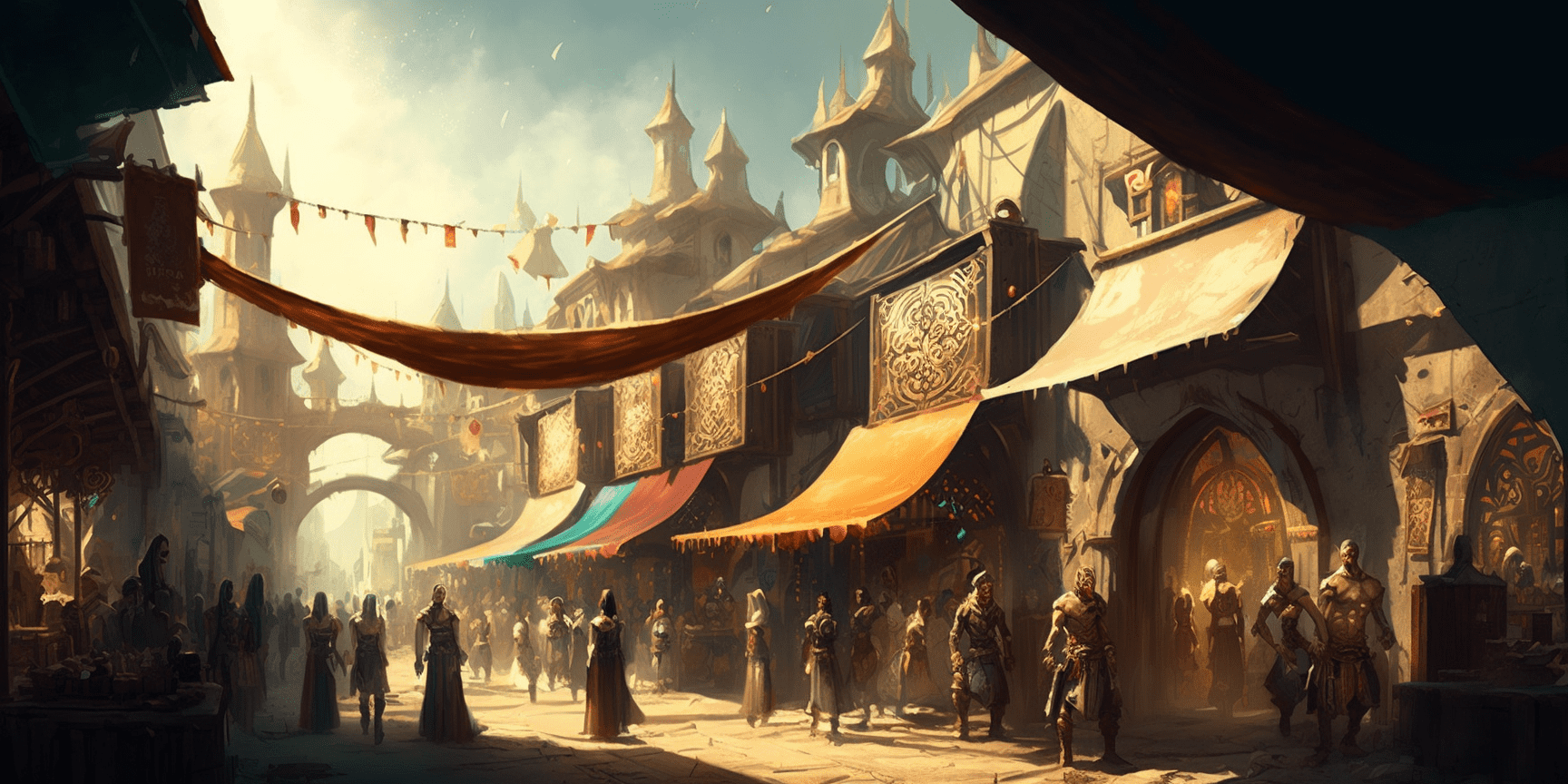
Southgate
The lower-class district, mostly tradesmen, especially close to the high street. Often an inn here that caters to ordinary folk.
Eastgate
The impoverished district, with the highest population concentration. Mostly laborers.
Wharf
A low-class district dominated by warehouses where ships are loaded and unloaded at the docks. The immediate surrounding area is a slum populated by sailors, dockworkers, tavern workers, and unskilled laborers. Often an inn here that caters to sailors and multiple taverns have the very best information about other cities.
Westgate
The middle-class district, mostly craftsmen, especially close to the high street and the market square; often the location of the guildhall. Often an inn here that caters to visiting guild members, merchants, and professionals.
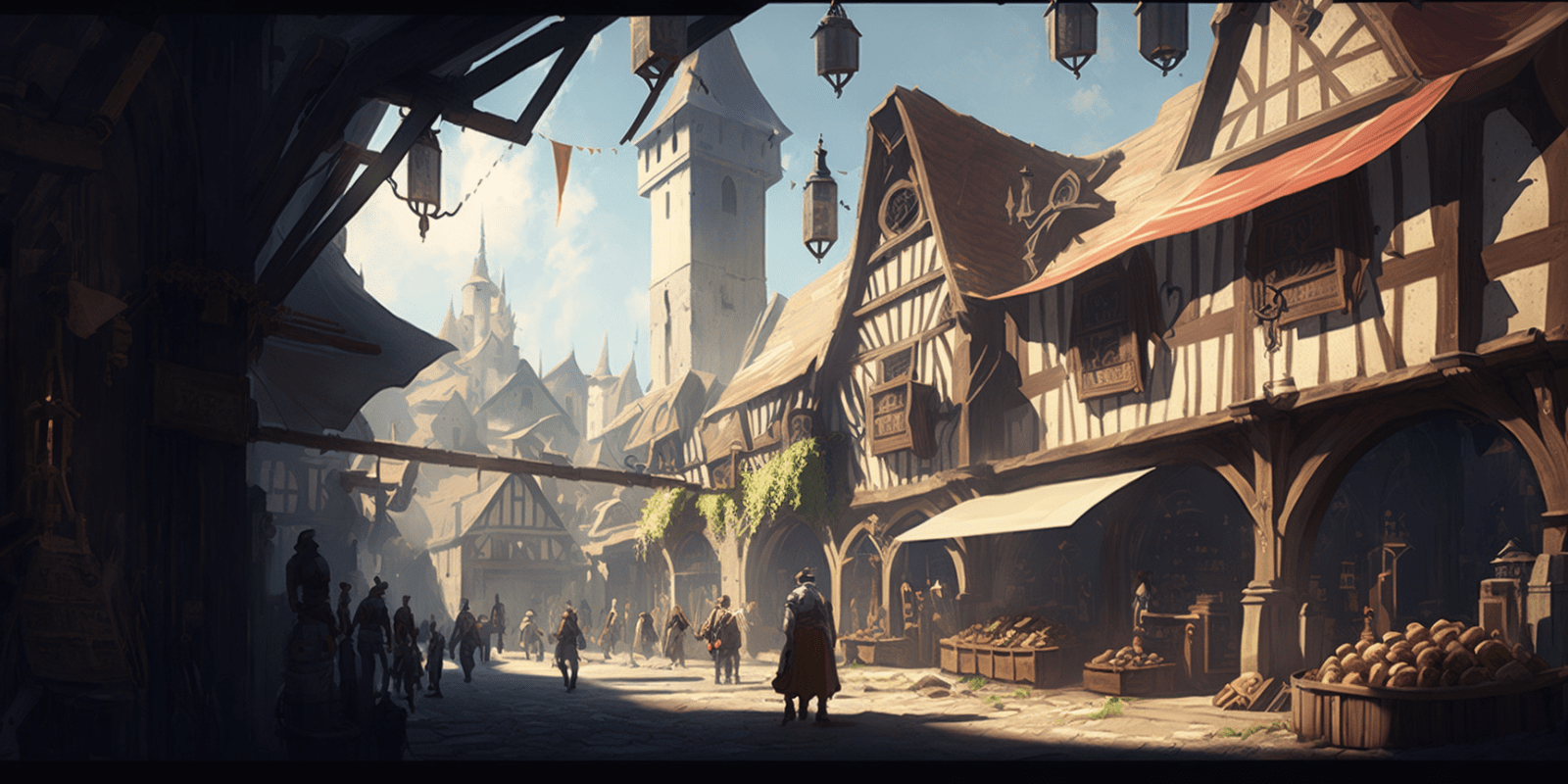
Highgate
The wealthy district in the north, usually at a higher elevation. It’s the home of merchants, professionals, gentry, and fine craftsmen.
Market Square
The open area where a weekly market is held and those who have things to sell set up booths or lay out their wares on blankets and in baskets.

Church/Abbey/Temple District
The location of the main religious establishment, surrounded by residences of those who conduct them. Also typically home to any hospitals, schools, libraries, museums, and such (many of which, historically, would be part of the abbey). Often an inn here, altho historically abbeys often served as inns.
There should also be smaller churches/temples in each district, each accommodating perhaps 200 people. So if the city has 2000 people, there should be 10 or so churches/temples. (Medieval churches had no pews or even benches, because there were no sermons.)
Old Bailey
The district of official buildings, where the court, jail, and such are located, surrounded by residences of the sheriff, judges, and other officials. This area was inside the old town walls, before it grew into a city, and may still have its old wall, separating it from the younger parts of town.
Corporal punishment and executions are conducted here (and/or in the market square). If the city has a mint or other royal office, it’s likely here. If there’s an inn here, it’s the nicest (and most expensive) in the city.

Specific Buildings
Government Buildings
Government buildings are typically places of administration found only in the realm’s largest cities.

- Chancery (office where clerks create and store official documents)
- Royal mint or moneyer
- Armory/arsenal
- Guild hall
- Jailhouse or prison
- Record archive or college of arms
- Court of law
- House of parliament/senate/royal council
- Noble or royal court castle
- Palace
City Buildings
Altho typically found in a city, many of these could be among the last remaining structures when the rest of a town was destroyed or has fallen into ruin.
- Colosseum, amphitheater, or theater
- Clock, bell, or signal tower (straight or leaning)
- Bakehouse
- Abbey, church, cathedral, or temple
- Inn, tavern, gambling house, or bawdy house
- Mansion, house of apartments
- Bathhouse
- Warehouse or storehouse
- Warrior training ground building
- Library (very small)
- Bank or moneylender
- Charnel house or morgue
- Cemetery or churchyard maintenance building
- Catacombs or crypt (underground)
- Hospital or infirmary
- Manufactory (pins, rope, etc.)
- Artist/sculptor studio
- Museum, hall of heroes, or statuary garden
- School, college, or academy
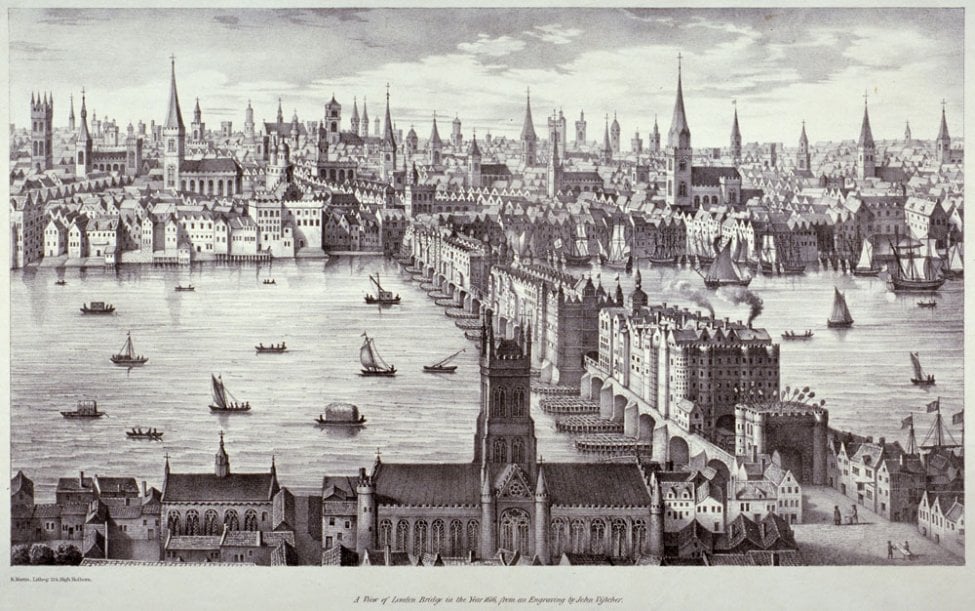
- Bridge large enough to have shops
Shops
A city needs houses for all the various townsfolk and workshops for all the various craftsmen who live there. Refer to Who’s In Your City? for that list.
 zarban.com
Leave a comment