

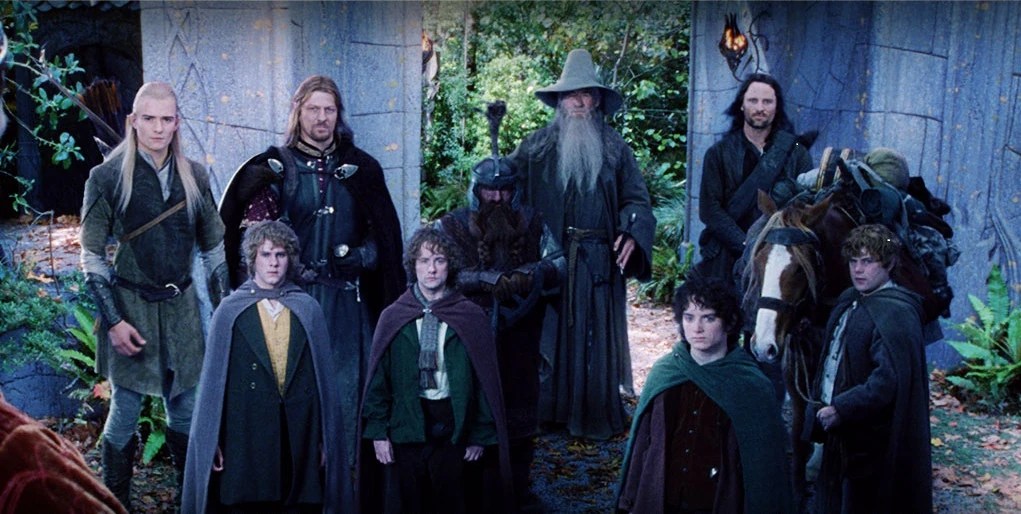
The traditional AD&D character classes (where class and race were separated) are fighter, ranger, paladin, magic-user (later wizard),cleric (later priest), druid, thief (later rogue), assassin, bard, and monk. Others came and went, most notably barbarian, which has come back. Most of these are straight from folklore, altho fighter, magic-user, and rogue are pretty generic and not really terms used much in folklore.
Fighter and magic-user always struck me as clunky terms. Why not warrior and wizard? Historically, fighter should be man-at-arms or footman, but those are both clumsy terms, too. Warrior can encompass all the 1st-level choices of sword-and-board, archer, two-handed weapon, etc.
I’ve never quite understood by Gary Gygax avoided making knight a character class. A paladin (a term that comes from Charlemagne’s household guard) is basically a knight errant modeled on the Grail knights of Arthurian legend and Charlemagne’s Twelve Peers, but the game never leaned into that. There’s no mechanic for knighthood. Gygax added the cavalier in his first Unearthed Arcana book in 1985, but that class didn’t last.
A lot of old-school games, including Shadowdark, offer something akin to a genre standard: cleric, fighter, thief, and wizard, possibly with sub-classes or additional classes in supplements. Low Fantasy Gaming offers a solid list: artificer, barbarian, bard, cultist (cleric), fighter, magic user, monk, ranger, and rogue. Grim Hollow and 13th Age offer similar lists: barbarian, bard, cleric, druid (GH),fighter, monk (GH), paladin, ranger, rogue, sorcerer, warlock (GH), and wizard.
In Matt Colville’s fantasy role-playing game, the classes of character you can choose to play include shadow, tactician, elementalist, and conduit, a bizarre set of terms that mean nothing outside the game. No child grows up reading books and watching movies and thinking “Wow, it would be so cool to be a conduit!” Hagrid didn’t say, “You’re an elementalist, Harry!”
Colville was asked directly about archer as a class and rejected it, saying he felt it would be too hard to create good features for such a class. (He did end up making it a kit, tho, calling it “sniper“, which is a bizarre choice.) I suppose he felt it was too narrow, as if artificer and druid are full-featured concepts in fiction? In reality, plenty of D&D players play rangers as archers, and 5e has plenty of archery feats to support that; many such rangers virtually ignore their druidic capabilities.
Many think of their ranger as Legolas from The Lord of the Rings, but it was Aragorn who was explicitly a ranger and whom the class was modeled after. Legolas would presumably have been a fighter. But what most players want, I suspect, is something like Robin Hood.
Classic Classes
It seems to me that a flavorful medieval fantasy game should lean into the lore and use the traditional terms from literature.
- Warrior
- Knight
- Archer (on the fence about this, since it might be better as a warrior specialization)
- Wizard (and perhaps Sorcerer, if we differentiate them by their mechanics)
- Cleric (god-worshiper)
- Druid (nature-worshiper)
- Monk (ancestor-worshiper)
- Rogue
The archer would typically have a rural background (traditionally, country yeomen trained as archers) and nature features like D&D rangers and Robin Hood’s Merry Men. But one could also opt for a more urban archer as well, like a castle defender. Meanwhile, warriors and barbarians could also opt for nature features.
The term “ranger” might instead be applied to a faction. Aragorn, the archetypal ranger, was a Ranger of the North, as opposed to a Ranger of Gondor. As a faction, it could refer to warriors, archers, rogues, and druids tasked with scouting and border defense.
Specialization
I think specialization at level 1 will be important. Warriors could specialize in weapon-and-shield, two-handed weapons, archery, dual-weapons, or double-daggers. Rogues might be allow specialties too, including double-dagger, archery, and backstabbing. I think warriors should be able to try any specialty but get extra benefits in their chosen specialty. A dual-weapon-wielder, for example, could shoot a bow just fine but wouldn’t be able to do archer tricks, for example.
Combination Classes
Knights could opt for the goody-goody paladin features by playing a knight/cleric. However, I personally would prefer to avoid multi-classing. After all, that’s not how characters in classic literature are normally described. One who was is Conan the barbarian, who has often called a warrior and a thief. I prefer combination classes, which is to say a separate class that has elements of two classes.
- Paladin (knight with some cleric)
- Barbarian (warrior with some rogue)
- Bard (warrior with some wizard)
- Witch (druid with some wizard)
- Swashbuckler (rogue with some warrior)
- Mountebank (rogue with some wizard)
- Witch (druid with some wizard)
This provides cleaner mechanics (avoiding the bookkeeping issues of multi-classing). By making these popular combinations into classes of their own, they could have extra little flavor features that a mere dual-class character wouldn’t have. Note also that in stock D&D, a fighter/thief and a thief/fighter are the same, but here you have the barbarian and the swashbuckler, which would be a bit of both and yet very different.
No Level Dips
Combination classes would also allow us to eliminate one modern gaming idea that I don’t like: allowing characters to “level dip” to snag various features from another class the player doesn’t really care about. This blurs the lines between classes and tends to result in overpowered characters, at least for the specific campaign they’re playing in. I prefer campaigns about stalwart adventurers, not characters each trying to optimize their skill set.
 zarban.com
Leave a comment