

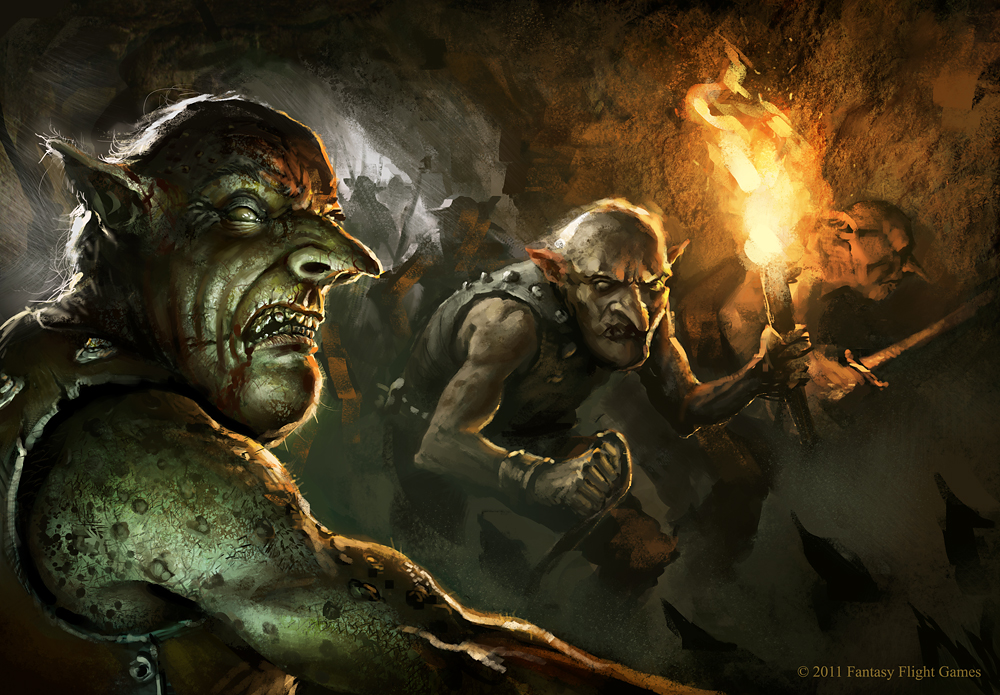
A lot of goblin and orc encounters are just hack-and-slash slogs in a flat, 20-foot-square room. Make yours more interesting.
I previously documented several combat scenarios that use secret doors and pits.
Alarms
Raising the alarm when your home is attacked is a pretty basic idea. The potential of alarm can encourage heroes to use stealth & scouting to try to avoid alerting every denizen of a camp or cave complex to their presence.
Alarms can be shouts, bells, or even silent signals. Sentries might train a dog to run to the chief when released, which is their signal that intruders are approaching.
Put a couple of sentries outside the lair. They don’t have to be particularly good at their job. A smart party should be able to catch them unawares.
Ledges
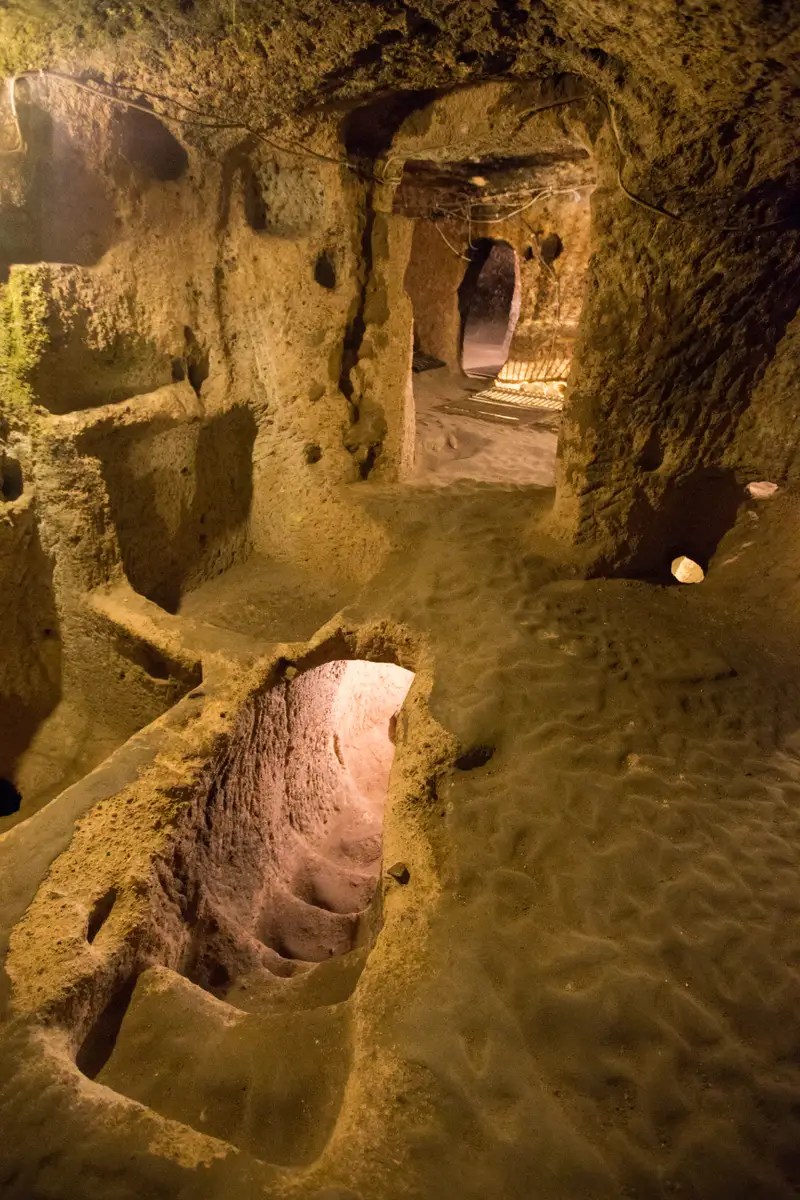
Natural caverns and tunneled chambers alike should have various ledges and overlooks here and there. These are great for storing away items not needed often but also for defending your lair. A log or large rock placed in front of a low ledge provides a seat and also a step to get up to the ledge. Now the heroes are fighting a creature with advantage for having the high ground.
Humanoids can reach a higher ledge–out of reach of most melee weapons–with a climbing pole. This is a small tree cut down and trimmed of its branches. Leaned against the wall, the creature climbs it using the remaining branch stubs like ladder rungs. Once up on the ledge, the creature can pull the pole up with them and attack intruders with rocks and arrows.
Stairways
Stairways work pretty well as ledges, in addition to being a way to created depth and hierarchy in a tunnel system (and reach a water source). Those at the top of the stairs get advantage over those below, so the initial passageways in a lair might descend substantially (or start at the bottom of a hill), while the rest gradually ascend, so that intruders are always fighting an uphill battle. That also puts the chieftain’s chamber close to the surface, where an escape passage can be short (but low and narrow).
Pits
A pit doesn’t have to be a camouflaged trap. It can just be a pit used to hold prisoners or refuse. Sited in some out-of-the-way passage, the heroes can stumble on it in the dark and be challenged. The inhabitants can try to push the heroes into it (perhaps garnering a prisoner).
A pit the size of a chamber can hold several prisoners. The inhabitants use a climbing pole to get in and out, but they pull it up with them.
A refuse pit could contain an otyugh or similar creature happy to live among waste, carcasses, bones, cast-off refuse of other sorts.
Rockfalls
Rockfalls & similar traps can be left unarmed & only be set when the alarm is raided. That way, traps can be located in well traveled corridors & still be safe for the denizens under normal circumstances. Sneaky heroes who avoid raising the alarm can therefore avoid the traps as well. Aside from rockfalls, this can include flooding, nets, and caged monsters.
Screens
Similar to ledges, screens and blinds can offer creatures with bows a vantage point from which to attack with advantage. In this case, it’s with cover, because a screen–made out of wooden poles or stone walls–has holes in it that allow the inhabitants to attack invaders on the other side.
This tactic is used by humans, of course, in a castle gatehouse with murder holes and arrow slits.
Secret Doors
Secret doors are great for hiding vaults containing valuables, but they also allow the inhabitants to move around and get the drop on invaders from behind or divide them from the flanks. Goblins and kobolds probably wouldn’t bother with normal doors for the most part, so secret doors will tend to be moving pieces of stone walls.
 zarban.com
Leave a comment