

In the old days, a D&D DM rolled up a treasure based on the treasure type of the monster they encountered. Each treasure type had a percentage chance for various coins, gems, and magic items. Blog of Holding did a good review of each D&D edition’s treasure determination method. More recent editions have streamlined treasure determination but also made them largely identical.
The beauty of the old tables–before 3e–is that the same treasure type can yield substantially different treasures depending on the rolls. If you make those rolls in front of the players–or let the players roll–it feels more exciting, like gambling. They might catch a big score or get very little.

Random Intermittent Reinforcement
This is called “random intermittent reinforcement”, and it’s used by the gambling industry and video game developers to keep players playing (and by abusers to keep partners from leaving, but that’s another kettle of fish).
Notice how, in the type A row, there’s a 35% chance of 1000 to 6000 pieces of electrum, a 40% chance of 1000 to 10000 pieces of gold, and a 25% chance of 100 to 400 pieces of platinum. Since everything can be converted to gold, that amounts to a 35% chance of 500 to 3000 gp, a 40% chance of 1000 to 10,000 gp, and a 25% chance of 500 to 2000 gp, and likewise for the other items. This all equates to a big multi-dice bell curve where, if you hit big on electrum, gold, and platinum, you could get up to 15,000 gp–not to mention gems, jewelry, and magic items. But then again maybe you go bust on all that, and it’s just a small pile of coppers.
As Blog of Holding pointed out, this method requires a lot of dice rolling. Not only do you roll percentiles for each coin and then roll again for how much, but if you roll up gems, jewelry, or magic items, you’ll need to do even more rolling to find out what kind. So that aspect could be toned down, and you’d still have a lot of fun.
Now, there’s probably too much treasure given out by the old tables. The system assumed characters were saving up to build a stronghold, but few care about such things now (altho WotC wrote an optimistic “bastion” system into the 2024 books).
I would suggest, therefore, that you create your own table with smaller treasures, but you should maintain the randomness, so that there’s no telling what treasure might be found. I’ve created my own treasure type system here for a bottom-up system like old-school D&D. But what would a perfect system look like?
The (Theoretically) Perfect Treasure System
In my system, I want to say that an adventure of a given level is roughly worth a certain amount. That suggests that I should adopt a top-down method like 4e, where each level has ten “treasure parcels” you can roll up. These get absurd at high levels (and 4e went to 30th level), but they’re nice at low levels; the only problem is that there’s not enough chance: each of the ten parcels is worth roughly the same amount, except for the magic items. But it also recommends that you sometimes give out multiple parcels for an encounter and sometimes nothing at all, but there’s no mechanism to help with this.
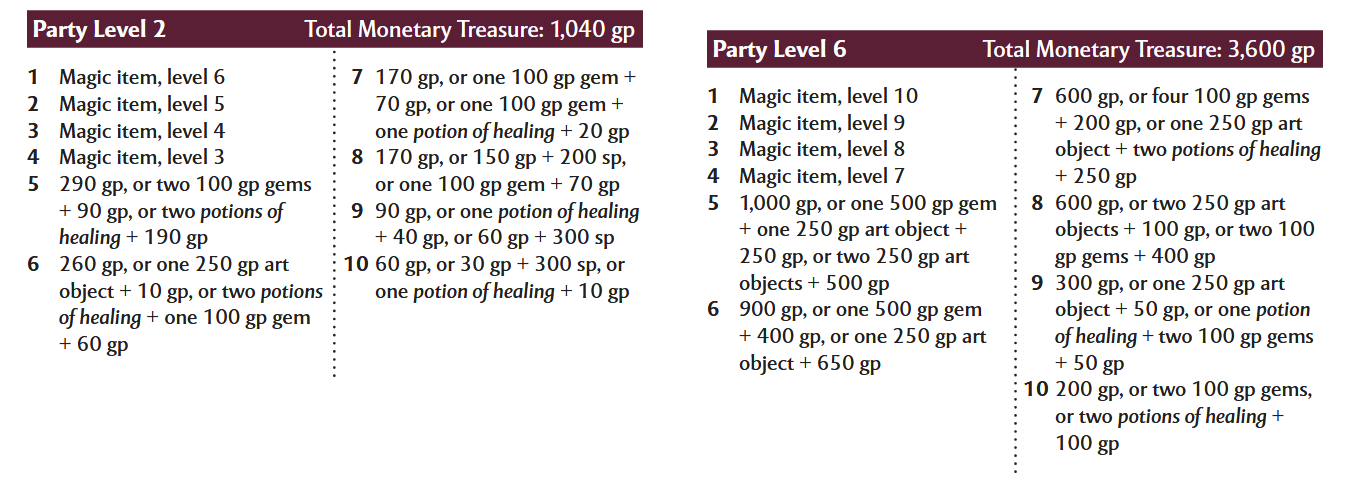
I think the better thing to do is to go by adventure level with suggested total treasure but tie actual treasure to the creatures the heroes encounter:
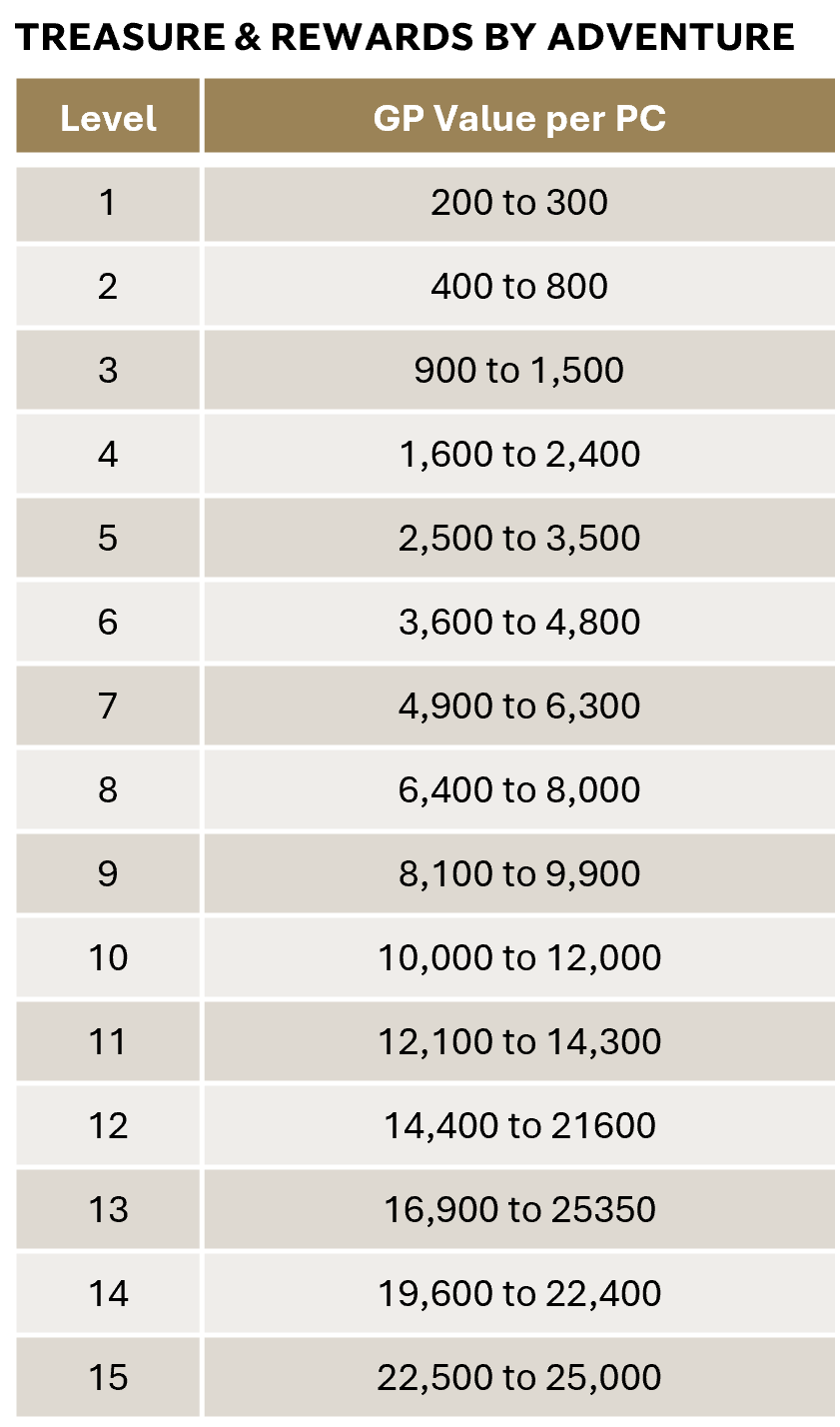
- Each level has an expected amount of treasure per hero per adventure.
- Each adventure is expected to have roughly 12 challenges with dangerous monsters and traps and 12 treasure parcels.
- Some encounters can be smaller, so the main treasure hoard can be bigger.
- Double-check that you’ve scaled the adventure correctly by counting likely encounters and total treasure likely to be claimed.
Use my treasure system as the parcels. Because of the way the treasure types are set up, you can take note of all the treasure types while creating the adventure, roll up some (leaving some for the players to roll), and scatter that around the adventure wherever they make sense (instead specifically with each creature).
 zarban.com
Leave a comment