


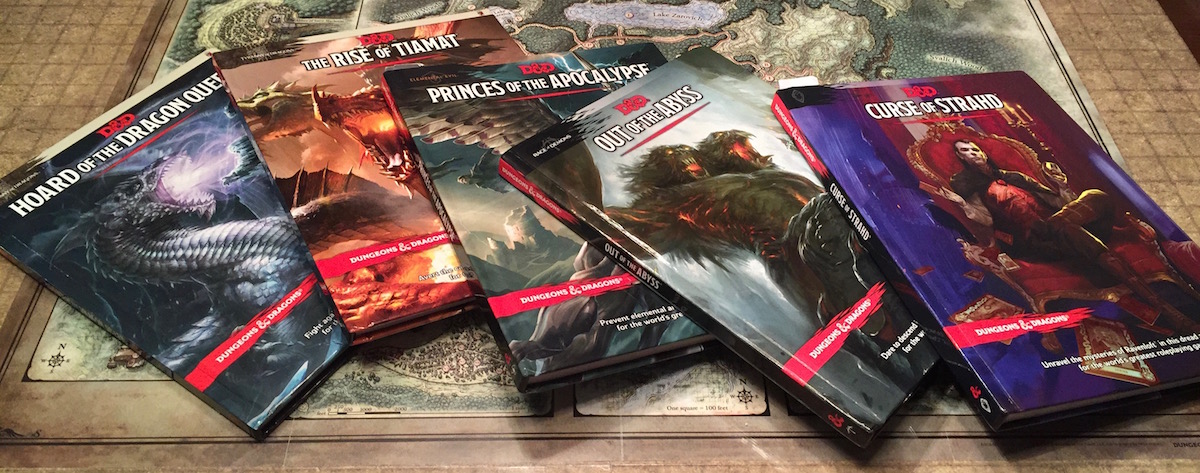
As I’ve mentioned previously, pacing is critical to making the players feel the adventure is moving along and the story is progressing. Forget the giant “adventure” books Wizards of the Coast puts out and aim to get the heroes into the meat of the adventure quickly and out again soon after.
Overall Structure
Adventures should have five parts, but how these break down over four to five sessions is flexible. Before the adventure really starts, the heroes need to have learned about it and gained the motivation to take it on (rumors of treasure, the promise of reward, the need to foil a threat, the desire for revenge, etc.).
- Setting Out: Modest initial challenges
- Crisis: A crisis signals things now get harder
- Hardship: Tougher challenges directly tied to the treasure or threat
- Setback: A setback tied to the discovery of the key to beating the villain
- Climax: A final confrontation that resolves the mystery/threat and results in treasure
Setting Out
The very first session should see the heroes setting out and traveling to the main location of the adventure. Encounters should be light but not pointless. Don’t waste playing time with inconsequential encounters (combat or social) except where necessary to prop up a lagging session. Instead, use a patrol of the villain’s minions or secondary bad guys that carry information about the villain. Or the heroes could encounter a puzzle or trap that slows them down and yet confirms that they’re on the right track. Challenges that also reveal something about the rest of the adventure are solid gold.
By the end of the session, the players should feel like they have the full picture of what the adventure is about, so they can be confident about what their goal is, who the bad guys are, and what their expected reward is. Generally, this should include reaching the main location of the adventure. But some clues they encounter should also deepen the central mystery and so keep them intrigued.
Crisis
The second session should get the heroes significantly further toward their goal by exploring the main location. Clues might reveal relationships among the bad guys and innocent bystanders, the intentions and location of the bad guys, and/or a catch the heroes will need to work out before they can confront the bad guys.
Ideally, the session should end with a crisis.
- The death of an allied NPC.
- A dark revelation about the villain’s purpose or efforts.
- The introduction of a ticking clock.
- The raising of an alarm.
- Crossing a threshold to descend to a deeper level.
- Discovery of the villain’s lair, which gives the villain a “home-court advantage”.
Hardship
The second half of the adventure should be harder, usually involving more direct confrontation with the bad guys. The heroes may still be dealing with the crisis at the end of the previous session. This might take more than one session by itself.
Setback
The hardship culminates in a serious setback of some kind.
- The villain slips thru the heroes’ fingers, but leaves behind a clue.
- The heroes discover the villain’s plan is already in action.
- The heroes discover the villain is hunting them.
- An ally dies or is captured, but the body of the villain’s henchman carries a clue.
- The heroes discover an ally is a traitor, but that in itself is a clue.
But almost immediately, the heroes should gain some crucial piece of information or a tool that will help them get to a final confrontation. Ideally, the third or fourth session ends here.
- The identity or location of the villain.
- The source of the villain’s power.
- The villain’s weakness.
- The death of the villain’s main henchman or guardian.
- The key to the villain’s lair.
- A magic item needed for success.
- A clue to the final puzzle.
- Answer to the main mystery.
Climax
The heroes will have some final challenges, like a trap, puzzle, predicament, or guardian, then confront the villain in the fourth or fifth session. The villain should rarely be confronted alone. He or she should be accompanied by a bodyguard of minions or a hefty henchman that can hold off the heroes for a few rounds, so the villain can get in some licks.
It’s okay if the heroes sometimes get at and dispatch the villain quickly. But you might have some final challenge before the heroes can claim the villain’s treasure. You might even have the death of the villain or the claiming of the treasure cause the villain’s lair to start to collapse, requiring the heroes to flee for their lives despite being victorious.
Success should result in reward or the recovery of treasure, as well as the final answer to any mystery that might have started the heroes off. Most heroes won’t stand still for any villainous monolog. Just leave dastardly plans lying around with all the information and incriminating evidence they could ask for.
 zarban.com
Leave a comment