

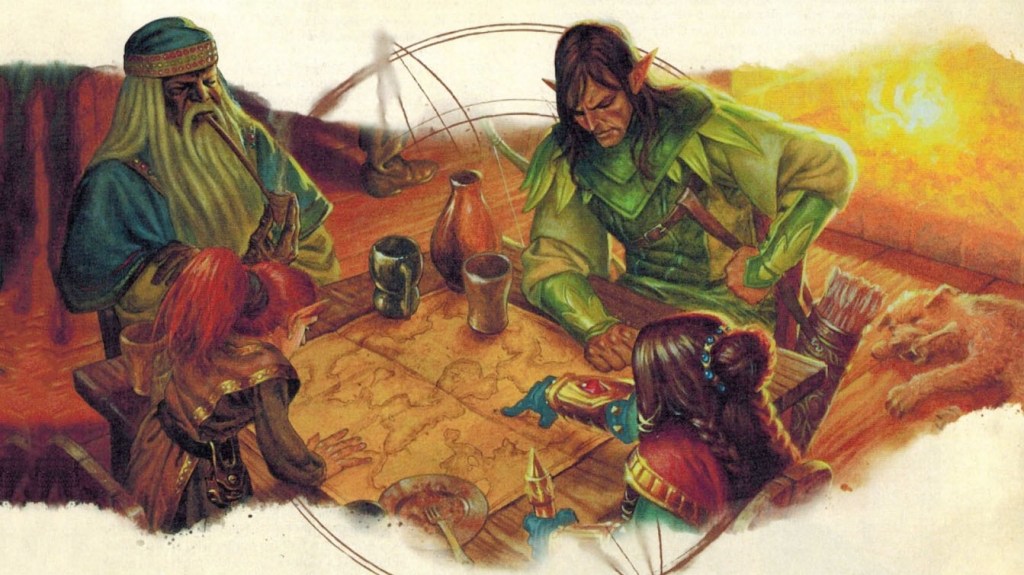
Creating a medieval fantasy campaign doesn’t have to be a huge chore. Start small and build a web.
Start Small
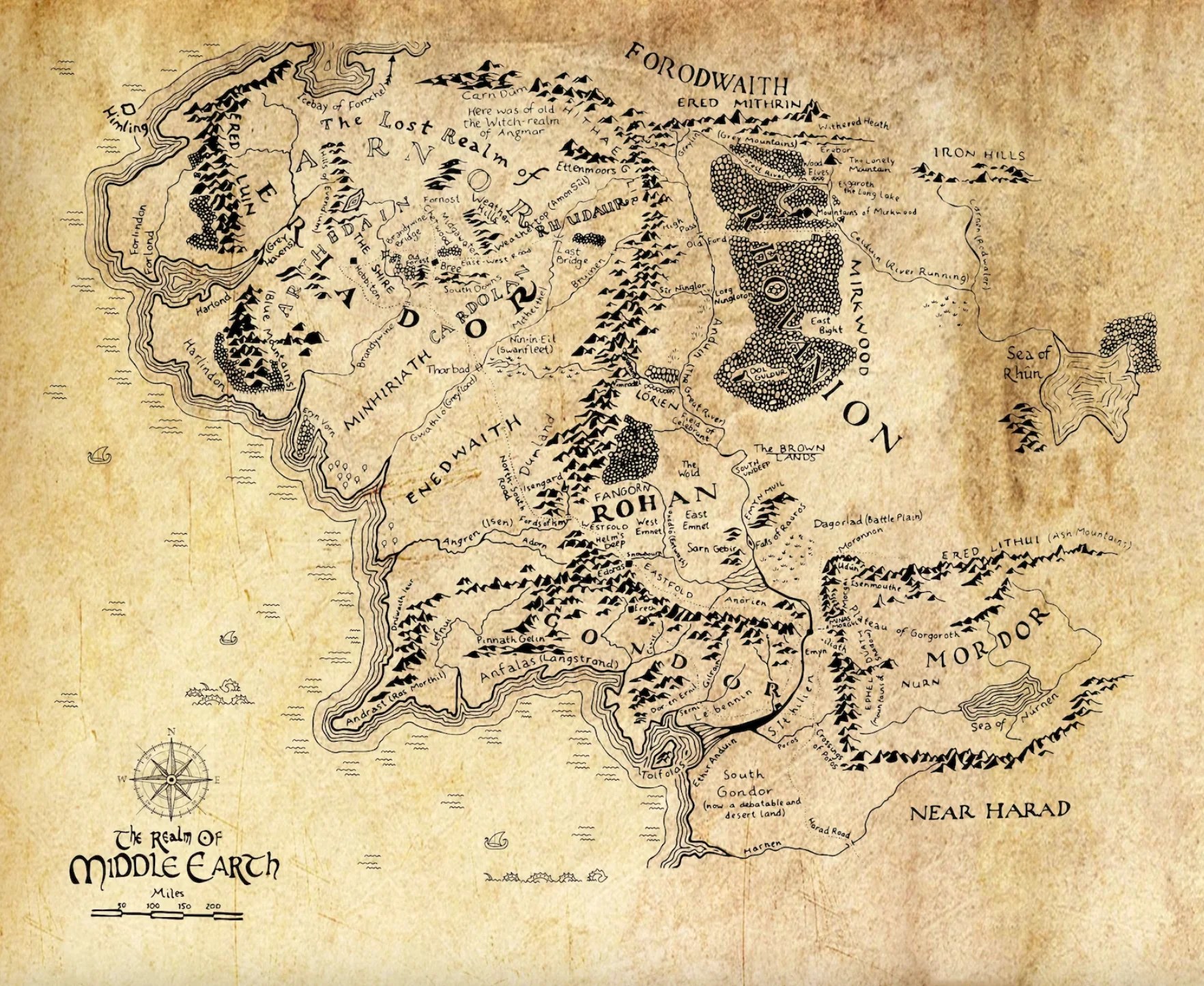
Start by creating a map of your realm. This should have a fair number of cities and a few major known perils, like a dragon in the mountains and a ruined ancient palace full of monsters. But your world should also have a few pieces of dramatic structure.
- An evil noble to threaten the peace
- A scheming merchant to smuggle contraband and fence goods
- A lasting grudge between two peoples
- A family feud that makes peace impossible
- A lost treasure that stirs the blood of adventurers
- A troubling mystery that continues to haunt people
- A percolating menace that threatens the stability of society
Then create a local map for the heroes’ starting city. This should have about three local peril locations. In the city, the heroes will hear about the three perils, giving them options about their first couple of adventures.
Then, during each adventure, something they find or someone they talk to can provide a lead on another adventure to be had some distance away, near another city.
Weave the Web
When they’re ready, the heroes can travel to that other city to use it as a base to pursue the new adventure they heard about. But, of course, once they get to that city, you’ll have prepared another local map for it that has about three of its own perilous locations, and they’ll get leads about them for their next few adventures. Each city should have its own character and goods and services that are available; don’t have everything from houses to ships to custom armor to item enchanting services available in one city.
In this way, you can lure the heroes from city to city across your realm, keeping situations fresh and new, and letting them explore in whichever direction they like. You only need to stay one step ahead of them, preparing material for the next city and the next adventure as they announce they’re going to pursue it.
Sometimes, the leads can build on the emerging story: the villain who got away has been seen elsewhere, or the doppelgangers who gave them trouble have been posing as them. Other times, it’s more conventional rumors about treasures to be won and/or evil to be vanquished.
Scale Up
As the heroes advance, scale up the adventures to match. Have the NPCs the heroes interact with be people of higher status: lords, church officials, nobles, the council of wizards. At some point, you may want to start seeding leads that can hook them into taking on one of the major perils that appear on your realm map. That’s the ancient dragon, the evil overlord, the powerful cult, the infamous lich, and so on.
Just a few mentions here and there can feed their legends: a noblewoman needs your help with a bulette because her husband—a powerful knight—was killed in the Pit of Horrors. Then you’ve developed its reputation as a daunting place for that moment when the king himself offers a noble title to any brave enough to delve the depths of the Pit of Horrors and slay what foul creatures dwell there. Or maybe the heroes’ starting city was devastated by an attack by the ancient dragon, and slaying it becomes a point of honor.
 zarban.com
Leave a comment