

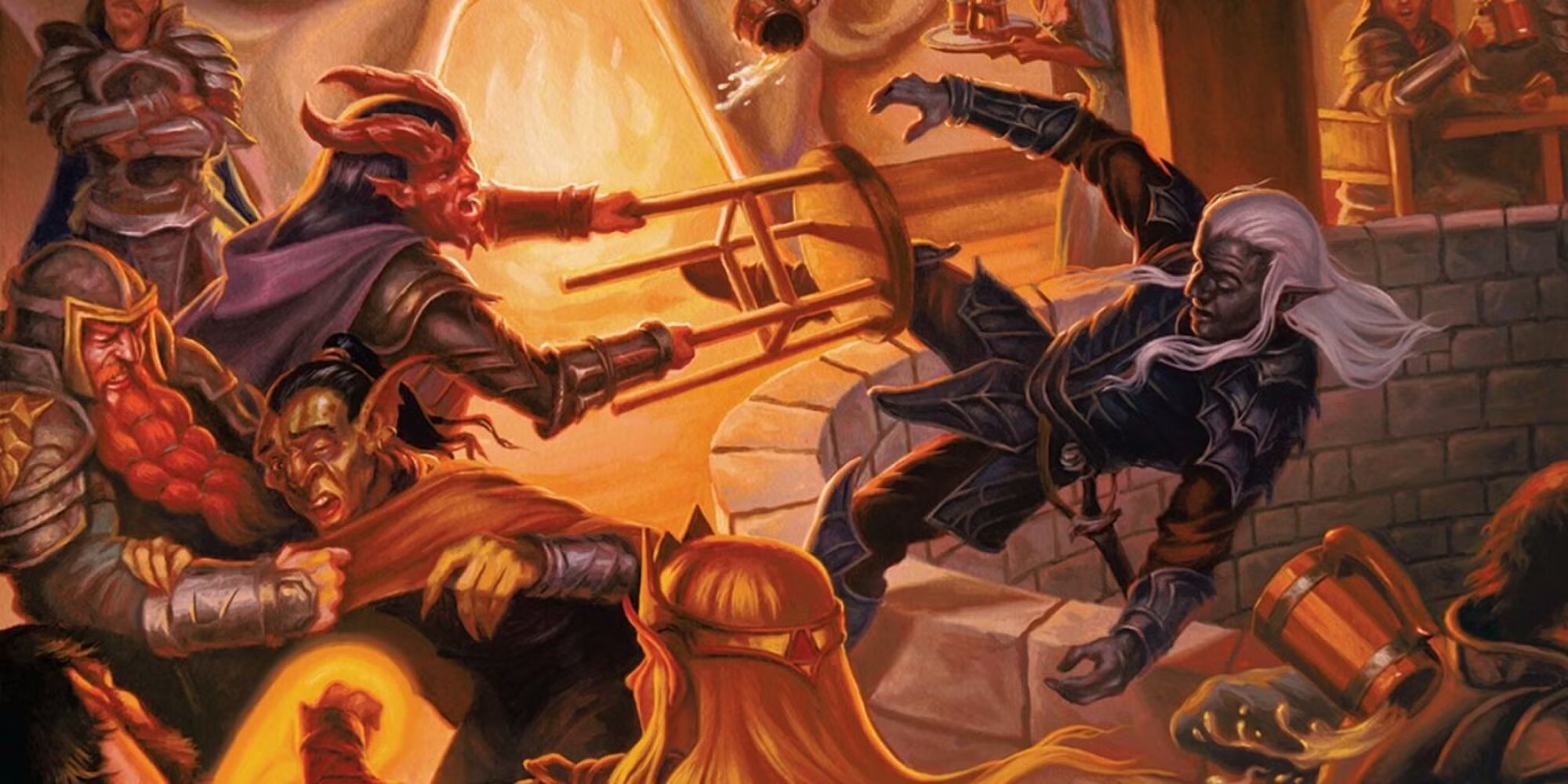
Just about everyone likes the idea of a tavern brawl in a fantasy RPG. But the rules for D&D and similar games are so focused on lethal combat that it’s hard to figure out how to have an old-fashioned dust up without it resulting in murder charges.
Worse, it would be great to smash a chair over someone’s head in a lethal fight too, but improvised weapons are normally listed as doing significantly less damage than martial weapons, because otherwise heroes would be smacking monsters with clay pots and frying pans all the time. I think the solution is actually pretty simple.
Regardless of whether it’s a hit or miss, the improvised weapon is destroyed (smashed on the opponent or the floor or wall, or smashed by the opponent blocking it). A hit does 2d4 non-lethal damage and requires the opponent that is not wearing a helmet (or has an extra thick skull, like an ogre) to make a constitution save or be knocked unconscious.
Note that for any normal melee attack declared to be a non-lethal attack, the damage is cut in half. If its damage is the one that reduces the opponent to zero hit points, the opponent is knocked unconscious instead of seriously wounded. An improvised weapon’s non-lethal damage is not cut in half.
Improvised weapons:
- Wooden chair
- Wooden stool
- Wooden cask (little barrel)
- Clay pot or small urn
- Tin cooking pot
- Sturdy stick of firewood or tree branch
- A framed painting (yeah, it’s not really likely to knock someone out, but it’s a great movie trope)
Materials that are more solid but not designed to be weapons do 2d4 bludgeoning damage. They break on an attack roll of natural 1 and crack on a natural 2 (breaking with the next attack, regardless of roll). They don’t have a chance of knocking the opponent unconscious.
- Cooking pan
- Small cauldron
- Chunk of rock
- A dead goblin/halfling/etc.
While these do (in an OSR system) as much damage as some martial weapons (and count as melee attacks for mechanical purposes), they all (in my system) cost 1 or more encumbrance slots and have more of a chance of breaking and so make inferior weapons in the long run.
 zarban.com
Leave a comment