

I’ve posted a list of different kinds of ruins and advice for building dungeons, as well as tables for populating them and making dungeon rooms more interactive. Now I present a set of tables for rolling up different kinds of dungeons and what’s in them. Dungeons come in many forms and should have a little history that remains discoverable as well as interesting secrets about what it has become.
Categories
- Subterranean location
- Subterranean location
- Ruined Surface structure with subterranean parts
- Surface structure(s)
- Natural location
- Bizarre location
Subterranean Locations
What it is now…
- Lair of a powerful monster (ogre, troll, minotaur, medusa, beholder, dragon, etc.) with some miscellaneous creatures (mimics, oozes, giant spiders, otyugh, etc.).
- Humanoids’ lair (kobolds, goblins, orcs, hobgoblins, sahuagin, lizardfolk, etc.).
- Temple of an evil cult with disused rooms containing monstrous creatures or traps.
- Tomb of a powerful NPC (noble, wizard, high priest, etc.), full of traps and puzzles, including undead and/or constructs and the occasional ooze.
- Catacombs full of corpses, undead, and miscellaneous monsters (mimics, oozes, giant spiders, otyugh, etc.) that don’t mind such things.
- City of evil creatures (gray dwarves, drow, mind flayers, demons, slavers, etc.).
What it was…
Subterranean chambers connected by passages can start as…(1d6: 1-2=a natural cavern; 3-4=passages carved out of rock; 5-6=a former mine).
Natural Cavern
A natural cavern complex that was dug out to be a lair or have some other purpose should be common, since passages and chambers already naturally exist. Tight squeezes would be enlarged, some rooms would be squared up, floors and perhaps ceilings would be flattened out. This creates a subterranean dungeon that is random, has sloping passages and/or stairways, has water features, and may still have natural ceilings with stalactites.
Not all sections may have been finished, so parts may still be natural and perhaps home to weird creatures; those parts may be blocked but could have some other way out.
- Natural caverns that remained so, with stalactites on the ceiling and stalagmites on the floor.
- Natural caverns dug out by humanoids as a lair but still has stalactites hanging from the ceilings.
- Natural caverns dug out to be a temple.
- Natural caverns dug out to be a monastery.
- Natural caverns dug out to be a tomb.
- Natural caverns dug out to be a catacombs.
- Natural caverns dug out to be a storehouse or cellar.
- Natural caverns dug out to be a subterranean city.
Carved out of the Rock
Tunnel and chamber systems (such as Derinkuyu and Cappadocia) are sometimes carved out of soft stone, usually volcanic or limestone. The stone removed may be may be traded away or used to build surface buildings. They may be carved along a cliff face, so some chambers have windows, or carved deep underground.
- Tunneled by… (1d6: 1=carrion crawlers; 2=giant sloth; 3=purple worm; 4=dragon; 5=umber hulk; 6=remorhaz).
- Tunneled by… (1d6: 1=carrion crawlers; 2=giant sloth; 3=purple worm; 4=dragon; 5=umber hulk; 6=remorhaz) but expanded later by unknown humanoids.
- Dug out by humanoids as a lair.
- Dug out to be a temple.
- Dug out to be a monastery.
- Dug out to be catacombs.
- Dug out to be a secret storehouse.
- Dug out to be a subterranean city.
Former Mine
Mines might be dug by humans or by humanoids who then trade the ore to others. For example, goblins or kobolds might trade with gray dwarves, who trade with mountain dwarves, who trade with humans. Since a mine follows the veins of ore, its passages are fairly random, with occasional chambers for rest and storage.
Hand-dug mines are not usually very extensive and are typically abandoned when the richest veins are exhausted. Common things to mine are… (1d20: 1-4=tin; 5-7=lead; 8-11=iron; 12-13=copper; 14=silver; 15=gold; 16=mythril; 17=adamantium; 18-19=semi-precious stones; 20=precious gems).
- Dug out by kobolds.
- Dug out by goblins.
- Dug out by deep gnomes (svirfneblin).
- Dug out by gray dwarves (duergar).
- Dug out by dwarves.
- Dug out by dwarves.
- Dug out by humans.
- Dug out by humans.
Ruined Surface Structures
These may be in ruins or merely abandoned or seized and may include cellars, some of which might be interconnected as a subterranean dungeon. Such things are sometimes the fortress of a powerful NPC or intelligent monster, such as a lord, knight, or wizard, or a giant, vampire, or lich.
- Temple that is now a… (1d6: 1=monster lair; 2=humanoid camp; 3=temple; 4=tomb; 5=stronghold of a powerful NPC; 6=stronghold of an intelligent monster).
- Monastery that is now a… (1d6: 1=monster lair; 2=humanoid camp; 3=temple; 4=tomb; 5=stronghold of a powerful NPC; 6=stronghold of an intelligent monster).
- Mausoleum (common or pyramid) that is now a… (1d6: 1=monster lair; 2=humanoid lair; 3=temple; 4=mausoleum; 5=stronghold of a powerful NPC; 6=stronghold of an intelligent monster).
- College of magic that is now a… (1d6: 1=monster lair; 2=humanoid camp; 3=stronghold of an intelligent monster; 4=stronghold of an evil cult; 5-6=stronghold of a powerful NPC).
- Walled town/city that is now a… (1d6: 1=monster lair; 2=humanoid camp; 3=stronghold of an intelligent monster; 4-5=stronghold of an evil cult; 6=stronghold of a powerful NPC).
- Fortress… (1d6: 1=fortified manor house; 2-3=tower; 4=keep; 5-6=small castle) of a powerful NPC that is now a… (1d6: 1=monster lair; 2=humanoid lair; 3=stronghold of an intelligent monster; 4=stronghold of an evil cult; 5-6=stronghold of a powerful NPC).
- Sprawling castle of a powerful NPC that is now a… (1d6: 1=monster lair; 2=humanoid lair; 3=stronghold of an intelligent monster; 4=stronghold of an evil cult; 5-6=stronghold of a powerful NPC).
- Watch Tower now occupied by an evil… (1d6: 1-2=wizard; 3=druid; 4=witch; 5=humanoid monster; 6=various monstrous creatures).
- Uncommon building, such as a… (1d6: 1=abandoned lighthouse; 2=ruined windmill; 3=ruined watermill; 4=abandoned prison; 5=ancient villa; 6=decrepit mansion) that now serves as a… (1d6: 1=monster lair; 2=humanoid lair; 3=stronghold of an intelligent monster; 4-5=stronghold of an evil cult; 6=stronghold of a powerful NPC).
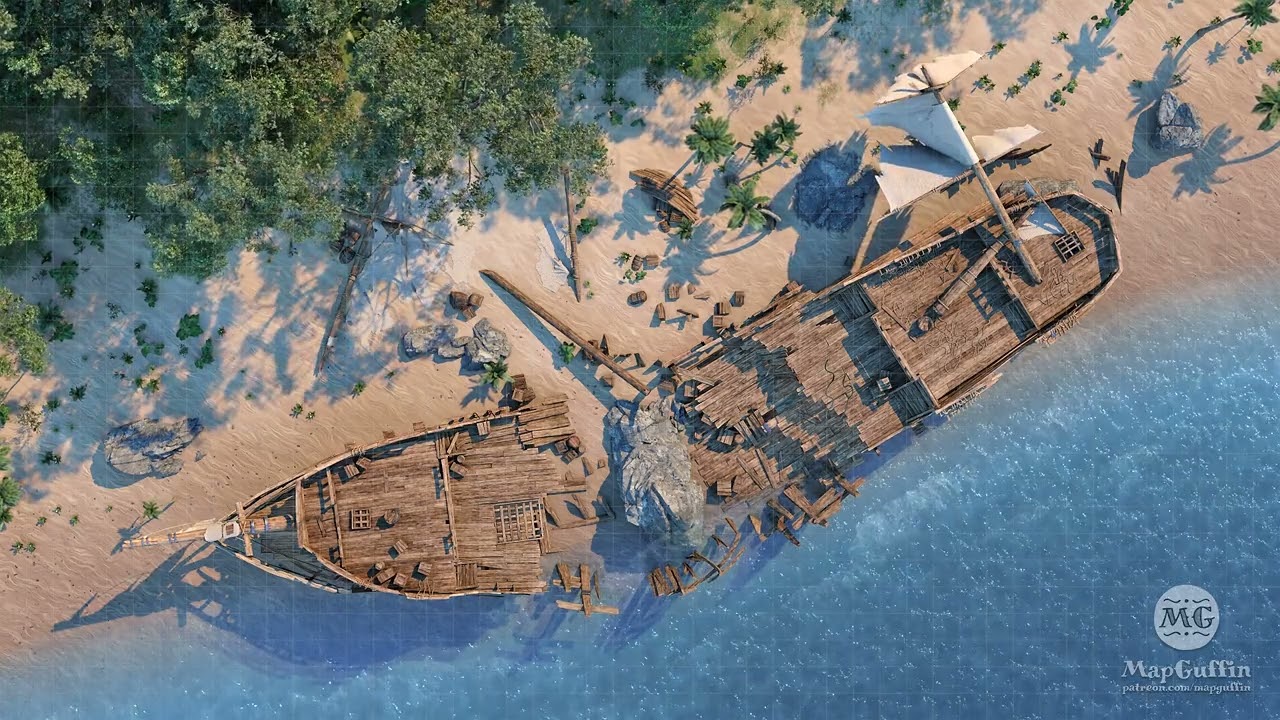
- Ship that is now a… (1d6: 1-2=shipwreck monster lair; 3-4=shipwreck humanoid camp; 5=floating temple; 6=ship of a powerful NPC or intelligent monster).
Surface Structures
Surface buildings that are in use by good humans and such may be the site of a mystery or trial the heroes investigate, heist scenario, smuggling problem, haunting, secret monster problem, etc.
- Temple/church
- Monastery
- College of magic
- Walled town/city
- Fortress… (1d6: 1=fortified manor house; 2=tower; 3=dwarven hall; 4=keep; 5=small castle; 6=sprawling castle) of a powerful NPC
- Lonely tower occupied by… (1d6: 1=wizard; 2=druid; 3=ranger; 4=witch; 5-6=the border watch).
- Uncommon building, such as a… (1d6: 1=lighthouse; 2=windmill; 3=watermill; 4=prison; 5-6=mansion).
- Ship of a merchant
Natural Locations
Natural surface locations can sometimes have a similar structure to subterranean locations: discreet room-like areas connected by passages or paths.
What it was…
- Clearings in a forest or jungle connected by long trails.
- A hedge maze or elaborate garden of forking paths.
- Treehouses connected by rope bridges.
- Open areas in an otherwise narrow gorge or canyon.
- Small islands in a sea or ethereal plane of existence.
- Islands (some with structures) in a marsh, connected by boardwalks.
What it is now…
- Lair of a powerful monster (ogre, troll, minotaur, medusa, beholder, dragon, etc.).
- Lair of various monstrous creatures (mimics, oozes, giant spiders, otyugh, etc.).
- Humanoids’ lair (kobolds, goblins, orcs, hobgoblins, sahuagin, lizard folk, etc.).
- Temple of an evil cult.
- Monastery of an evil cult.
- Tomb full of traps and puzzles.
- Catacombs full of undead.
- City of evil creatures (gray dwarves, drow, mind flayers, demons, etc.).
Bizarre Locations
Some locations don’t fit into the standard types of locations due to magic or other bizarre circumstances.
What it is…
- A hollow where the corpse of a dragon, dinosaur, god, or other gigantic creature was covered in volcanic ash or lava.
- A gigantic clockwork engine or golem in need of repair and which has become infested with verminous monsters or taken over by a cult.
- A variety of locations connected by large, stone magic portals.
- A maze with moving walls.
- A series of rooms whose doors connect magically to other rooms, and which is therefore unmappable.
- Tunnels under a town once taken over by goblins, who connected the cellars to be their lair.
- Paintings of various rooms, each of which is a magic portal to a pocket dimension of that room that has paintings of the other rooms.
- Ice cave carved by frost giants, a white dragon, yetis, polar bears, a white werebear, trolls, or a remorhaz.
- A city that was buried under many feet of volcanic ash or river silt but which goblins dug out, leaving a dungeon with shop fronts and occasional dug out shops as chambers.
 zarban.com
Leave a comment