

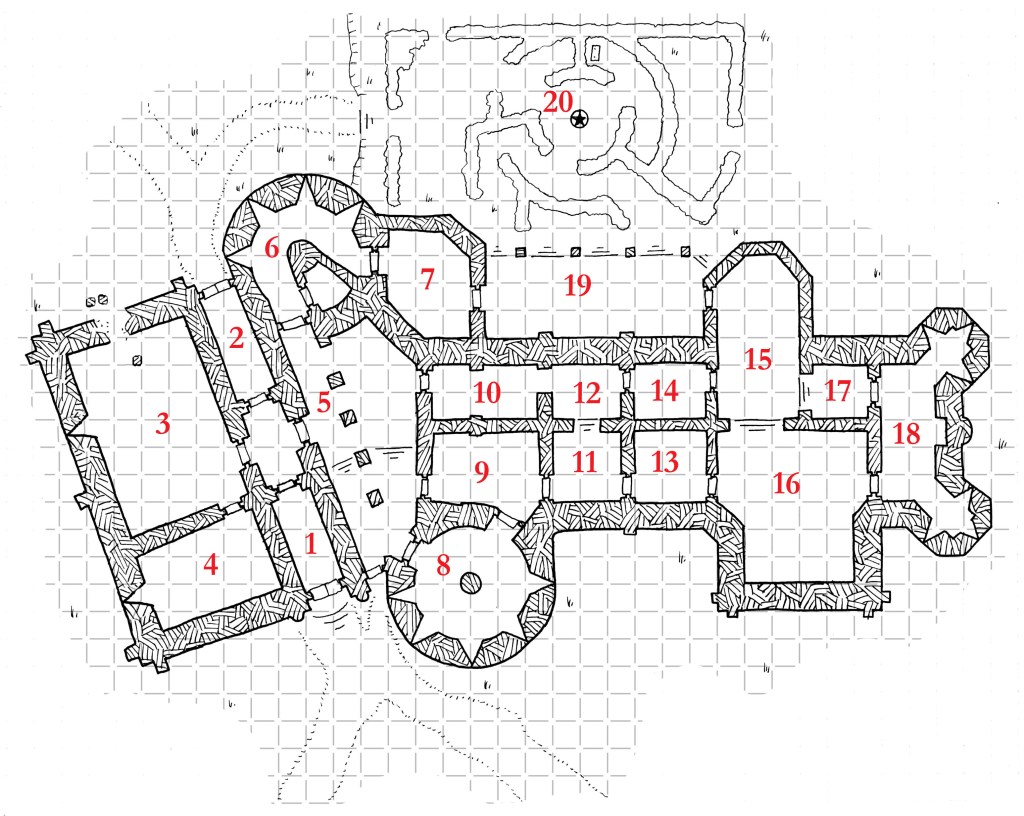
When writing adventure text for a room, make the first (brief) paragraph a description of what’s obvious. Follow with what’s less obvious, as a bullet point if necessary. Don’t bother with full sentences. In my short adventure, The Ruins of Castle Cuar, note how each room is minimally described, with non-obvious bits listed in bullet points afterward.

Here, I merely reference the creatures to keep them system neutral. You should use minimal stats (AC, HP) in your adventure text & focus on what the creature will say & do. But I recommend you make a card for each creature type with all the important info (attacks, resistances, special abilities, vulnerabilities) for easy reference. And you can reuse them for other adventures. If you picture of the creature on the back, you have something to show the players.

Here’s an example meant as a defense(!) of sentence and paragraph format, as opposed to bullet points. How would you GM the version at left? You’d have to read the whole description to yourself, then read the first paragraph aloud while skipping the details, which you’ll describe later when the heroes examine things more closely. The bulleted list is much clearer.

The version at left is written by aspiring novelists, people who want you to engage with their prose, not their adventure. Old D&D adventures were written this way. Descriptions were long-winded and hard to follow; and the writer often held back important information as secrets revealed only at the end of the adventure. And they were hard to GM.
Worse: you don’t have to choose! You can start each location key with a short paragraph of read-aloud text, then follow with bullet points with more specific information.
B13. Trophy Room
Smells stuffy and musky. A central table is laid out with various tools. Taxidermied animal heads, three on each side wall. At the back of the room on the north wall sit three glass-top cases.
- Old wooden table: Both hunter’s tools and taxidermist tools lie scattered here: knives, scissors, oil, hooks, a wooden rack, cotton and horsehair stuffing, a wire armature, a length of chain.
- Disturb the tools: the animal heads become animated and bray and shriek with fear.
- Remove the tools: the animal heads grow calm and helpful.
- Animated animal heads: Deer, wolf, boar, lynx, aurochs, bear. These will animate if touched or addressed directly. If calm, they can talk with low intelligence but don’t know a lot. If removed from the room, they lose their magic permanently.
- Fine glass-top cases: These are locked wooden frames set with glass panes. Laid out on pieces of hide and fur are hunting trophies worth 10 gp: horns, fangs, claws, tusks, a mummified heart.


Leave a Reply