

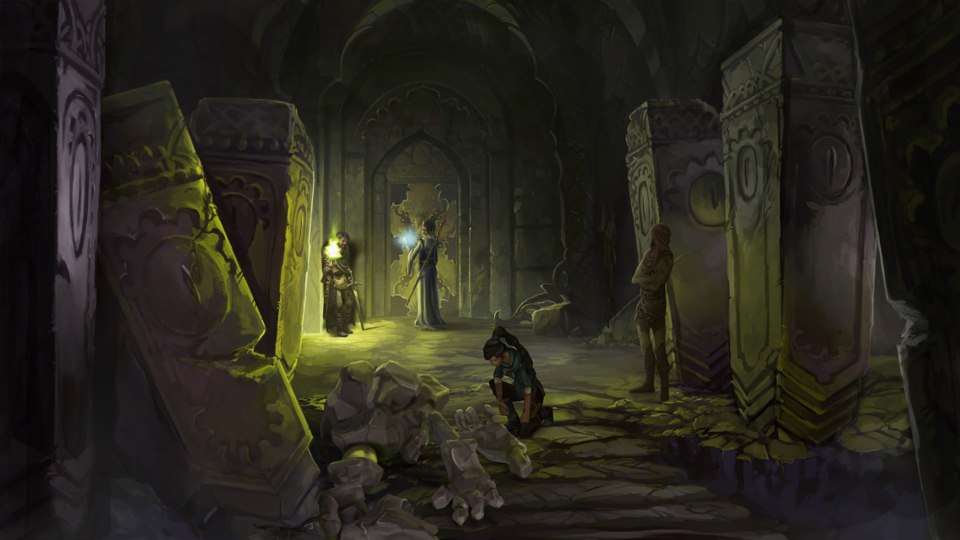
Something that annoyed me about AD&D was the lack of clarity around conducting a dungeon crawl. Here is a method to conduct exploration of buildings, ruins, tunnels, caverns, subterranean complexes, and such.
Make an Interesting Dungeon
Up front, you need to create (or find) an interesting adventure with a good dungeon that’s worth exploring. You also need to know what puzzles, treasures, and especially creatures are in this dungeon and what they’ll do once intruders start skulking around and making a mess. Will they come running at the sound of combat? Raise an alarm? Hide? Flee? Negotiate? You’ll also need to know the basic tactics they’ll use, especially if they have magical abilities or spells; make sure your creatures don’t just square up and fight to the death.
In particular, try to turn opponents into puzzles instead of bags of hit points. At least once per dungeon, have an encounter where the heroes can change the odds by doing something other than whacking the bad guys. Maybe they can cut off some reinforcements by dropping a portcullis; or they can knock over an idol that is giving an opponent divine protection.
Wandering Monsters
Decide how often to make wandering monster checks: every 10 minutes for busy areas, every 20 or 30 minutes for most areas, and every 40 minutes for barely inhabited areas. This will greatly affect the players’ decisions to search, since searching eats up time.
Keep in mind that wandering monster checks are for seeing if denizens of the dungeon happen to come upon the heroes (or seek them out due to noise or smells); fatalities reduce the number of opponents. Random encounter checks are for wilderness, where the heroes might stumble upon terrain-appropriate creatures that may not be connected to the main adventure.
Unwanted Attention
Make it clear to players that their characters will attract unwanted attention if they make a lot of noise or use fire as a solutions to their problems.
- In open tunnels, noise travels a long way, so be sure to have enough closed doors that the first combat doesn’t alert every creature in the entire complex.
- You might also include a river or waterfall just for the noise, as an excuse for combat not to ring thruout the dungeon and attract every curious/hungry creature.
- This is also a good reason to have empty rooms—they create a buffer zone that allows the heroes to go back to sneaking after making a racket.
Try to decide beforehand during your design process which rooms can hear noise in which other rooms. It might prompt you to add a couple sets of heavy double doors to that main corridor.
Have Them Specify Their Speed
As the heroes move thru corridors, have the players specify if they’re rushing, exploring, or searching. When they enter a room, they should still specify how quickly they go thru it.
In my system, searching is half normal movement rate (30 feet per 15-second round), exploring is normal (60 feet per round), and rushing is double (120 fpr).
Draw the Room for Them
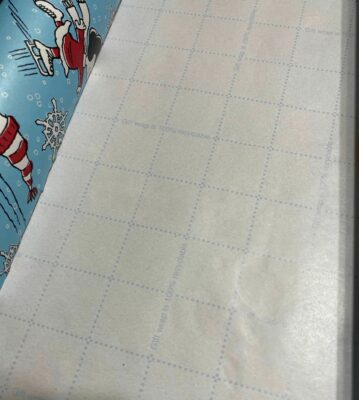
Don’t waste time trying to describe an oddly shaped room and its doors. Get an erasable battle mat (or old wrapping paper with a grid on the back) and draw the shape of the room. It’s the players’ responsibility to add this room to their map if they’re making one (they may not, if they think the place is small).
Describe the Room Succinctly
Describe the obvious aspects of the room. As you do, mark where things are on the battle mat. The doors, the furniture, the rust monsters, whatever. Keep your description short and limited to the obvious things the characters can interact with—and don’t forget smells and sounds. If there are obvious things that aren’t of consequence (a pile of rubble), put them in the middle of your description. They’ll remember better whatever is first and last.
When the players describe how they start interacting with elements in the room, give them a little non-obvious detail: material it’s made of, dirt or lack thereof, wear marks, etc. They’ll use these clues to decide which locations to focus a search on. It’s okay to tell them they have a feeling about the thing, like it seems out of place or would be a good hiding spot. They need such hints, because they can’t actually see what you’re describing and form those opinions themselves.
Roll for Searches
If the heroes are rushing, they see only what’s obvious.
If the heroes are exploring, roll for each of them. On a 15+ on a d20, the character can notice something concealed, like a trap or a concealed door. On a 20+, they can notice something hidden, like a secret door or a letter stuck to the underside of a table with wax. If anyone rolls a natural 1, and there’s a trap they didn’t detect that could be triggered casually, that character triggers it. (This means a party of 5 has about a 23% chance of triggering most traps.)
If the heroes search the room or corridor, each character finds a hidden thing on a 15+. They automatically find anything concealed (whichever character is closest). Each hero can specify one location as their focus, and automatically find anything concealed or hidden there.
A search takes about 10 minutes in most cases but two or three times that if the room is large and/or cluttered. Deliver more detailed information here, but don’t over-describe things that aren’t important, even if they ask for it.
You can simply say, “I don’t know. It’s ordinary stone,” or whatever. Eventually, they’ll get the hint that a casual description means it’s not worth examining.
One of the heroes should be acting as a look-out. Otherwise, the party can be surprised by creatures or changes in the environment that they would otherwise notice.
If the heroes search the same location twice, they automatically find anything concealed or hidden. This avoids the players getting obsessive and insisting there must be something more to the place.
Follow up by rolling to disarm traps and pick locks. If the heroes want to do something like tip over a statue or open a particularly stuck door, make that a strength check.
Adjudicate Tricks, Traps, Puzzles, & Predicaments
The notes you made about the various rooms and what’s in them should help you decide on what happens when the heroes interact with the various tricks, traps, puzzles, and predicaments you’ve set before them. Try to stay open-minded and keep such challenges open-ended, so that creative solutions work often enough.
Puzzles & Predicaments
When you’re creating puzzles in particular, keep in mind that the players may try to avoid dealing with them at all by smashing or by-passing them rather than playing by their rules. Don’t waste hours trying to devise such clever challenges that they can’t be circumvented; let them have their fun. That’s just a challenge you can reuse later in a form that doesn’t allow for whatever trick the players pulled.
However, bypassing a puzzle should often have consequences, so decide if smashing a lock breaks potion vials or delicate valuables inside. Predicaments may be more optional, but it should be fairly clear that if they do so, they’ll be bypassing treasure or valuable information.
Tricks & Traps
As for tricks and traps, if they heroes pass thru a location with a trick or trap set in their way (a tripwire across a hallway or pressure plate, for example), and they don’t find it because they were rushing or failed their explore roll, then they trigger it. Most of these are only concealed, so they should be found automatically if the heroes are searching. You should decide if it is triggered by the first character (as with a trip wire) or if it could be missed by the first and triggered by another (as with a pressure plate). You might roll a d4 or d6 for each character and, on a 1, it goes off. Or use a dice timer of d6, d4, d3, and d1.
If the trick or trap isn’t in their way, it’s probably triggered by a specific action of the sort that someone who is nosy would do, like opening a desk drawer or standing in front of a spot near something interesting. Therefore, if they do that action without searching the room, they trigger it. You might even decide that some traps are hidden rather than concealed, so they wouldn’t necessarily even get found on a search.
If the party finds a trap, they notice the tripwire or pressure plate, or a stain or scrape marks that gives it away. They can then explain how they investigate to avoid or disarm it. Often, it should be pretty trivial to simply avoid it.


Leave a comment